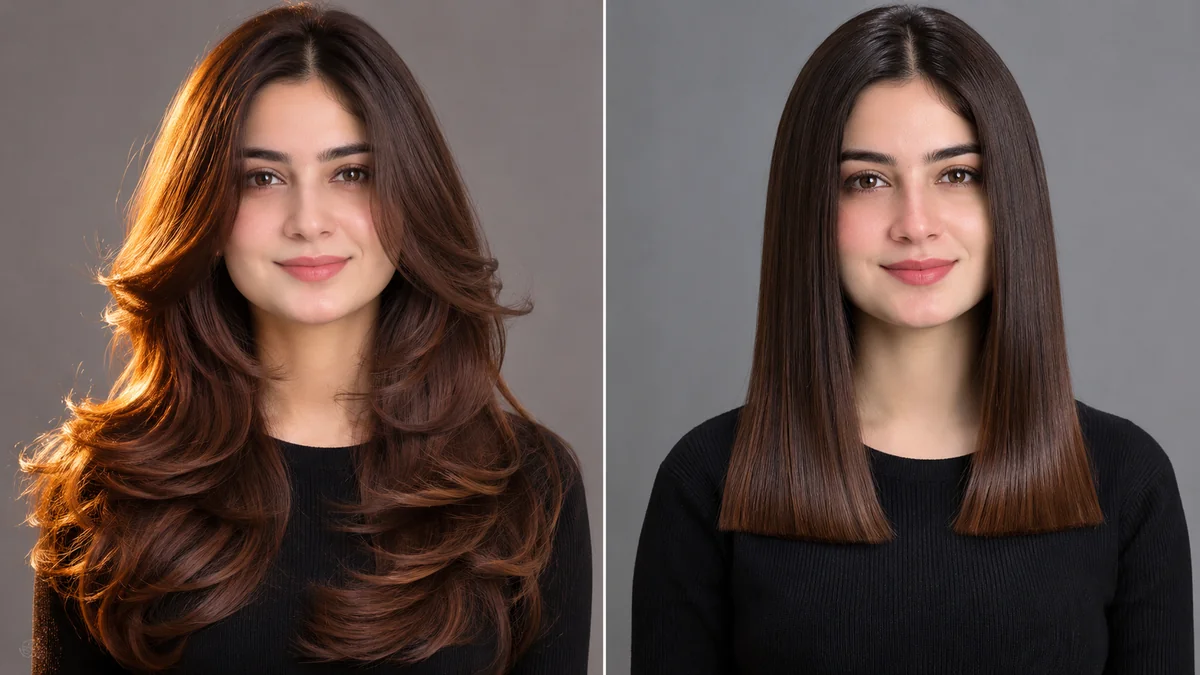
You sit in the barber chair, the cape goes on, and your barber asks what you want — but you freeze completely. The layered haircuts vs non layered decision feels impossible when you do not understand what each technique actually does to your hair structure.
Choose wrong and you spend three months hiding under hats waiting for it to grow out. This barber-written guide eliminates that guesswork with real styling steps, exact prices, face-shape matching, and safety checks you can use at your very next appointment.
What Is a Layered Haircut?
A layered haircut removes internal weight by cutting hair at multiple different lengths across the head simultaneously. Your barber creates shorter pieces on top and progressively longer pieces underneath, producing natural movement, root lift, and visible texture from crown to ends. This technique works for both men and women who want volume and dimension without the heavy, flat appearance that single-length cuts sometimes create on fine or medium-density hair.
Popular layered styles include long flowing layers, short choppy layers, face-framing curtain layers, and hidden internal layers that remove bulk without changing the outer silhouette. According to Milady Standard Cosmetology, layering remains the most requested cutting technique in professional shops worldwide because it adapts to every hair texture, density, and growth pattern (Milady Cengage, 2020).
What Is a Non-Layered Haircut?
A non layered haircut keeps every single strand at one uniform length from the crown down to the bottom edge. Your barber cuts a single clean line — straight across, slightly angled, or softly rounded — without removing any internal weight or creating shorter pieces on top. The result is a heavy, sleek, mirror-smooth finish that looks sharp and intentional from every angle.
Classic non layered styles include the blunt bob, the one-length lob grazing the collarbone, and the straight-across mid-back trim. These cuts shine on naturally thick, straight hair that already carries enough density to support the full weight without looking flat or lifeless against the scalp.
Layered Haircuts vs Non Layered: Key Differences at a Glance
| Feature | Layered Haircuts | Non Layered Haircuts |
| Weight Distribution | Removed at multiple zones | Kept entirely intact |
| Volume and Movement | High bounce and texture | Low movement, maximum sleekness |
| Best Hair Density | Fine to medium | Medium to thick |
| Trim Frequency | Every 6 – 8 weeks | Every 10 – 14 weeks |
| Daily Styling Time | 15 – 25 minutes | 8 – 12 minutes |
| Annual Maintenance Cost | $350 – $750 | $150 – $350 |
This layered haircuts vs non layered comparison table makes the trade-offs instantly clear. Layers demand more frequent trims and more product but deliver significantly more styling versatility. Non layered cuts save real time and money while keeping your look consistently clean and polished every single day.
Pros and Cons of Layered Haircuts
Layered haircuts add instant volume to flat, thin hair and remove stubborn bulk from thick hair that puffs outward into an unwanted triangle shape. They create natural movement that gives you multiple distinct looks from a single cut — sleek one day, wavy and textured the next. When comparing layered haircuts vs non layered options for versatility alone, layers win every time.
The downside is that layers grow out unevenly and start looking messy around week eight if you skip your scheduled trim. They also require more styling products — texturizing sprays, volumizing mousses, and sea salt mists — to maintain their shape and separation between washes.
Pros and Cons of Non-Layered Haircuts
Non layered haircuts deliver a razor-sharp silhouette that looks professional in any setting without extra morning effort. They grow out gracefully because the single clean line simply drops lower over time, and they need minimal product to stay sleek, shiny, and frizz-free all day long.
The trade-off is limited styling variety. A blunt one-length cut looks essentially the same every day, which frustrates people who enjoy experimenting with texture, waves, and volume changes throughout the week.
Best Hair Types for Layered vs Non Layered Cuts
The layered haircuts vs non layered decision shifts dramatically based on your actual hair type and density. Fine, thin hair benefits from subtle long layers that create the illusion of fullness without exposing the scalp or making strands look stringy. Thick, coarse hair needs aggressive short layers to remove interior bulk and prevent the wide triangle shape that adds unwanted visual width to the head.
Curly hair demands layers that follow the natural curl pattern precisely to avoid shrinkage and uneven length when the hair dries. Straight, dense hair looks its absolute best in a non layered cut because the full weight creates a glass-smooth finish that layers would fragment and disrupt.
Face Shape Guide: Which Cut Flatters You?
Round faces gain instant length from long face-framing layers that start below the cheekbone and taper toward the chin. The same round face also looks striking with a sharp angular blunt bob that creates geometric structure where softness dominates.
Oval faces pull off nearly every layered haircuts vs non layered style equally well because their balanced proportions adapt to any cutting line. Square faces soften beautifully with wispy textured layers around the jawline or lengthen with a non layered cut that falls past the shoulders. Heart-shaped faces balance a wide forehead with chin-length layers that add visual width at the narrowest point of the face.
How to Style Layered Haircuts at Home
Apply a lightweight heat protectant spray to towel-dried hair before picking up any hot tool. Blow-dry with a medium round brush, lifting each layer at the root while directing the airflow downward to smooth the cuticle and lock in natural shine throughout every section.
For effortless beach waves, wrap one-inch sections around a curling wand and leave the bottom two inches completely straight for a modern undone finish. Mist a light-hold texturizing spray from mid-length to ends to keep every layer separated, bouncy, and defined all day without crunch or stickiness.
How to Style Non-Layered Haircuts at Home
Smooth a dime-sized amount of silicone-free serum onto damp hair, concentrating on the mid-lengths and ends where frizz attacks first and fastest. Blow-dry with a wide paddle brush while pointing the dryer nozzle straight down the hair shaft to seal the cuticle flat and eliminate flyaways completely.
Run a ceramic flat iron on low-to-medium heat over small sections for a glass-hair reflective finish. Tuck one side behind your ear and mist a light-hold hairspray from twelve inches away to lock the sleek line in place without flattening natural root volume.
Maintenance, Grow-Out, and Pricing Breakdown
Layered haircuts need a professional trim every six to eight weeks to reshape the layers and prevent the awkward grow-out phase where shorter pieces stick out at odd angles. Non layered cuts stretch comfortably to ten or even fourteen weeks between visits because the single clean line simply drops lower without creating choppy uneven sections that demand immediate attention.
Salon prices for layered cuts range from $50 to $95 per session while non layered trims cost $30 to $60 on average. Over a full calendar year, the layered haircuts vs non layered cost gap reaches $200 to $400 when you factor in the extra visits and additional styling products that layers require.
How to Stay Safe at the Barber Chair
Inspect your barber’s workstation before you sit down and confirm that every tool comes directly from a UV sanitizer cabinet or a fresh barbicide solution jar. The American Academy of Dermatology explicitly recommends verifying tool sterilization at every single visit to prevent fungal infections, bacterial folliculitis, and scalp irritation (AAD, 2023).
Speak up immediately if you feel dull blades tugging or pulling your hair instead of cutting it cleanly in one smooth motion. Dull scissors create split ends and micro-fractures that take months to grow out. Bring clear reference photos showing whether you want layered haircuts vs non layered results so your barber nails the exact vision on the very first try.
Expert Tips: How to Talk to Your Barber
Arrive with clean, dry hair in its completely natural state so your barber sees your real texture, cowlicks, growth direction, and natural part before making any cutting decisions. Research published in the Journal of Cosmetic Dermatology confirms that individual hair shaft diameter directly determines how layers behave, move, and age over time (JCD, 2022).
Be brutally honest about your actual morning routine. If you spend under ten minutes on your hair each day, tell your barber directly — they will steer you toward a cut that matches your real lifestyle instead of your Pinterest board fantasy.
Conclusion
The layered haircuts vs non layered choice ultimately belongs to your unique hair type, face shape, budget, and daily schedule. Layers deliver volume, movement, and creative styling freedom for those who enjoy experimenting. Non layered cuts reward you with sleekness, speed, and timeless polish that never follows trends because it already transcends them entirely.
Stop scrolling and start acting. Book a consultation with your most trusted barber this week, bring this guide as your reference, and walk out with a haircut that makes you feel genuinely confident every single morning. Your best hair is one honest conversation away — go claim it right now.
Featured Guides
Hand‑picked articles to level up your style & grooming
Taper Mullet Haircut: Pricing, DIY Guide & Best Styles 2025
6 style variations · Face‑shape matching · Step‑by‑step DIY & barber tips.
Read Guide
What Is BodenXT? Features, Pricing & Honest Review
No‑code automation · Visual workflow builder · Free tier & pricing explained.
Read Guide
Wollmatten (Wool Mats): Types, Uses & Benefits Guide
Felted vs needle‑punched · Gardening & insulation uses · Care & maintenance tips.
Read Guide