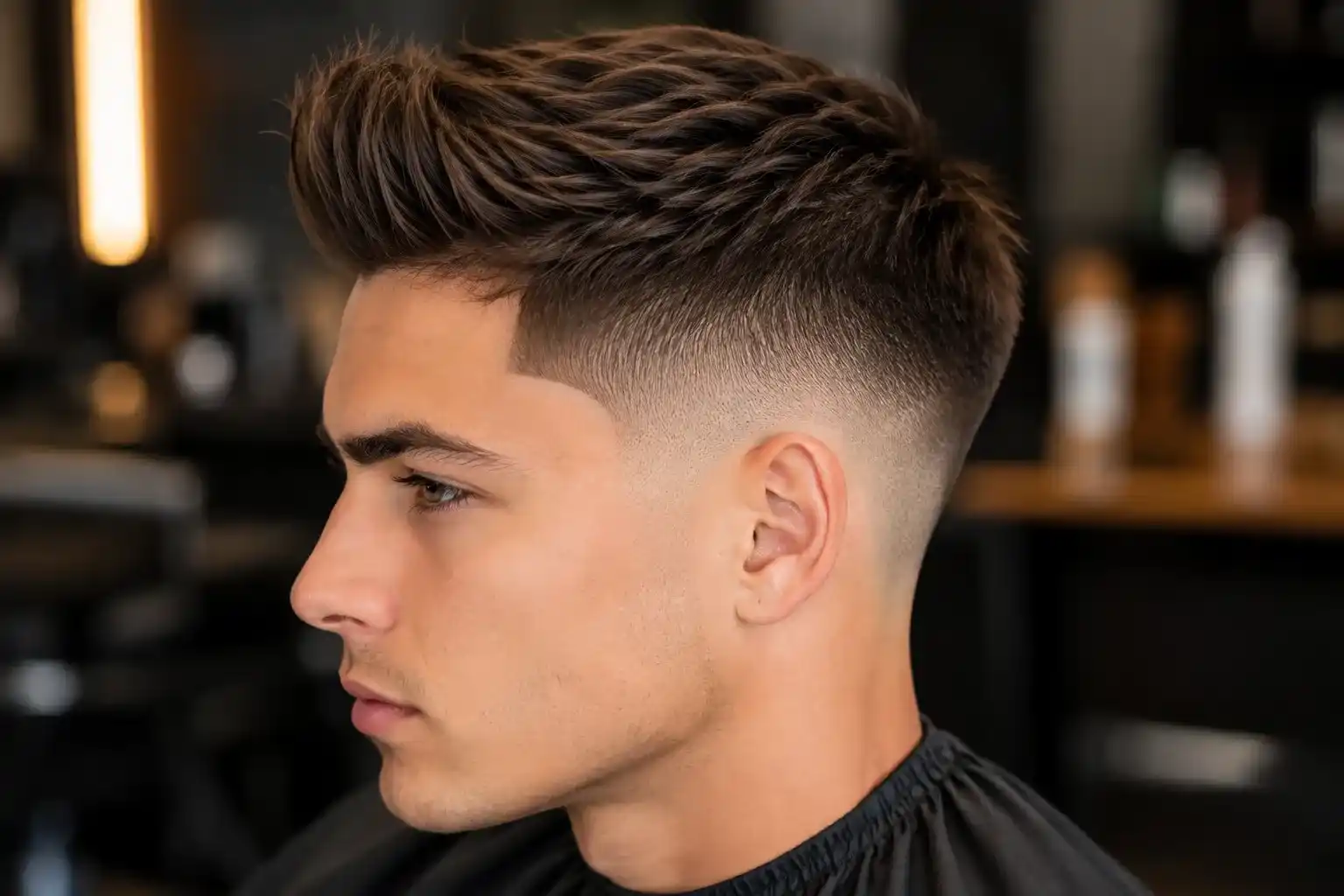
You point to a photo on your phone. Your barber nods. Twenty minutes later, you’re looking at a haircut that doesn’t match the picture at all. This happens because “fade” is a broad word, and most men never learn the one term that actually pins down the look they want: temple fade. Once you know what it means and how to ask for it, you’ll never leave the chair guessing again.
What Is a Temple Fade?
A temple fade is a haircut where the hair is cut shortest around the temples — the area just above and in front of your ears — then blended upward into longer hair on top. Unlike a full fade that wraps around the entire head, this style stays focused on the front and side hairline.
The result is a sharp, clean frame around your face without touching the rest of your sides too aggressively. That’s the short answer to what is a temple fade: a targeted fade at the hairline, not a total buzz down the sides.
Barbers favor this cut because it works on almost any hair type. Curly, straight, coily, or wavy hair all take it well, since the fading happens at the edge of the hairline rather than across the whole scalp.
Temple Fade vs Taper Fade: What’s the Real Difference?
Men mix these two up constantly, and it’s the single biggest reason a haircut request goes wrong. A temple fade vs taper fade comparison comes down to where the shortest hair sits and how far it travels.
| Feature | Temple Fade | Taper Fade |
| Shortest point | Temples and hairline | Nape and sideburns |
| Coverage | Focused, narrow area | Runs down the full side |
| Contrast | Sharp near the face | Gradual, subtle blend |
| Best for | Framing the face, curly or thick hair | Classic, low-key business looks |
| Common pairing | Afros, waves, mullets, curls | Crew cuts, side parts, pompadours |
A taper quietly shortens hair as it moves down toward the neck and ears. This style does its work right at the front, near your eyebrows and hairline, which is why it reads as bolder and more defined in photos.
Low Temple Fade: The Everyday Favorite
The low temple fade sits closest to the hairline and barely rises above the ear. It’s the most requested version because it looks sharp without feeling extreme, and it grows out gracefully between barber visits.
A low temple fade haircut suits guys who want definition without a big jump in contrast between the top and sides. Office workers, students, and anyone who needs a low-maintenance cut usually land here first.
Best for: oval, square, and round face shapes that don’t need extra height added at the sides.
Mid Temple Fade: The Balanced Middle Ground
A mid temple fade starts a little higher, roughly at eye level, and creates more visible contrast than the low version. It still keeps things wearable for daily life while adding a sharper edge.
This height works well when you want the fade to actually show rather than blend in quietly. It’s a strong pick if your hair on top carries some length or volume, since the added contrast below balances it out.
High Temple Fade: Maximum Contrast
The high temple fade climbs well above the ear, sometimes close to the crown, creating a dramatic line between short sides and longer top hair. It’s the boldest of the three heights and demands the most upkeep.
Because the fade line sits so high, regrowth shows faster. Expect to book a trim every two to three weeks if you want this height to stay sharp.
Quick Comparison Table: Low vs Mid vs High Temple Fade
| Fade Height | Starting Point | Contrast Level | Trim Frequency | Who It Suits |
| Low | Just above the ear | Subtle | Every 4–6 weeks | First-timers, office settings |
| Mid | Eye level | Moderate | Every 3–4 weeks | Guys who want visible shape |
| High | Above the temple, near the crown | Bold | Every 2–3 weeks | Statement looks, thick or curly hair |
Temple Fade for Black Men and Black Male Styles
A temple fade for black men works especially well with coily and afro-textured hair, since it sharpens the hairline while leaving room for volume on top. Requesting a “temple fade black men” style tells your barber to prioritize hairline precision rather than blending down the whole side.
For a temple fade black male look, barbers usually keep the height low to mid and let the top hair stay natural, twisted, or shaped into a rounded afro. This combination gives structure to the sides while the top does the talking.
A low temple fade black male style pairs nicely with a lined-up beard, since both the hairline and jawline get the same crisp treatment. If you simply say “temple fade black,” most barbers will read that as this hairline-first, afro-friendly approach.
Temple Fade Curly Hair: Getting the Best Shape
Temple fade curly hair works because curls naturally add volume, and the fade at the temple keeps that volume from looking bulky. It trims away density right where it’s not needed while letting curls bounce freely up top.
- Ask for a low or mid height so the curl pattern stays the star of the look.
- Use a curl cream or leave-in conditioner to define texture after washing.
- Let hair air-dry or diffuse it on low heat to avoid frizz.
- Keep length on top around one to two inches for the curls to show properly.
This pairing is one of the most requested combinations in barbershops today because it flatters round and oval faces alike.
Temple Fade Straight Hair: Clean Lines, No Guesswork
Temple fade straight hair leans into precision. Straight strands show every line clearly, so the cut needs sharp, even blending or it will look uneven under normal lighting.
This version pairs naturally with slick-backs, side parts, and textured crops. Because straight hair doesn’t hide mistakes the way curls do, book with a barber who has real experience blending fades, not just trimming length.
Temple Fade Long Hair: Keeping Length Without Losing Shape
A temple fade long hair look keeps several inches on top while the sides stay tightly faded at the temple. It’s a popular choice for men growing their hair out who still want a defined, groomed appearance.
The short sides do the heavy lifting here, giving shape and structure while the length on top stays loose, swept back, or tied up. This combination also grows out more forgivingly than shorter styles, since the top hair naturally covers the transition line as weeks pass.
Temple Fade Mullet: The Modern Twist on a Retro Cut
The temple fade mullet takes the classic short-front, long-back mullet and sharpens the sides with a clean fade instead of leaving them shaggy. This update is one of the fastest-growing style requests among younger clients.
Short faded temples up front contrast against longer hair at the back and crown, giving the cut structure instead of the loose, undefined look mullets had in past decades. Straight or wavy hair holds this shape best, since the back needs enough weight to move rather than curl tightly.
Temple Fade for a White Guy: What Changes, What Doesn’t
A temple fade white guy request follows the same core technique — short at the temple, blended upward — but styling choices often shift based on hair texture. Finer or straighter hair, more common though not universal among white clients, usually needs a slightly higher fade to read clearly, since fine hair shows less natural contrast than thick or coily hair.
Whatever your background, the underlying cut stays identical. The only real variable is how your individual hair type holds the shape, not who’s sitting in the chair.
How to Ask Your Barber for a Temple Fade Haircut Men Trust
Walking in with the right words saves time and avoids a haircut you didn’t want. When you’re describing temple fade haircut men actually ask for at the chair, follow this script:
- Name the style. Say “temple fade” clearly, not just “fade,” so your barber knows to focus on the hairline.
- Pick a height. Specify low, mid, or high based on how much contrast you want.
- State your top length. Tell your barber how much length to leave on top — an inch, two inches, or “keep it as is.”
- Mention your hair type. Curly, straight, or coily hair changes how the fade is cut and styled.
- Bring a photo. Even with the right words, a reference photo removes any remaining guesswork.
How Much Does a Temple Fade Cost and How Long Does It Take?
Pricing varies by region and barbershop tier, but most men pay a fair, mid-range price for this level of detail work since it requires more precision than a standard trim.
| Setting | Typical Price Range | Time in the Chair |
| Budget barbershop | $20–$35 | 20–30 minutes |
| Mid-range salon | $35–$60 | 30–40 minutes |
| Premium or celebrity barber | $60–$100+ | 40–60 minutes |
Skin-close, high-contrast versions usually take longer than low, subtle blends because the clipper work near the hairline demands a steadier hand. Ask your barber upfront whether the quoted price includes a beard line-up or hot towel finish, since those add-ons often cost extra but make the overall result look noticeably more polished.
Common Mistakes to Avoid
Even a great haircut can go wrong if a few basics get overlooked. Watch for these common slip-ups before and after your appointment.
- Not specifying a height. Saying only “fade” leaves too much room for interpretation.
- Skipping the reference photo. Words alone rarely capture the exact contrast you want.
- Waiting too long between trims. A high fade grown out past four weeks starts to look patchy rather than sharp.
- Ignoring your face shape. The wrong height can add unwanted width or length to a round or long face.
- Overusing heavy products. Too much pomade on faded skin traps sweat and dirt, leading to irritation.
- Rushing a new barber. If you’re trying a shop for the first time, start with a lower, more forgiving height so any small unevenness is easy to fix on your next visit.
- Forgetting to mention allergies or scalp sensitivity. Some clippers use lubricants or aftershave tonics that can irritate sensitive skin, so flag this before the cape goes on.
Most of these mistakes come down to communication, not skill. A five-minute conversation before the clippers start almost always prevents a disappointing result.
Who Should Get a Temple Fade Haircut?
Almost anyone can wear this style, but it particularly suits men who want a defined hairline without committing to a full skin fade. If your hair is thick, curly, or holds volume easily, it gives that volume somewhere to “land” instead of looking bulky.
It also works well for men transitioning between a longer style and something shorter, since the temple area is the easiest place to start tightening things up. Whether you’re after a low option for everyday wear or a high one for a bolder statement, there’s a version built for your face shape and lifestyle.
Temple Fade Haircuts by Style Combination
| Style Pairing | Recommended Height | Hair Type | Maintenance Level |
| Afro on top | Low to mid | Coily, afro-textured | Low |
| Loose curls on top | Low | Curly, wavy | Low to medium |
| Slick-back on top | Mid | Straight | Medium |
| Mullet at the back | High | Straight, wavy | Medium |
| Long, flowing top | Low | Any | Low |
| Buzzed top | High | Any | High |
Frequently Asked Questions
What is a temple fade?
It’s a haircut where hair is cut shortest at the temples and hairline, then blended into longer hair on top, without fading the entire side of the head.
What’s the difference between a temple fade and a taper fade?
This style focuses on the hairline and temple area, while a taper gradually shortens hair down toward the neck and sideburns across the whole side.
Does it work on curly hair?
Yes. A low or mid height suits curly hair especially well, since it trims bulk at the edges while letting curls keep their natural volume on top.
How often do I need a trim?
Low versions need attention every four to six weeks. Mid and high versions grow out faster and usually need a visit every two to four weeks.
Can women get this cut too?
Yes, though this guide focuses on men’s styling. The same principle — a short fade at the temple blending into longer top hair — applies to any hair type or gender.
What should I say to my barber?
Ask specifically for a “temple fade,” state whether you want it low, mid, or high, and confirm how much length to leave on top before the clippers start. If you’re unsure, ask your barber to start conservative — you can always go shorter next visit, but you can’t add length back once it’s gone.
Conclusion
A temple fade turns a routine haircut into a precise, intentional style, and once you know the terminology, getting it right becomes simple. Pick your height, match it to your hair type, and describe it clearly the next time you sit in the chair.
Bookmark this guide, share it with a friend who’s tired of leaving the barbershop disappointed, and book your next appointment with confidence.