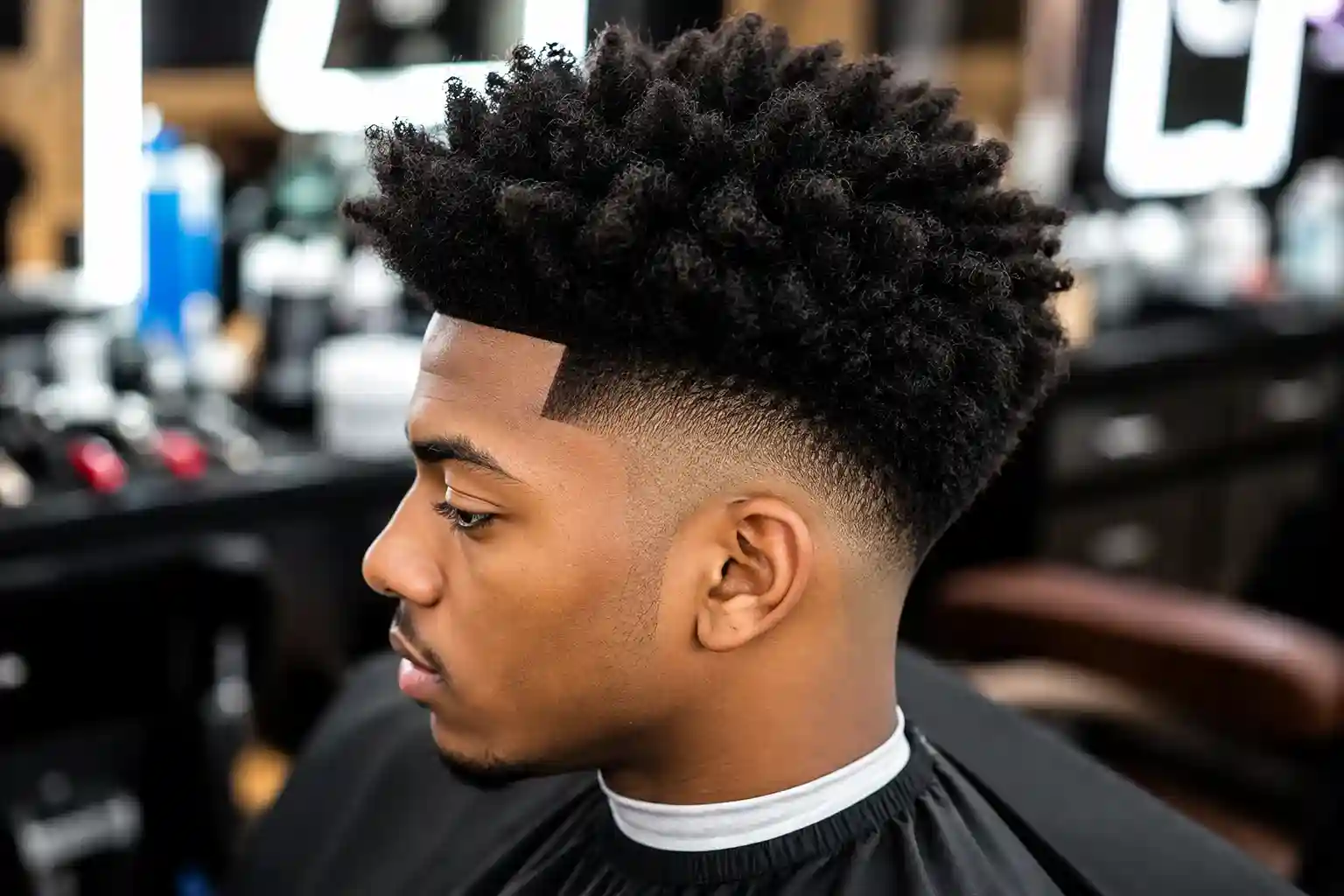
Choosing a haircut that stays sharp for weeks instead of days feels harder than it should. A plain taper often flattens natural curls and looks shapeless by day three. The blowout afro taper fade fixes this problem directly. It pairs a round, voluminous afro on top with a clean fade on the sides, giving you bold volume where it counts and a crisp finish that holds its shape.
This guide breaks down everything you need to know: what the cut is, who it suits, how barbers create it, and how to keep it looking fresh between visits. You will also find a detailing table, real maintenance steps, and answers to the questions people ask most.
What Is a Blowout Afro Taper Fade?
A blowout afro taper fade combines two distinct techniques into one balanced style. The top section keeps length and gets “blown out” with a round brush and hooded dryer to create height, roundness, and a soft cloud-like texture. The sides and back taper down gradually into a fade, moving from longer hair at the crown to skin-close or near-skin length at the neckline.
The result is a style that looks full and confident on top while staying neat and structured around the edges. Barbers often describe it as the natural-hair answer to a modern fade — texture and volume up top, precision and shape below.
- The top: brushed and dried outward for lift and roundness
- The sides: faded using clippers in graduated lengths
- The blend: a seamless transition zone where the afro meets the fade
Why the Blowout Afro Taper Fade Works So Well
This cut earns its popularity because it solves three problems at once: it manages curl shrinkage, it frames the face, and it stays wearable for both casual days and formal events.
Curly and coily hair naturally shrinks after washing, which can make a style look uneven or smaller than intended. The blowout technique counters this by stretching the hair outward while it dries, so the afro keeps its shape instead of curling back tight against the scalp.
- Adds visible length and volume without chemical straightening
- Creates a rounded silhouette that suits most face shapes
- Keeps a sharp, tapered edge that reads as polished and intentional
- Works for office settings, casual outings, and special occasions alike
The History and Evolution of the Blowout Afro Taper Fade
The afro has deep roots in Black culture, first rising to prominence during the 1960s and 1970s as both a fashion statement and a symbol of pride. Barbering techniques evolved over the following decades, and the taper fade became a barbershop staple by the 1990s thanks to its clean, low-maintenance sides.
The blowout afro taper fade is the modern fusion of these two traditions. Barbers began combining round-brush blowout techniques with precision fading in the 2010s, giving clients a way to wear natural volume without sacrificing a sharp, groomed edge. Today, it remains one of the most requested cuts for men and women with textured hair who want a bold yet professional look.
Blowout Afro Taper Fade vs Other Popular Fades
Comparing this style against other well-known fades helps clarify what makes it unique.
| Style | Top Length | Best Hair Type | Maintenance Level | Occasion Fit |
| Blowout Afro Taper Fade | Medium to long, rounded | Curly, coily (types 3B–4C) | Moderate (every 2–3 weeks) | Casual, formal, everyday |
| Standard Taper Fade | Short, close top | All hair types | Low | Everyday, professional |
| High Top Fade | Long, flat top | Coily, thick hair | High | Bold, statement looks |
| Skin/Bald Fade | Any top length | All hair types | Low to moderate | Sharp, minimalist |
| Afro (No Fade) | Long, full | Curly, coily | High (frequent trims) | Casual, natural |
The blowout afro taper fade sits in the middle of this range. It offers more volume than a standard taper but far less upkeep than a full afro, making it a practical choice for people who want a statement style without daily styling stress.
Types of Blowout Afro Taper Fades
Not every blowout afro taper fade looks the same. Barbers adjust the fade height, blend tightness, and top shape to match personal preference.
- Low blowout taper fade: The fade starts just above the ear, keeping more hair on the sides for a softer transition.
- Mid blowout taper fade: The fade begins at the temple, offering a balanced look between volume and definition.
- High blowout taper fade: The fade starts higher on the head, creating maximum contrast between the afro and the skin-close sides.
- Blowout taper fade with a hard part: A shaved line separates the fade from the top, adding a crisp graphic detail.
- Blowout taper fade with fringe: Front strands are left longer and shaped forward for a textured fringe effect.
Each variation still relies on the same core idea: rounded volume on top, precise tapering below.
Step-by-Step: How Barbers Create a Blowout Afro Taper Fade
Understanding the process helps you communicate clearly with your barber and know what to expect during the appointment.
- Wash and detangle. Hair is cleaned with a moisturizing shampoo and detangled with a wide-tooth comb to remove knots without breakage.
- Section the hair. The barber separates the top section from the sides and back, clipping the top out of the way.
- Blow-dry with a round brush. Using a round brush and a hooded or handheld dryer, the barber lifts each section at the root and dries it outward, building the rounded shape section by section.
- Fade the sides. Clippers with graduated guards taper the hair from longer at the crown to shorter near the hairline and neck.
- Blend the transition. The barber uses shears or a trimmer to soften the line between the afro and the fade so there is no harsh gap.
- Shape and edge up. The hairline, sideburns, and neckline are cleaned with a trimmer for a sharp, finished outline.
- Finish with product. A light hold cream or curl-defining product sets the shape without weighing the hair down.
This entire process typically takes 45 to 75 minutes, depending on hair density and desired detail.
Hair Texture and Face Shape: Finding Your Best Fit
The blowout afro taper fade adapts well across curl patterns, but small adjustments make a real difference in how the finished look sits.
- Type 3B–3C (looser curls): These curls hold the blowout shape longer and need less frequent restyling.
- Type 4A–4B (springy coils): These textures benefit from extra moisture before drying to prevent frizz at the roots.
- Type 4C (tight coils): These curls shrink the most, so a longer top length is recommended to keep visible volume after drying.
Face shape also matters. Round faces often look sharper with a higher fade and more height on top, while square or angular faces balance well with a softer, rounder blowout shape that eases harsh lines.
Tools and Products You Need for a Perfect Blowout Afro Taper Fade
The right tools make a noticeable difference in how long the style holds and how healthy the hair stays.
- Round brush: A boar-bristle or ceramic round brush gives the smoothest lift and shape.
- Hooded or bonnet dryer: Even, controlled heat reduces frizz better than a handheld dryer alone.
- Clippers with adjustable guards: Needed for a clean, graduated fade.
- Leave-in conditioner: Adds slip and moisture before blow-drying, protecting curls from heat stress.
- Light-hold styling cream: Locks the shape without leaving hair stiff or greasy.
- Heat protectant spray: Shields strands from damage during the drying process.
Investing in quality tools pays off, since a blowout afro taper fade depends heavily on technique and equipment rather than the haircut alone.
How to Maintain a Blowout Afro Taper Fade at Home
A great blowout afro taper fade does not stop looking good the moment you leave the barbershop. Daily habits keep the shape intact between visits.
- Wrap hair at night. A silk or satin bonnet prevents friction that flattens the top section while you sleep.
- Refresh with a light mist. A water and leave-in conditioner mix revives volume without a full rewash.
- Avoid daily washing. According to the American Academy of Dermatology, curly and coily hair should typically be washed every two to three weeks to prevent dryness and breakage.
- Touch up the fade every 2–3 weeks. Fades grow out faster than the top, so regular trims keep the contrast sharp.
- Brush gently, never when dry. Detangling dry curls increases breakage, so always work through hair when it is damp and conditioned.
Following this routine keeps the blowout afro taper fade looking fresh for far longer than skipping aftercare entirely.
Common Mistakes to Avoid
Even a well-cut blowout afro taper fade can look off if these details are missed.
- Using too much heat. High dryer settings speed up styling but weaken curls over time and increase breakage risk.
- Skipping the blend. A visible line between the top and the fade instantly makes the cut look unfinished.
- Overloading with product. Too much cream flattens the volume the blowout is meant to create.
- Waiting too long between fade trims. A grown-out fade loses its sharp contrast and starts to look like a plain afro.
- Ignoring scalp health. Flaking or itching can signal dandruff or dryness; the American Academy of Dermatology notes that thick, curly hair is more prone to dryness and breakage than other hair types, so scalp care matters as much as styling.
Cost and Where to Get a Blowout Afro Taper Fade
Pricing varies by location, barber experience, and hair density, but most clients can expect the following general ranges.
| Service Level | Typical Price Range | What’s Included |
| Standard Barbershop | $30–$50 | Wash, blowout, fade, edge-up |
| Specialist Barber/Salon | $50–$90 | Extended blowout time, deep conditioning, precision blending |
| Premium Studio | $90–$150+ | Full consultation, treatment, styling products included |
Always choose a licensed barber. Barbering is a regulated profession in the United States, and licensed shops must follow state sanitation and safety standards, which protects clients from infection risk and ensures consistent training quality.
Styling Tips for Different Occasions
The blowout afro taper fade is versatile enough to adjust for different settings without needing a new haircut.
- For work or formal events: Apply a light-hold cream and comb the top slightly flatter for a more polished, rounded finish.
- For casual days: Let the natural volume stand fuller with minimal product for an effortless look.
- For humid weather: Use an anti-frizz serum and avoid touching the hair often, since friction encourages frizz.
- For workouts: Tie a silk scarf loosely around the hairline to protect the shape while sweating, then reshape with a light mist afterward.
Detailing Table: Blowout Afro Taper Fade at a Glance
| Feature | Detail |
| Best for | Curly and coily hair types (3B–4C) |
| Top style | Rounded, voluminous blowout |
| Side style | Graduated fade (low, mid, or high) |
| Maintenance frequency | Fade touch-up every 2–3 weeks |
| Styling time | 10–20 minutes for at-home refresh |
| Recommended tools | Round brush, hooded dryer, clippers, leave-in conditioner |
| Average cost | $30–$150 depending on barber and location |
| Face shapes suited | Round, square, oval, heart |
Frequently Asked Questions
1. What is a blowout afro taper fade?
A blowout afro taper fade is a haircut that combines a rounded, voluminous top created through blow-drying with a graduated fade on the sides and back. It gives curly or coily hair fuller shape on top while keeping the sides clean and short, blending both textures into one balanced look.
2. How long does a blowout afro taper fade last?
The fade typically stays sharp for two to three weeks before it needs a touch-up, while the top can be refreshed at home with a light mist and brush for several weeks longer. Overall, most people return to their barber every three to four weeks for a full reshape.
3. Does a blowout afro taper fade damage curly hair?
Heat styling can cause damage if done incorrectly, but using a heat protectant, moderate dryer temperature, and a leave-in conditioner minimizes risk significantly. Spacing out blowouts and avoiding daily heat exposure also protects curl health over time.
4. Can any hair texture get a blowout afro taper fade?
This style works best on curl types ranging from 3B to 4C, since looser and coily textures both hold the rounded shape well after blow-drying. Straighter hair types can still get a fade but will not achieve the same natural volume without added texture.
5. How do I maintain a blowout afro taper fade at home?
Wrap the hair in a silk or satin bonnet at night, refresh volume with a light water and leave-in conditioner mix, and avoid washing more than every two to three weeks. Gentle detangling on damp hair and regular fade touch-ups keep the entire look sharp between barbershop visits.
6. How much does a blowout afro taper fade cost?
Prices typically range from $30 at a standard barbershop to $150 or more at a premium styling studio, depending on hair density, blowout time, and added treatments. Choosing a licensed barber ensures consistent technique and proper sanitation standards throughout the service.
Conclusion
The blowout afro taper fade delivers exactly what most people want from a haircut: noticeable volume, a clean structured edge, and a look that adapts from the office to the weekend without extra effort. With the right barber, the correct tools at home, and a simple maintenance routine, this style holds its shape far longer than a standard cut.
If you are ready to try it, bring a clear reference photo to your next barbershop visit and ask specifically for a blowout technique paired with your preferred fade height. Book your appointment, communicate your hair type, and enjoy a style built to last.