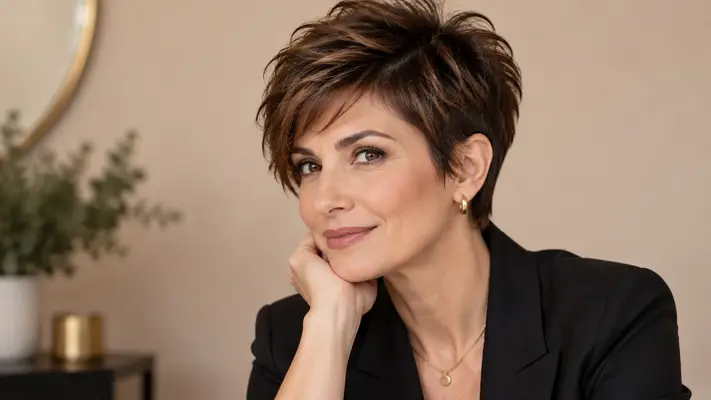
You’ve scrolled past a hundred haircut photos and still can’t picture yourself with short hair. That fear stops more women from trying a pixie than any bad salon experience ever could.
Here’s the truth nobody tells you at the chair: the right pixie isn’t about being brave. It’s about matching the cut to your face, your hair texture, and your actual morning routine. Get that match right and a pixie can look younger, sharper, and lower-maintenance than anything you’ve worn in years.
This guide walks through the pixie styles worth asking your stylist for in 2026, who each one flatters, and how to keep it looking intentional instead of accidental.
Why Pixie Haircuts Are Having a Real Moment Again
Short hair used to carry a stigma that it was a “give up” haircut. That reputation is gone.
Search interest in pixie haircuts for women climbs every spring, and stylists report more first-time clients under 35 asking for one alongside their usual over-50 crowd. The style has shaken off its dated image completely.
A few reasons this cut keeps coming back:
- Heat styling fatigue. Fewer women want to spend 20 minutes with a flat iron every morning.
- Texture-friendly cutting techniques now work with curly and wavy hair instead of fighting it.
- Celebrity visibility keeps reintroducing the cut to new audiences every few years.
- Grey hair confidence has made short grey and silver pixies a genuine trend, not a fallback.
Finding Your Pixie: Match the Cut to Your Face Shape
A pixie sits close to the face, so face shape matters more here than with almost any other haircut.
Round or Fat Faces
Height on top and shorter sides create the illusion of length. Ask for a longer pixie with volume through the crown rather than a cut that hugs the head evenly all around.
Oval Faces
Almost every pixie style works here, from extremely short pixie haircuts to a longer, shaggy version. This is the shape stylists love because there’s little room for error.
Square Faces
Soft, textured layers around the jaw take the edge off strong angles. A blunt, geometric pixie usually fights the face shape instead of working with it.
Pixie Haircuts by Hair Type
Not every pixie is cut the same way, and hair type changes the technique more than most people expect.
Fine or Thin Hair
Fine hair pixies need weight removed strategically, not all over. A short pixie with a slightly longer top and micro-layers creates the appearance of thickness that fine strands can’t fake on their own.
Thick Hair
Thick hair pixie cuts often need heavy thinning at the sides to avoid a triangular, helmet-like shape. Texturizing shears do more work here than a regular scissor cut.
Curly or Wavy Hair
A pixie for curly hair should be cut curl-by-curl, dry, so each curl lands where it naturally wants to fall. Cutting curly hair wet and straight almost always leads to disappointment once it dries.
7 Pixie Styles Worth Requesting in 2026
| Style | Best For | Maintenance Level |
| Classic pixie | Oval, heart faces | Low |
| Long pixie / pixie bob | Growing out short hair | Medium |
| Textured shaggy pixie | Thick or wavy hair | Low |
| Undercut pixie | Fine hair needing edge | Medium |
| Curly pixie | Naturally curly hair | Low |
| Grey or silver pixie | Mature, over-50 clients | Medium |
| Spiky pixie | Round faces wanting height | Medium-High |
Looking at this table, the pattern is clear: the lowest-maintenance pixies are the ones that lean into natural texture instead of fighting it with daily styling.
Pixie Haircuts for Women Over 50, 60, and 70
Age-specific searches for this cut are enormous, and for good reason. A well-cut pixie can soften the jawline, work beautifully with glasses, and handle thinning hair better than most longer styles.
Stylists working with older clients usually recommend:
- Keeping some length on top for styling flexibility as hair thins with age.
- Avoiding an overly blunt fringe, which can look harsh against mature skin.
- Adding soft layers around the ears to frame glasses instead of competing with them.
- Choosing a slightly longer nape if the client wears earrings or scarves often.
Women over 70 in particular tend to do well with a rounder, softer pixie shape rather than sharp, geometric lines.
Growing Out a Pixie Without the Awkward Stage
The in-between phase scares people out of ever trying a pixie in the first place.
A few things genuinely help:
- Get a trim every 5-6 weeks during the grow-out, even though it feels backward.
- Ask for a “pixie bob” shape around month three to bridge the awkward length.
- Use texturizing products rather than smoothing ones, since flyaways look worse when hair is flattened.
- Try clip-in pieces for special occasions if length is uneven at the crown.
Styling Products That Actually Work on Short Hair
Most short hair looks tired by 3 p.m. because of the wrong product choice, not bad cutting.
A lightweight paste or clay works better than gel for daytime texture. Save stronger hold products for spiky or undercut styles that need real staying power. Dry shampoo at the roots on day two extends a pixie’s life more than any other single product.
Frequently Asked Questions
How often do pixie haircuts need to be trimmed?
Most pixie cuts need a trim every 4 to 6 weeks to keep the shape sharp, since short hair grows out visibly faster than longer styles.
Do pixie haircuts work for round or fat faces?
Yes, as long as the cut adds height at the crown and avoids width at the sides, which visually elongates a rounder face shape.
Can I get a pixie haircut with curly hair?
Absolutely, and curly pixies often need less daily styling than straight ones because the curl pattern does the work naturally when cut correctly.
Are pixie haircuts good for thin or fine hair?
Yes, a well-layered pixie is one of the few cuts that can make fine hair look genuinely thicker by removing bulk in the right places instead of everywhere.
What is the difference between a pixie and a pixie bob?
A standard pixie sits close to the head, while a pixie bob leaves more length around the sides and back, making it a softer transition style.
Do pixie cuts suit women over 60?
Many stylists consider it one of the most flattering options for this age group, especially when it’s cut to work with glasses and thinning hair.
Will a pixie haircut make my hair look thinner?
Only if it’s cut incorrectly. A skilled stylist removes weight strategically so thin areas get more volume, not less.
Conclusion
A pixie only fails when it’s copied straight from a photo without adjusting for face shape, hair texture, and how much time you’re honestly willing to spend styling it. Bring a stylist your hair type and your real morning routine, not just a screenshot, and this cut earns its comeback every single time.