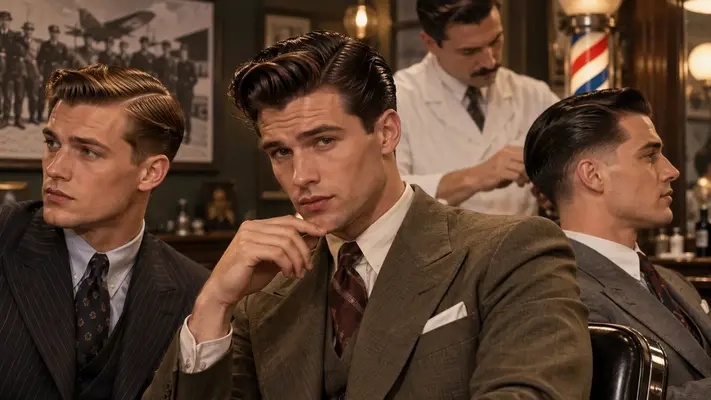
Walk into most barbershops today and ask for a “vintage cut,” and there’s a good chance the barber reaches straight back to the 1940s. That decade didn’t just survive a world war — it left behind some of the sharpest, most wearable haircuts in menswear history.
This guide breaks down exactly what made a mens haircut 1940s style work, how to get one at your next appointment, and which version fits your face, your job, and your patience for daily styling. By the end, you’ll know the real vocabulary barbers use, not just the movie-poster version of the look.
Why the 1940s Haircut Still Works in 2026
Military regulations shaped almost everything about grooming in the 1940s. Short back and sides weren’t a trend — they were a requirement for millions of men in uniform, and that requirement quietly rewired what “normal” hair looked like for an entire generation.
Civilians followed the same silhouette because barbers only really knew one language: clean, tapered, controlled. Walk-in shops in that era didn’t have twenty different menu options like modern salons do. You got a taper, a part, and maybe a wave if your hair allowed it.
That discipline is exactly why the style ages so well now. It was never designed to chase a trend cycle, so it never really goes out of style the way mullets or curtain fringes eventually did.
Modern barbers describe it as “low maintenance with maximum polish.” You get structure without needing fifteen products, a diffuser, or twenty minutes in front of the mirror every single morning.
There’s also a practical career angle. Because the cut reads as neat and deliberate rather than trendy, it tends to age well across job interviews, weddings, and any setting where you want to look put-together without looking like you tried too hard.
Core Features of a Classic 1940s Men’s Haircut
Before booking anything, it helps to know the anatomy of the look. Every authentic 1940s cut shares a handful of traits, even when the finishing style on top changes from man to man.
Short, Tapered Sides
Sides were kept tight, usually cut with a short scissor-over-comb technique or hand clippers. There was no fade in the modern gradient sense — just a clean, gradual shortening toward the ear and down into the neckline.
This matters if you’re bringing a reference photo into a modern shop, because a lot of barbers will default to a skin fade unless you specifically say otherwise. A true period taper is softer and less dramatic than what’s popular right now.
Length on Top for Movement
Unlike a buzzcut, the top carried enough length — usually somewhere between two and four inches — to comb, part, or slick back into shape. This is where almost all the personality of the cut actually lived.
Men with thicker or wavier hair often kept a little extra length here, since it gave the pomade something to grip and hold through a long workday.
A Defined, Deliberate Part
Almost every version of the style featured a hard side part, often cut directly into the hairline with clippers rather than just combed in each morning. Barbers at the time called this a “razor part,” and it’s still requested by that exact name in modern shops.
A cut-in part saves you styling time because you’re not fighting your natural hairline every single day trying to recreate the same line freehand.
Pomade-Ready Finish
Hair products in the 1940s were thick and oil-based, nothing like the water-based gels most people reach for now. They gave strong shine and long hold without the crunchy, stiff texture that modern gel can leave behind.
This oily finish is a big part of why the look reads as authentically vintage in photos rather than just “short hair with a part.” Product choice really does change the entire final impression.
The 7 Most Popular Mens Haircut 1940s Styles
Here’s where things get practical. Each of these had its own identity in the decade, and knowing the names helps you communicate clearly instead of just pointing at a blurry photo.
- The Side Part – The default office and everyday look, clean, symmetrical, and professional in almost any setting.
- The Pompadour – Volume swept up and back off the forehead, popular with musicians, actors, and anyone wanting a bit of drama.
- The Slick Back – Fully combed backward with no part at all, relying on heavy pomade for shine and hold.
- The Ivy League – A shorter, tighter cousin of the modern crew cut, favored heavily by college students and young professionals.
- The Butch Cut – Very short all over, practical, low-maintenance, and closely tied to military grooming standards.
- The Quiff – A rolled, forward-swept front section, borrowed partly from British style and later carried into the rockabilly era.
- The Finger Wave – A textured, wavy top popular among men with naturally curly or coily hair who didn’t want to fight their texture.
Which Style Fits Which Face Shape
Not every cut flatters every face, even within a single decade of style. A little face-shape awareness up front can save you from a haircut you’ll regret every time you look in the mirror for a month.
| Face Shape | Best 1940s Style | Why It Works |
| Round | Pompadour or Quiff | Adds vertical height, breaks up width across the cheeks |
| Square | Side Part | Softens a strong jawline with a clean diagonal line |
| Oval | Slick Back | Oval faces can generally wear almost anything cleanly |
| Long | Ivy League | Shorter top avoids elongating an already long face |
| Heart | Finger Wave | Textured top balances a narrower, pointed chin |
Barbers who specialize in vintage cuts will usually check your hairline and cowlicks before recommending one of these, since natural growth patterns can genuinely fight against a hard, straight part.
How to Ask Your Barber for an Authentic Cut
Vintage requests can get lost in translation fast if you’re not specific about vocabulary. Bring a reference photo, but also use the right terms so the barber isn’t left guessing halfway through.
- Ask for a “scissor-over-comb taper” rather than a numbered clipper guard, since numbered guards weren’t standardized until decades later.
- Specify “hard part” or “razor part” if you want that line cut directly into the skin rather than just combed fresh each morning.
- Mention “low fade into the neckline” only if you’re fine with a modernized version — true 1940s necklines were blocked square, not faded.
- Bring up pomade recommendations before you leave the chair, because the wrong product can undo the whole silhouette by lunchtime.
Styling It at Home
Getting the cut is only half the job. Recreating the finish every single morning is what actually makes the haircut read as 1940s instead of just “short hair with a part.”
- Start with slightly damp hair and a wide-tooth comb to avoid pulling or breaking strands.
- Use a small, oil-based or water-based pomade — a dime-sized amount is genuinely plenty for most head sizes.
- Comb from the crown down and outward, rather than lifting hair upward with a brush first.
- Let it air dry, or use a low-heat blow dryer while combing continuously into shape.
- Reapply a light amount of product midday only if you’re in humid weather or sweating heavily.
Frequently Asked Questions
What is the most iconic 1940s men’s haircut?
The side part is generally considered the defining mens haircut 1940s look, largely because it was worn across social classes, from office clerks to soldiers on weekend leave.
Is a 1940s haircut hard to maintain?
No — it’s actually one of the lower-maintenance vintage styles available. A trim every three to four weeks combined with a small amount of pomade each morning keeps it looking sharp.
Can curly hair pull off a 1940s cut?
Yes, the finger wave style was designed specifically for naturally textured or curly hair, so you don’t need pin-straight hair to wear this era’s signature look.
What products did men use in the 1940s for their hair?
Oil-based pomades were the standard product of choice, giving strong hold and a glossy finish without the flaking that some modern gels tend to cause.
Does this haircut work for a professional office job?
Absolutely. The side part and Ivy League styles were themselves the professional standard of their time, and both still read as polished and buttoned-up today.
How short are the sides in a 1940s cut?
Sides were typically tapered close to the skin near the ear, then gradually blended into a blocked or slightly rounded neckline rather than a sharp modern fade.
Can I ask for a modern fade version of this style?
Yes, many barbers now offer a hybrid — a modern skin fade paired with a vintage top — for men who want the overall silhouette without strict historical accuracy.
Conclusion
A mens haircut 1940s style earns its comeback honestly — it’s sharp, fast to style, and photographs better than most trends invented in the last five years. Bring the right reference photos, use the right vocabulary at the chair, and pick the version that actually flatters your face shape rather than just the one that looked best on a movie poster.