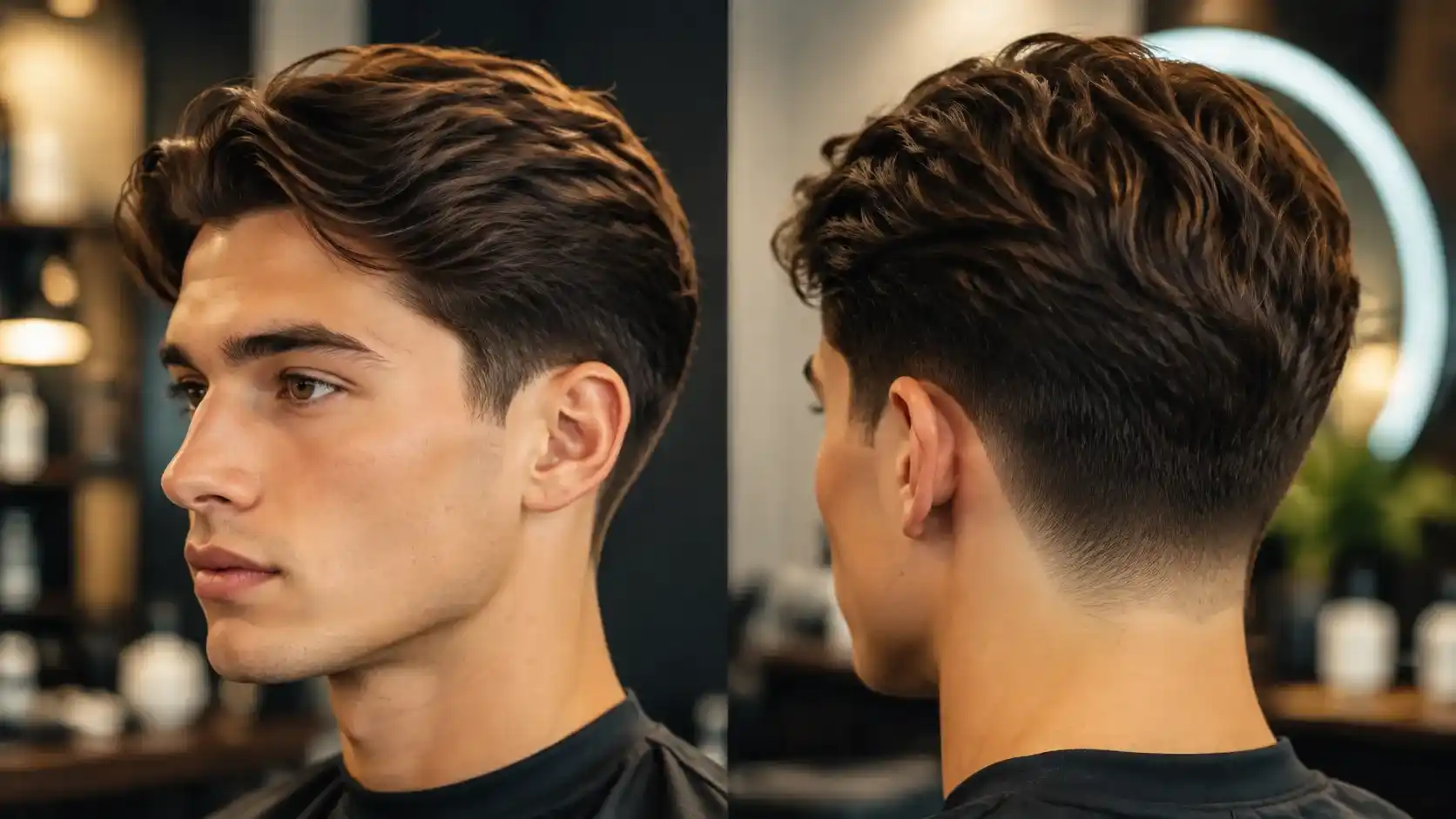
Walking out of a barbershop with a cut that looks nothing like what you pictured is frustrating, and it happens more often than most men admit. A classic taper haircut removes that guesswork because it follows a clear, repeatable formula: short sides, a smooth blend, and natural length left on top. This guide shows you exactly how to describe it, wear it, and keep it sharp between visits.
What Is a Classic Taper Haircut?
A classic taper haircut is a men’s hairstyle where the hair gradually shortens from the top of the head down toward the ears and neckline, with no harsh lines anywhere on the sides. The top stays close to its natural length, while the perimeter tightens into a clean, close finish near the skin.
Barbers sometimes call it a “regular taper” because it was the standard men’s haircut requested in American barbershops for decades before the sharper skin fade became popular. The appeal has never really faded: it suits almost every hair texture, grows out without looking messy, and reads as neat in almost any setting.
In short: if you want a haircut that looks intentional on day one and still looks fine on day twenty, the classic taper haircut is the safest and smartest choice on the menu.
Classic Taper Haircut vs. Fade: What Actually Separates Them
People use “taper” and “fade” interchangeably, but a barber will tell you they are not identical.
- A taper keeps most of its length and tightens gradually, usually staying above the ear and blending softly into the neckline and sideburns.
- A fade drops much lower and faster, often exposing skin near the bottom of the sides and back.
- A taper fade borrows from both, combining a soft taper on top with a faster fade lower down.
| Feature | Classic Taper | Skin Fade |
| Shortest point | Above the skin, close but not bare | Down to bare skin |
| Overall look | Soft, professional, understated | Sharp, high-contrast, bold |
| Growth-out appearance | Neat for 3–4 weeks | Needs a touch-up sooner |
| Best setting | Office, interviews, formal events | Streetwear, trend-driven looks |
| Maintenance level | Low to moderate | Moderate to high |
If your goal is a polished, low-drama look you can wear anywhere, this style beats a fade on versatility every time.
Clipper Guard Sizes for This Style: The Full Chart
Clipper guards are numbered attachments that control how much hair is left after each pass. Barbers blend two or three guard sizes to build a smooth taper, working from the shortest guard near the hairline up to a longer guard higher on the head.
| Guard Number | Length Left | Where It’s Used on a Taper |
| 0 / 0.5 | 1/16 inch (1.5 mm) | Neckline and sideburn edges |
| 1 | 1/8 inch (3 mm) | Lower side taper zone |
| 1.5 | 3/16 inch (5 mm) | Blending point between guards |
| 2 | 1/4 inch (6 mm) | Mid-side transition |
| 3 | 3/8 inch (10 mm) | Upper side, close to the part line |
| 4 | 1/2 inch (13 mm) | Top blend on shorter styles |
According to StyleSeat’s professional barbering guide, moving the taper lever between an open and closed position shifts the cutting length by roughly 1/16 inch, which is exactly how barbers soften the line between guard sizes for a seamless finish.
How to Ask Your Barber for a Classic Taper Haircut
Walking in and saying “give me a taper” is not enough detail, since taper severity varies from barber to barber. Use this simple script instead.
- Say the words “classic taper haircut” so the barber knows you want the traditional, low-contrast version, not a hard fade.
- Point to where you want the taper to start, such as above the ear.
- Tell the barber how much length to leave on top, using a finger-width or a reference photo.
- Mention your face shape or lifestyle needs, like a job that requires a conservative look.
- Ask for scissor-over-comb blending on top if you want texture instead of a flat, clipper-only finish.
A good barber will confirm the guard sizes before starting, which protects you from an overly short result.
Best Face Shapes for This Haircut
One reason this style has stayed popular for generations is that it adapts to nearly any face shape with small adjustments.
- Round face: Ask for more height on top and a slightly higher taper to add visual length.
- Square face: A medium taper with soft, textured top length balances strong jawlines nicely.
- Oval face: Almost any taper length works, since this shape has the most flexibility.
- Long face: Keep the top shorter and let the sides taper gradually to avoid adding extra height.
- Heart-shaped face: A taper with fuller sides softens a narrower chin.
Bring a mirror-selfie or two before your appointment so your barber can adjust the taper height to your bone structure rather than guessing.
This Haircut for Different Hair Types
Hair texture changes how a taper behaves once it grows out, so it helps to plan around yours.
- Straight hair: Holds a crisp taper line the longest and blends the easiest.
- Wavy hair: Adds natural movement on top; ask for slightly more length to let the wave show.
- Curly hair: A taper with shears on top, rather than a flat clipper cut, keeps curl pattern intact.
- Coily hair: Barbers often taper the sides first, then shape the top separately to control shrinkage.
- Thinning hair: A shorter, tighter taper reduces the appearance of visible scalp.
Every hair type can carry this cut well; the only variable is how the barber handles the top section.
Popular Taper Variations
The base technique branches into several well-known styles, so you can pick a version that fits your personality.
- Ivy League taper: Slightly longer top with a side part, favored for business settings.
- Taper with a hard part: A shaved line separates the taper from the top section for extra sharpness.
- Low taper: Starts closer to the ear, keeping most of the length and a subtle look.
- Mid taper: Starts around the temple, a middle-ground choice for most men.
- High taper: Starts near the crown, giving a bolder, more noticeable contrast.
- Taper with a beard blend: Connects the haircut into a trimmed beard for a unified finish.
Each variation still counts as a taper; only the starting point and top length change.
Step-by-Step: How Barbers Cut a Taper
Understanding the process helps you spot a rushed cut before it becomes a bad one.
- Consultation: The barber checks hair growth direction, density, and your desired length on top.
- Sectioning: Hair is clipped or combed into sections to keep the cut organized.
- Clipper work on the sides: The barber starts with the shortest guard at the hairline and works upward.
- Blending: Guards are switched gradually, or the taper lever is used, to remove any visible lines.
- Top cutting: Scissors or a longer guard shape the top length and texture.
- Line-up: The hairline, sideburns, and neckline are cleaned with a trimmer for sharp edges.
- Finishing: Product and a blow-dry or air-dry show the barber the final result before you leave the chair.
A rushed job usually skips step four, which is why visible clipper lines are the most common complaint about a bad taper.
Maintenance Schedule for a Taper
Scalp hair grows at roughly half an inch per month on average, according to research summarized by Medical News Today citing dermatology and trichology sources. That growth rate is the reason a taper needs a predictable touch-up schedule.
| Guard Length Used | Recommended Touch-Up |
| Short taper (guard 0–1) | Every 2–3 weeks |
| Medium taper (guard 1.5–2) | Every 3–4 weeks |
| Longer taper (guard 3+) | Every 4–6 weeks |
Between visits, a beard trimmer with a guard close to your original setting can clean up the neckline without disturbing the main blend. Skipping touch-ups too long causes the taper to grow into an uneven, shapeless bush rather than a longer version of the same style.
Best Styling Products for a Classic Taper Haircut
The top length and texture you retained will determine the product you choose.
- Matte clay: Best for short, textured tops that need hold without shine.
- Pomade: Ideal for a classic, combed finish with a side part.
- Sea salt spray: Adds texture and volume to wavy or curly tops.
- Light cream: Works well on fine, straight hair that needs control without stiffness.
Apply product to towel-dried hair, since wet hair dilutes hold and dry hair absorbs product unevenly.
Common Mistakes to Avoid With a Classic Taper Haircut
- Asking for “a taper” with no detail: Always specify low, mid, or high, and mention “classic taper haircut” by name.
- Skipping regular touch-ups: A taper looks its best fresh; letting it grow out too far removes the blend.
- Using the wrong guard at home: Touching up your own neckline with the wrong guard number creates visible steps.
- Over-styling thin hair: Heavy product on fine hair can flatten the top instead of adding lift.
- Ignoring face shape: A generic taper height rarely flatters every bone structure equally.
Avoiding these five mistakes keeps a classic taper haircut looking sharp for its entire growth cycle, not just on cut day.
Classic Taper Haircut Cost: What to Expect
Pricing varies by region and barber experience. According to SQUIRE’s 2026 State of the Barbershop Industry report, which analyzed more than 13.9 million U.S. appointments, the national average haircut price reached $43 in 2026, with regional averages ranging from about $35 in the Midwest to $45 in the West.
A classic taper haircut typically falls at or slightly below the average ticket price, since it uses standard clipper and scissor work without added design or color services. Expect to add 15–20% for tipping at most U.S. shops.
Frequently Asked Questions
1. What is the difference between a taper and a regular haircut?
A regular haircut can end abruptly at any length, while a classic taper haircut always narrows gradually from top to skin, with no harsh line anywhere on the sides.
2. How often should I get a classic taper haircut?
Most men return every 2 to 4 weeks, depending on how short the guard was and how fast their hair grows.
3. Does a classic taper haircut work for curly hair?
Yes. Curly hair holds a taper well when the barber uses shears on top and clippers only on the sides and neckline.
4. Can I maintain a classic taper haircut at home between barber visits?
You can trim the neckline and sideburns with a matching guard, but full blending on the sides is best left to a professional to avoid visible lines.
5. Is a classic taper haircut good for a job interview?
Yes. Its clean, understated finish is one of the most widely accepted professional hairstyles for interviews, offices, and formal events.
6. What is the difference between a low, mid, and high classic taper haircut?
The difference is where the taper begins: low starts near the ear, mid starts at the temple, and high starts near the crown, with each option giving a different level of contrast.
Final Thoughts
A classic taper haircut earns its reputation the honest way: it looks sharp on cut day, ages gracefully between appointments, and fits nearly every face shape, hair type, and dress code without a second thought.