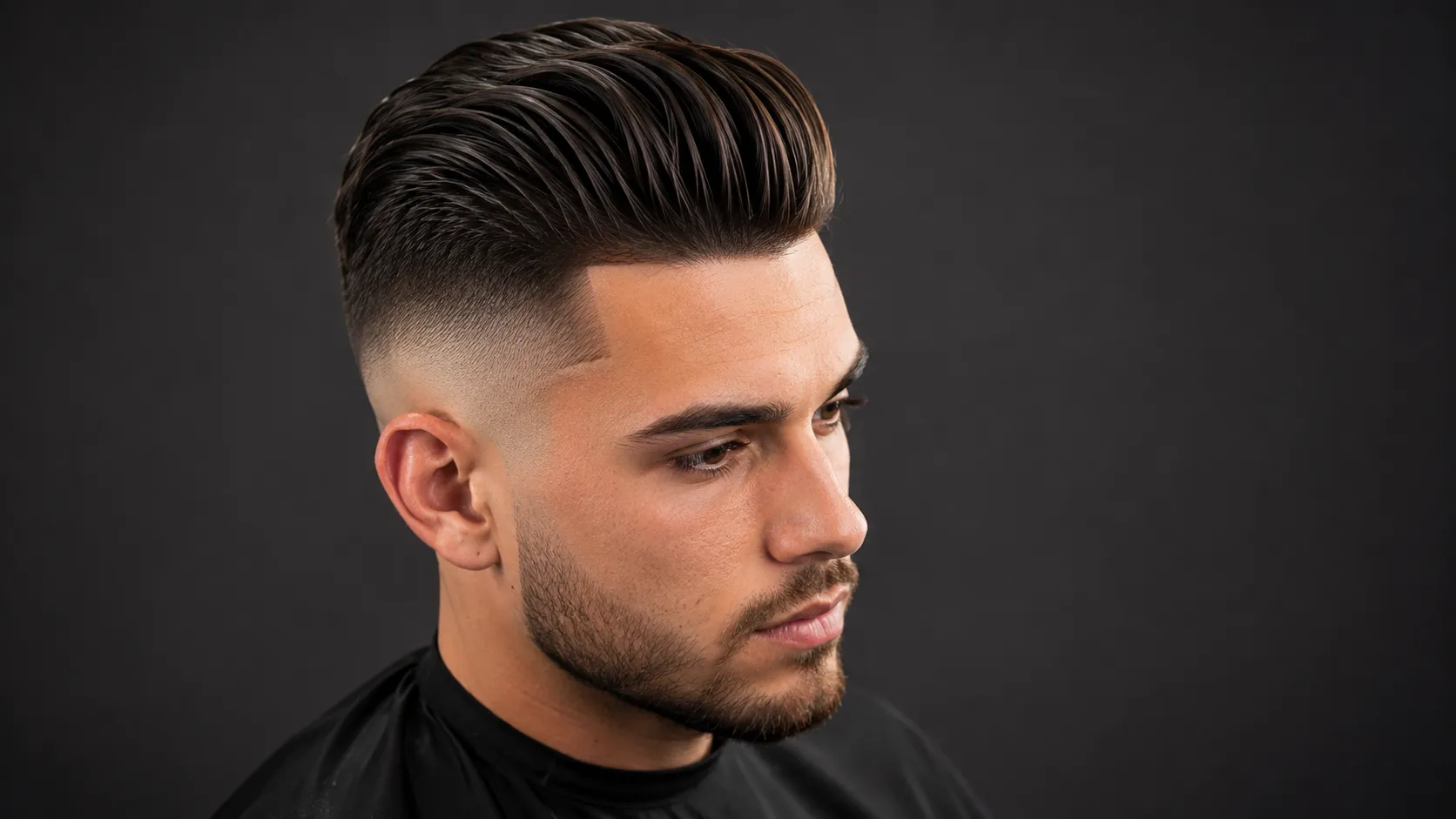
Walk into the wrong barbershop and ask for a cholo haircut, and you’ll walk out with a bad buzz cut and zero shape. That’s the problem nobody talks about.
This guide fixes that. You’ll get the exact terminology to use, the styles that actually work for your hair type, and the maintenance tricks that keep the cut sharp between visits.
What Is a Cholo Haircut, Really?
The cholo haircut traces back to Chicano and Pachuco street culture in Southern California, evolving through decades of barbershop tradition. It’s built around clean lines, tight fades, and a slicked or combed finish that reads as sharp and deliberate.
The style isn’t one single cut. It’s a family of looks that share a few core traits.
The Core Elements
Every authentic version of this cut shares a handful of building blocks that barbers rely on.
- Short, tapered sides with a skin or low fade
- Slightly longer hair on top, usually combed straight back or to the side
- Crisp, razor-sharp line-ups around the hairline
- Minimal layering for a clean, uniform look
Skip any of these and the cut starts to lose its identity. Barbers who specialize in this style treat the line-up as the most important part of the whole process.
Popular Cholo Haircut Variations in 2026
Trends shift every year, but a few variations have held steady because they simply work on most face shapes and hair textures.
1. The Classic Slick Back
This is the most recognizable version. Hair on top gets combed straight back with a light pomade, while the sides stay tight and faded.
It photographs well, holds up through a full workday, and needs almost no daily styling once you learn the comb technique.
2. The Side Part Fade
A sharper, more modern take. The barber cuts a hard part into the side, then blends it into a mid or low fade.
This version tends to suit rounder faces better because the hard line adds visual angles.
3. The Buzz with Design
Some go bolder, adding a shaved design or pattern into the fade itself. Stars, lightning bolts, and geometric lines are common requests in 2026 shops.
This style demands more upkeep since the design grows out within two to three weeks.
Cholo Haircut Style Comparison
| Style | Best For | Maintenance Level | Product Needed |
| Classic Slick Back | Straight to wavy hair | Medium | Pomade |
| Side Part Fade | Round or square faces | Medium-High | Gel or pomade |
| Buzz with Design | Bold personalities | High | Clippers touch-up |
| Low Taper Only | Professional settings | Low | Light wax |
The data here is simple but useful. If you’re new to the style and don’t want weekly barber visits, the classic slick back or a low taper gives you the look without constant upkeep.
How to Ask Your Barber for the Right Cut
Barbershop miscommunication ruins more haircuts than bad technique does. Bring specifics, not vague requests.
Words That Actually Work
Use these phrases instead of just saying “cholo haircut” and hoping for the best.
- “Skin fade on the sides, please”
- “Keep the top long enough to comb back”
- “Sharp line-up around the hairline and temples”
- “No layering on top, keep it uniform length”
Bring a reference photo too. Barbers work faster and more accurately when they can see the exact silhouette you want instead of guessing from description alone.
Styling and Maintenance Tips
Getting the cut is only half the job. Keeping it sharp between appointments takes a little routine.
Daily Styling Routine
A short, consistent routine keeps the shape intact and prevents the top from looking flat or greasy.
- Apply a dime-sized amount of pomade to damp hair
- Comb straight back or to your preferred side while hair is still slightly wet
- Let it air dry for a natural hold, or blow-dry on low heat for extra volume
- Touch up flyaways with a fine-tooth comb midday if needed
Between-Haircut Maintenance
Fades grow out fastest, so plan your barber visits around that timeline rather than waiting until it looks messy.
- Schedule a fade touch-up every 2 to 3 weeks
- Trim the top every 5 to 6 weeks to maintain shape
- Use a beard trimmer at home for minor neckline cleanup only
- Avoid cutting your own line-up unless you’re experienced
Face Shape Considerations
Not every version flatters every face equally, and a good barber will factor this in before picking up the clippers.
Round faces generally look sharper with a hard side part, since the straight line breaks up the curve of the jaw. Square faces can usually wear the classic slick back without adjustment, since the strong jawline already provides definition. Oval and oblong faces have the most flexibility and can experiment with nearly any variation.
Frequently Asked Questions
What products work best for a cholo haircut?
Water-based pomade gives the most authentic slicked finish and washes out easily. Heavier oil-based products offer stronger hold but can look greasy under bright light, so most barbers recommend starting with water-based first.
How often should I get the fade touched up?
Most people need a touch-up every two to three weeks. Fades grow out faster than the top, so the sides start looking uneven well before the length on top changes noticeably.
Can I get this haircut with curly or coily hair?
Yes, though the top section will need extra product and possibly a light blow-dry to lay flat for the slicked-back look. A barber experienced with textured hair can adjust the technique accordingly.
Is a skin fade required for this style?
Not always. A low or mid fade works just as well and tends to grow out more gracefully, giving you a few extra days before you need a touch-up.
What’s the difference between this and a regular fade haircut?
The line-up and the slicked or combed top set it apart. A standard fade often pairs with textured or messy styling on top, while this look stays clean and uniform.
Does this haircut work in professional workplaces?
The low taper and classic slick back versions read as polished and work-appropriate in most offices. Bold designs or very high skin fades may draw more attention depending on your workplace culture.
How long does the top need to be for slicking back?
Around two to three inches usually gives enough length to comb back smoothly without looking flat or sparse once it dries.
Conclusion
The best version of this cut comes down to matching the style to your hair type, your face shape, and how much upkeep you’re actually willing to commit to. Start with the classic slick back if you’re unsure, since it’s the most forgiving and easiest to maintain.
Bring specific language and a reference photo to your next barbershop visit, and you’ll walk out with a cut that actually matches what you asked for.