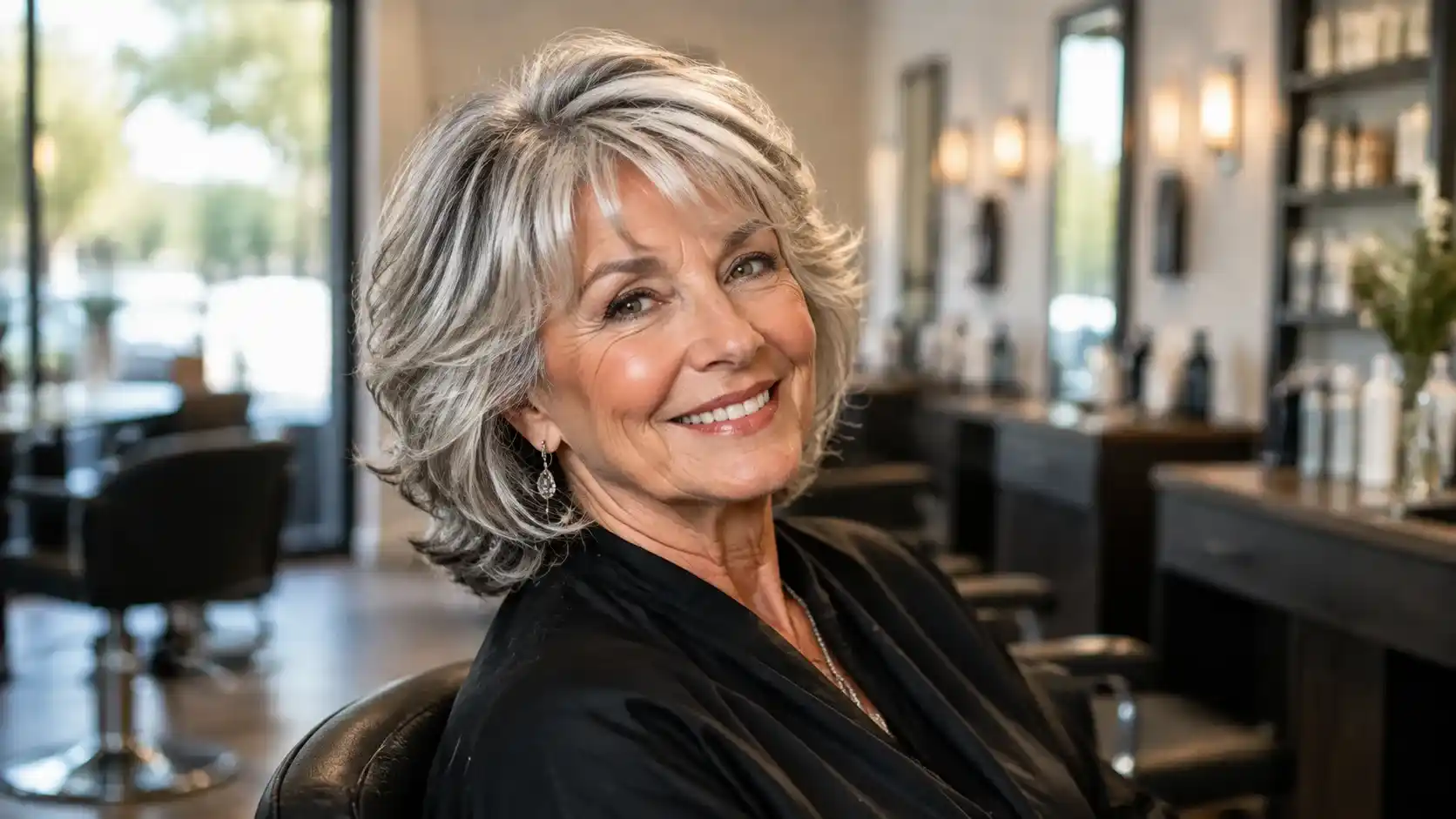
Your hairstylist has been quietly steering you toward the wrong cut for years, and nobody told you. If your hair feels flat, tired, or stuck in a decade that’s long gone, the right haircut can shave off ten years without a single product or procedure.
This guide breaks down the exact haircuts stylists actually recommend for older women right now, why they work with changing hair texture and face shape, and how to ask for them in the chair so you never leave the salon disappointed again.
Why Your Haircut Matters More After 50
Hair changes with age in ways most women aren’t warned about. Strands get finer, volume drops at the crown, and grey growth patterns shift how color and cut interact with your face.
A haircut that worked at 35 can drag your features down at 55 simply because gravity and texture have changed the rules. Choosing a cut that respects your current hair, not your hair from twenty years ago, makes the single biggest visual difference of any beauty change you can make.
The Real Problem With “Age-Appropriate” Advice
Most articles online recycle the same tired list without explaining why a style works. That leaves you guessing whether a cut suits your face shape, your hair density, or your lifestyle at all.
Every haircut below comes with the reasoning behind it, so you can adapt the idea to your own features instead of copying a photo blindly.
The 7 Best Haircuts for Older Women in 2026
1. The Textured Pixie
A pixie with soft, choppy layers on top gives instant lift at the crown, which is exactly where thinning hair shows first. It also draws attention straight to the eyes and cheekbones.
Ask your stylist for “point cutting” on the ends rather than a blunt razor cut. This keeps the shape soft instead of severe, which flatters mature skin far better.
2. The Long Layered Bob
This cut sits just above or at the shoulder and uses long layers to add movement without sacrificing length. It’s one of the most requested styles because it works on nearly every hair type.
- Softens a square or angular jawline
- Adds volume without daily styling effort
- Grows out gracefully between salon visits
3. The Shaggy Bob (Shag-Bob)
The shag-bob combines choppy, face-framing layers with a bob’s easy length. It creates natural texture that hides fine or thinning hair better than a smooth, sleek cut ever could.
4. The Side-Swept Pixie Bob
A slightly longer pixie that sweeps to one side softens strong features and covers a higher forehead if that’s a concern. It photographs beautifully and needs minimal daily maintenance.
5. The Curly Shag
For women with natural curl or wave, cutting a shag shape lets the curl pattern do the work instead of fighting it. Layers release weight so curls bounce rather than clump into a triangle shape.
6. The Classic Chin-Length Bob
A blunt or slightly angled bob at chin length is one of the most reliable anti-aging cuts because it tightens the jawline visually and frames the face symmetrically.
7. The Feathered Crop
Similar to a pixie but slightly longer on top, the feathered crop uses soft, wispy layers around the face. It suits women who want short hair without looking severe or overly cropped.
Matching Your Haircut to Your Face Shape
| Face Shape | Best Haircut Match | Why It Works |
| Round | Textured Pixie | Adds height, elongates the face |
| Square | Long Layered Bob | Softens angular jawline edges |
| Oval | Almost any style | Balanced proportions suit most cuts |
| Heart | Chin-Length Bob | Balances a wider forehead |
| Long | Curly Shag | Adds width and horizontal movement |
The data above reflects patterns most stylists confirm in the chair every week, not rigid rules. Face shape is a starting point, not a final verdict, since hair texture and density change the outcome just as much.
Haircuts to Approach With Caution
Overly Long, Straight Styles
Very long, one-length hair past the shoulders can pull the face down and emphasize sagging skin around the jaw. It also tends to look thin and flat once volume naturally decreases with age.
Blunt, Heavy Bangs
Thick, straight-across bangs can look harsh against softer, more mature facial contours. A side-swept or wispy fringe almost always reads as more flattering and current.
Styling Tips That Make Any Cut Look Better
- Use a volumizing mousse at the roots before blow-drying upside down
- Ask for a color that includes lowlights, not just grey coverage, for dimension
- Get a trim every 6 to 8 weeks to keep shape and prevent split, thinning-looking ends
- Avoid heavy serums that weigh down finer strands
Frequently Asked Questions
What is the most flattering haircut for a 60-year-old woman?
A long layered bob or textured pixie tends to work best because both add volume at the crown while softening facial lines, which are the two biggest concerns for most women in their 60s.
Should older women avoid long hair completely?
Not necessarily. Long hair works well past 50 as long as it includes layers and movement; the mistake is wearing it completely straight and one-length, which can drag features downward.
How often should older women get their hair trimmed?
Every 6 to 8 weeks keeps shorter cuts sharp and prevents longer styles from looking stringy or thin, since fine, mature hair shows split ends faster than thicker hair.
Do short haircuts make you look older?
A poorly shaped short cut can, but a well-layered pixie or crop actually looks younger because it lifts the face and draws focus toward the eyes rather than emphasizing jaw or neck skin.
What haircut hides thinning hair best?
Shaggy, layered cuts like the shag-bob or curly shag hide thinning best because textured layers create the illusion of density that a single, smooth length cannot replicate.
Is grey hair better with short or long styles?
Grey hair tends to photograph beautifully in shorter, textured cuts because the cooler tone catches light differently, though long layered styles with lowlights work just as well for dimension.
How do I ask my stylist for these cuts without a photo?
Describe the goal, not just the shape: mention “volume at the crown,” “soft face-framing layers,” or “movement instead of blunt ends,” and any experienced stylist will translate that into the right technique for your hair.
Conclusion
The best haircut for older women isn’t a single style pulled from a magazine; it’s the cut that respects your current hair texture, face shape, and how much time you actually want to spend styling it each morning.
Start with a textured pixie or long layered bob if you’re unsure, since both are the safest, most universally flattering options stylists return to again and again.