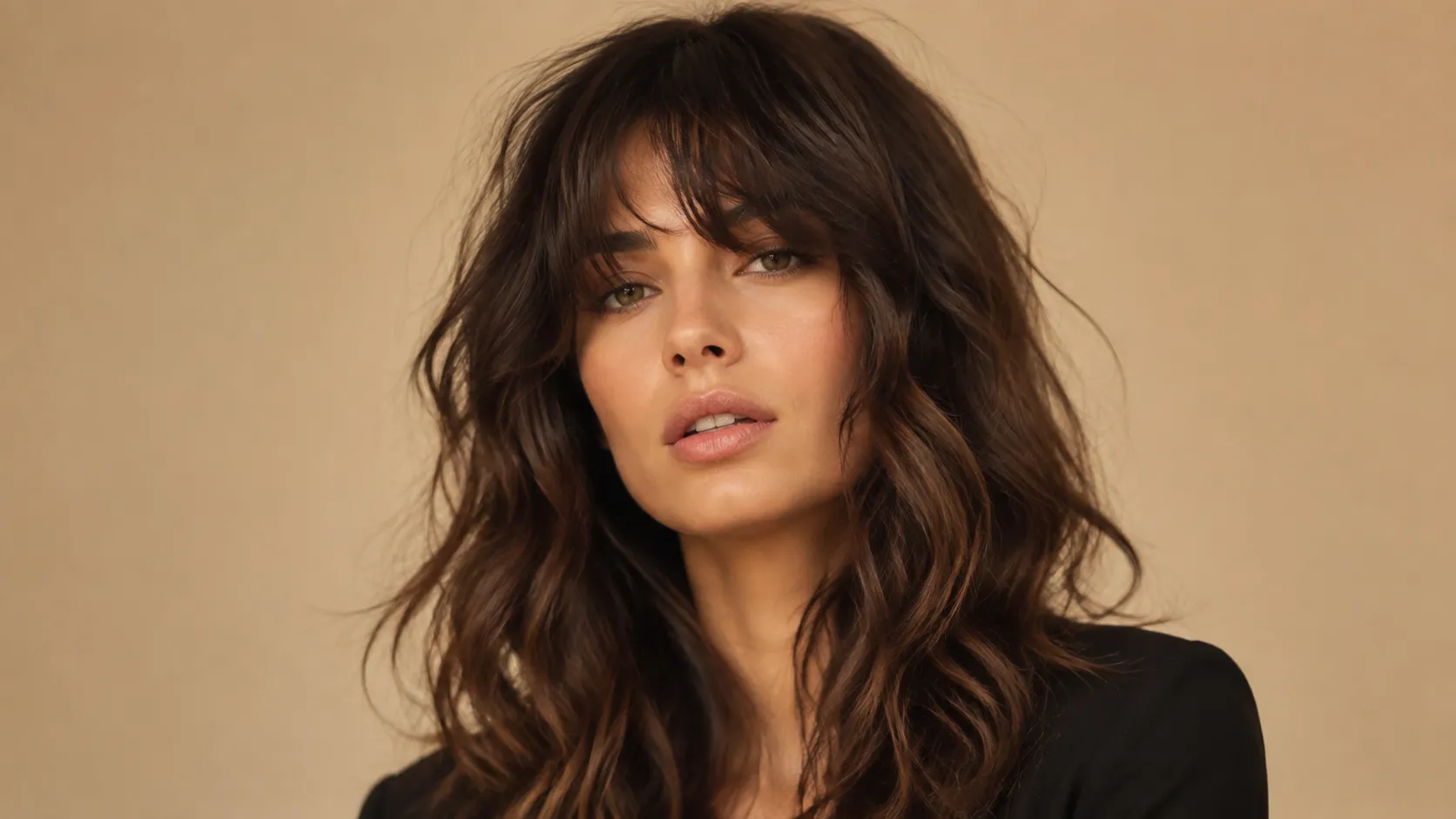
Your hairstylist just said “shag” and you nodded like you knew exactly what that meant. You didn’t. Nobody blames you—this cut has changed so much since the 70s that even seasoned stylists argue about what counts anymore.
Here’s the good news: by the end of this guide, you’ll know exactly which version of the shag haircut fits your face, your lifestyle, and your patience level with a blow dryer.
What Is a Shag Haircut, Really?
A shag haircut is built on heavy layering, choppy ends, and volume that starts right at the crown. It’s less about one fixed shape and more about an attitude—undone, textured, effortlessly messy.
Unlike a standard layered cut, the shag intentionally breaks the “rules” of blending. Stylists often leave visible steps between layers instead of smoothing everything into one soft cascade.
That’s exactly why it looks so different on every person who wears it. Your natural texture, your face shape, and your part all shape the final result.
The Core Elements That Define It
Every real shag haircut shares a few non-negotiable traits:
- Heavy layering starting high on the crown
- Face-framing pieces cut shorter around the cheeks
- Choppy, textured ends instead of blunt lines
- Built-in volume without heavy styling
- Optional fringe that blends into the layers
A Quick History: Why the 70s Shag Haircut Still Matters
The original 70s shag haircut exploded thanks to rock stars and rebellious energy—think shaggy, undone hair that looked like you rolled out of bed and still owned the room. It was messy on purpose, and that was the entire point.
What’s fascinating is how little the core concept has changed. Modern stylists still reference those original silhouettes when building today’s cuts.
The difference now is precision. Today’s shag haircut uses the same volume and movement but with far more intentional shaping underneath.
Popular Shag Haircut Styles Compared
Picking a shag isn’t a one-size-fits-all decision. Length, texture, and fringe all change the entire personality of the cut.
| Style | Best For | Maintenance Level | Signature Feature |
| Long shag haircut | Fine to medium hair | Medium | Soft layers, subtle volume |
| Medium shag haircut | Most face shapes | Medium | Balanced movement + length |
| Short shag haircut | Bold, low-maintenance lovers | Low | Maximum texture, edgy shape |
| Curly shag haircut | Natural curls/waves | Low-Medium | Layers enhance curl pattern |
| Modern shag haircut | Trend-focused clients | Medium-High | Sharper, blended layers |
| 70s shag haircut | Vintage/retro fans | High | Heavy fringe, dramatic volume |
A quick read of this table shows something interesting: the shorter the cut, the less daily effort it demands. That’s a big reason the short shag haircut has surged among busy professionals.
Long Shag Haircut: Soft Drama Without the Bulk
The long shag haircut women request most often keeps length past the shoulders while removing bulk through internal layering. It reads as romantic rather than rock-and-roll.
A long shag haircut with bangs takes this even further, framing the face while keeping the flowing length intact. It’s arguably the most requested variation in salons right now.
Medium Shag Haircut: The Sweet Spot
If you want maximum versatility, the medium shag haircut is your safest bet. It sits between low-maintenance and high-impact styling.
A medium shag haircut with bangs adds instant personality without committing to a full fringe overhaul. Many first-timers start here before going shorter or longer.
Short Shag Haircut: Bold and Unapologetic
This is where the shag haircut gets fearless. Short lengths amplify every layer, creating a spiky, textured silhouette that photographs beautifully.
It works especially well for anyone tired of daily styling routines. Texture spray and fingers often replace an entire styling toolkit.
Shag Haircut Women vs. Shag Haircut Men: What Actually Differs
The shag haircut women choose typically leans into longer layers and softer face-framing pieces. The shag haircut men request usually keeps things tighter, with more emphasis on the crown and less on flowing length.
That said, the line has blurred significantly in recent years.
Key Differences at a Glance
- Length distribution: Women’s versions often keep more overall length
- Fringe styling: Men’s shag haircuts frequently skip bangs entirely
- Texture emphasis: Both genders now favor heavy texture over sleekness
- Product use: Matte pastes dominate men’s styling; texture sprays dominate women’s
Texture Matters: Curly, Wavy, and Soft Shag Haircuts
Not every shag haircut behaves the same way once you leave the salon chair. Your natural texture changes everything about how it falls.
Curly Shag Haircut
A curly shag haircut lets natural curl patterns do most of the work. Layers here need to be cut dry, or curls can bounce up shorter than expected once they set.
Wavy Shag Haircut
The wavy shag haircut is often called the “easiest win” by stylists. Waves naturally create the tousled look this cut is famous for, with minimal styling effort.
Soft Shag Haircut
A soft shag haircut uses gentler, more blended layers instead of choppy contrast. It’s ideal for workplaces or anyone wanting a quieter, more polished version of the trend.
The Chic Shag Haircut: Elevated and Editorial
A chic shag haircut takes the classic shape and refines it with precision cutting. Think glossy finishes, controlled layers, and a red-carpet feel rather than rock-concert energy.
This version pairs beautifully with modern shag haircut women styling trends seen across fashion editorials this year. It proves the shag can be polished without losing its rebellious core.
Styling Tips That Actually Work
Making the cut correctly is only half the fight. Styling makes or breaks how a shag haircut looks day to day.
- Apply a texturizing spray to damp hair before blow-drying
- Use a round brush only at the roots for lift
- Scrunch mid-lengths and ends for natural movement
- Finish with a light-hold paste, not heavy gel
- Avoid over-brushing, which flattens the signature texture
FAQs
What is a shag haircut best suited for?
It suits almost every face shape because the heavy layering can be adjusted to soften angles or add width where needed.
Does a shag haircut work on thin hair?
Yes, and it’s actually one of the best cuts for thin hair. The layering creates the illusion of thickness without heavy products.
How often do I need trims for a modern shag haircut?
Every 8 to 10 weeks keeps the layers sharp. Waiting longer causes the shape to lose its defined texture.
Can someone with straight hair obtain a shag haircut?
Absolutely. Straight hair actually shows off the layered haircut’s sharp lines and choppy ends more clearly than wavy hair does.
Is the shag haircut high-maintenance?
It depends on length. Short versions need almost no daily effort, while long shag haircuts require more blow-drying time to build volume.
What’s the difference between a shag and a regular layered cut?
A shag uses more dramatic, choppy layering starting higher on the crown, while standard layered cuts blend more smoothly.
Will a shag haircut suit round faces?
Yes, especially with longer face-framing layers that create length and definition instead of adding width.
Conclusion
The shag haircut isn’t a trend you outgrow in a season—it’s a shape that bends around your hair type, your face, and your patience for styling. Whether you land on a curly shag haircut or go bold with a short shag haircut, the real win is choosing the version that matches how you actually live, not just how it looks in a photo.