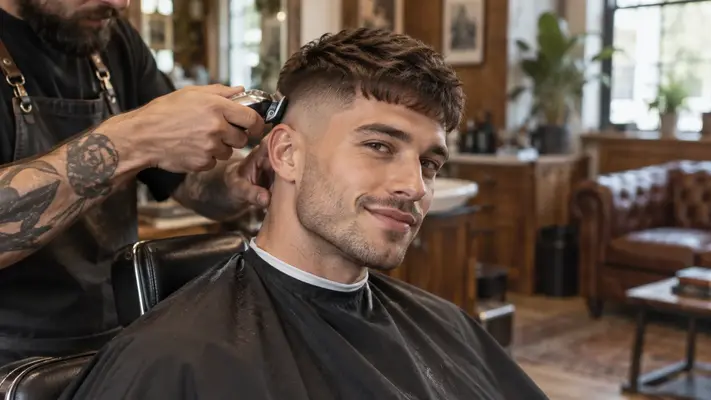
Your hairline hasn’t changed, but your barber’s technique should. Most guys in their 20s wear the same haircut they had in high school, and it’s quietly aging them by years.
This guide breaks down exactly which 20s male hairstyles work right now, why they work, and how to ask for them without getting a confused stare from your barber.
Why Your 20s Hairstyle Choice Actually Matters
Your 20s are the decade where your face shape finally settles and your hair texture stops changing. That makes this the best window to lock in a signature look.
A dated cut sends a signal before you even speak. Recruiters, dates, and clients all form a snap judgment based on grooming within the first few seconds.
The good news? Fixing this doesn’t require a dramatic transformation. Small adjustments to length, texture, and fade placement make a massive visual difference.
The Cost of Getting It Wrong
A mismatched haircut can make a lean face look gaunt or a round face look wider than it is. Barbers see this mistake constantly with clients who never update their reference photos.
- Wearing hair too long without a shape plan
- Copying a celebrity cut that doesn’t match your face
- Ignoring hair density and going for styles that need volume you don’t have
- Sticking with a “safe” buzz cut purely out of habit
The 7 Best 20s Male Hairstyles Right Now
Each of these styles works across different hair types, face shapes, and lifestyles. Pick the one that matches your daily routine, not just your Pinterest board.
1. The Textured Crop
This is the low-maintenance king of 20s male hairstyles. Short on the sides, slightly longer and choppy on top, styled with a matte paste for texture.
It works with thick, wavy, or straight hair and needs less than five minutes to style each morning.
2. The Modern Quiff
A quiff adds height and volume, which flatters guys with rounder or shorter face shapes. Pair it with a mid-fade for a sharper, more current finish than the classic pompadour.
- Best for: thick to medium hair density
- Styling time: 5-8 minutes
- Product needed: blow dryer plus a strong-hold cream
3. The Slick Back Undercut
This style pairs a disconnected undercut with longer hair on top, slicked straight back. It reads as polished and confident, making it a favorite for young professionals in client-facing roles.
4. Curly Crop with Fade
Guys with natural curls no longer need to fight their texture. Barbers now shape curls into a rounded crop on top with a tight fade on the sides, letting the natural pattern do the styling work.
5. The Buzz Cut with Design Line
A classic buzz cut gets a 2026 update with a single sharp line shaved into the side part or temple. It’s still low-maintenance but reads as intentional rather than lazy.
6. Long Top, Short Sides (Modern Mullet-Inspired)
This isn’t your dad’s mullet. Barbers now blend a tapered fade into slightly longer, textured hair on top for a rugged, effortless look popular in creative industries.
7. The French Crop
A French crop features a short fringe with a fade and tight sides. It’s structured enough for the office and relaxed enough for weekends, making it one of the most requested 20s male hairstyles at barbershops today.
Matching Your Hairstyle to Your Face Shape
Picking a cut without considering your face shape is the single biggest mistake young men make. Here’s a quick reference to fix that instantly.
| Face Shape | Best Styles | Styles to Avoid |
| Round | Quiff, French Crop | Buzz cut with no height |
| Square | Textured Crop, Undercut | Overly boxy top styles |
| Oval | Almost anything works | N/A |
| Long | Fringe styles, Curly Crop | Tall quiffs, extra height |
| Diamond | Side-swept crop, Slick Back | Center parts |
The data here matters more than trend charts. A style that dominates Instagram might still clash badly with your bone structure, so use this table as your filter before your next appointment.
How to Talk to Your Barber Like a Pro
Walking in with a vague request like “just make it look good” almost guarantees disappointment. Barbers work off specifics, not vibes.
Bring Reference Photos
Save two or three photos of the exact length and fade type you want. Angles matter, so include a front view and a side view of the style.
Use the Right Numbers
Fades are measured in guard numbers, typically from a 0 to a 4 on the sides. Tell your barber the guard number you want at the bottom and how high you want the fade to blend.
Ask About Maintenance
Some styles need a touch-up every two weeks, while others stretch to five or six. Be honest about how often you’ll realistically visit the shop.
Product Routine for Each Style Type
The right haircut still fails without the right product. Here’s a simple breakdown by hair type.
- Fine hair: lightweight sea salt spray for texture and lift
- Thick hair: matte clay or paste for control without shine
- Curly hair: curl cream plus a light hold gel
- Straight hair: pomade for slick styles, clay for textured looks
Frequently Asked Questions
What is the most popular 20s male hairstyle in 2026?
The textured crop remains the top choice because it works across hair types, needs minimal daily styling, and photographs well for both professional and casual settings.
How often should a man in his 20s get a haircut?
Most stylists recommend every three to four weeks for fades and shorter cuts, while longer textured styles can stretch to five or six weeks between trims.
Does hairstyle really affect how people perceive you at work?
Yes. Grooming studies consistently show that well-maintained hair influences first impressions around competence and professionalism within seconds of meeting someone.
What hairstyle works best for thinning hair in your 20s?
A shorter buzz cut or French crop reduces the visual contrast between thinning areas and fuller sections, making hair loss far less noticeable.
Can curly hair pull off a fade?
Absolutely. A tight fade on the sides paired with shaped curls on top is one of the fastest-growing requests among barbers working with textured hair.
How do I know which face shape I have?
Pull your hair back, look in a mirror, and trace the outline of your face on the glass with a dry-erase marker. Compare the traced shape to round, square, oval, long, or diamond references.
Is it worth paying more for a specialist barber over a walk-in salon?
For detailed fades and textured cuts, yes. Specialist barbers typically have more experience with precision fading, which is the hardest technique to execute well.
Conclusion
Your 20s are the easiest decade to experiment before life gets busier and routines get harder to change. Pick one style from this list, bring the reference photos, and commit to it for at least two full growth cycles before judging the results.
The proper cut will do more than just alter the appearance of your hair. It alters your level of self-assurance while entering a space.