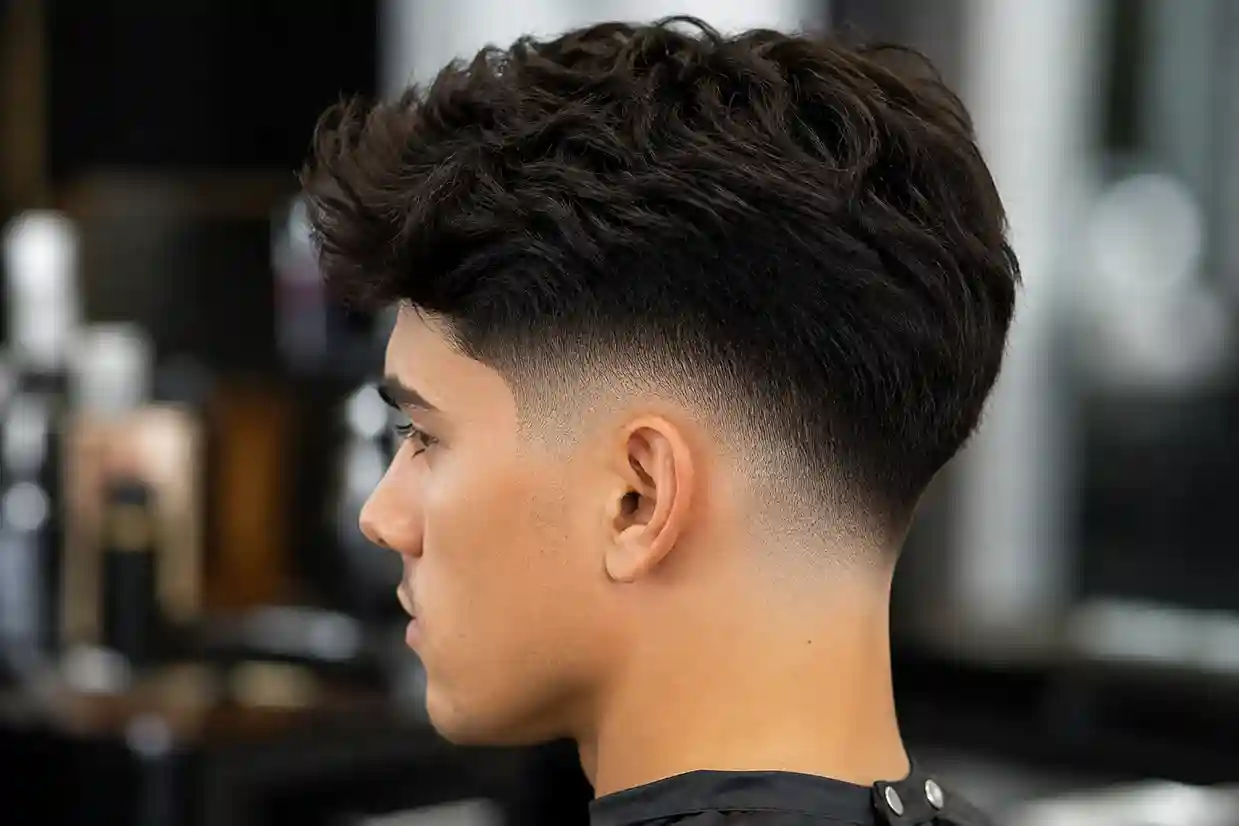
Struggling to explain what you want at the barbershop? Walking out with a fade that looks nothing like the picture you showed? A bad haircut can knock your confidence for weeks. This guide fixes that. You will learn every version of the taper fade haircut, how to ask for it correctly, and how to keep it sharp between visits.
What Is a Taper Fade Haircut?
A taper fade haircut is a cutting technique where the hair gradually shortens from the top down to the skin or a very short length near the ears, neckline, and sideburns. Unlike a full fade, the sides never go completely bare unless you choose that option. The blend stays soft, close, and clean.
This style works because it removes bulk without removing shape. The top stays full and styleable while the sides look neat and controlled. Barbers use clippers with different guard sizes, moving from longer to shorter blades as they work down the head.
Most people search for this cut because it suits almost every hair type, face shape, and age group. It also grows out better than a hard fade, which means fewer trips back to the chair.
History of the Taper Fade Haircut
The history of the taper fade haircut traces back to the American military in the 1940s and 1950s, where short, disciplined sides were required for uniform grooming and hygiene. Barbers on and around army bases refined the technique using hand clippers to blend hair smoothly instead of cutting a blunt line.
By the 1980s and 1990s, hip-hop culture and basketball icons brought the style into mainstream fashion. Barbers began experimenting with low taper fade haircut and high taper fade haircut variations, adding designs, parts, and shape-ups. What started as a practical military cut became a global style statement.
Today, the taper fade sits at the center of modern barbering. It has influenced countless spinoff styles, from the skin fade to the drop fade, and remains one of the most requested cuts worldwide.
The Main Types of Taper Fade Haircuts
Not all fades sit at the same height. Where the fade starts on your head changes the entire look of the cut. Here is a clear breakdown.
| Type | Fade Starts | Best For | Maintenance Level |
| Low taper fade haircut | Just above the ears | Office, formal settings, curly or straight hair | Low |
| Mid taper fade haircut | Above the temple | Balanced, versatile everyday look | Medium |
| High taper fade haircut | Near the top of the head | Bold, edgy, streetwear style | High |
| Lower taper fade haircut | Very close to the neckline | Subtle, conservative appearance | Low |
Understanding this table helps you communicate clearly with your barber instead of pointing at random photos.
Low Taper Fade Haircut
The low taper fade haircut keeps the fade close to the ears and neckline, leaving most of the sides longer. This is the safest, most professional-looking option. A low taper fade haircut men commonly request pairs well with business attire, interviews, and school settings.
It also suits a low taper fade haircut for boys, since it looks neat without appearing too aggressive or grown-up. Parents often choose it because it grows out gracefully and needs fewer touch-ups.
Mid Taper Fade Haircut
The mid taper fade haircut sits in the middle ground. The fade begins around the temple area, giving a balanced contrast between the top and sides. It works with almost any face shape and hairstyle on top, from a textured crop to a slick pompadour.
Barbers often recommend this option for first-time fade clients because it offers noticeable contrast without looking extreme.
High Taper Fade Haircut
The high taper fade haircut starts higher on the head, closer to the crown, creating a sharp and dramatic contrast. This version pairs well with shorter top lengths, spikes, or a textured crop. It suits people who want a bold, confident look and don’t mind more frequent maintenance.
Taper Fade Haircut for Men: Popular Variations
A taper fade haircut men request is rarely just one style. Barbers combine the fade with different top lengths and finishes to create dozens of looks.
- Taper fade with a quiff for volume and height
- Taper fade with a comb-over for a polished, professional finish
- Taper fade with waves for textured, wavy hair on top
- Taper fade with a beard line-up for a fully groomed appearance
- Taper fade with a hard part for added definition
A mens taper fade haircut is popular precisely because it adapts. You can walk into a boardroom or a barbershop lookbook shoot with the same base cut, only the top styling changes.
When booking, a simple haircut low taper fade haircut request combined with your preferred top length gives the barber exactly what they need to work with.
Taper Fade Haircut for Black Men and Textured Hair
A taper fade haircut black men often choose highlights the natural texture and volume of coily or curly hair. Because textured hair holds shape well, a taper fade haircut black men style can support a rounded top, a curly fringe, or a defined afro without losing structure.
The low taper fade haircut black version is especially popular because it frames the face while preserving length and curl pattern on top. Many barbers who specialize in textured hair recommend this combination for its low upkeep and strong shape retention.
A low taper fade haircut black men commonly request also pairs beautifully with sharp hairline designs, part lines, or a simple clean edge-up for extra sharpness.
Taper Fade Haircut for Straight Hair
Straight hair behaves differently under clippers than curly or coily hair, so a low taper fade haircut straight hair version needs careful blending to avoid a choppy transition. Barbers usually use a lower guard on top and take more time gliding the clippers through the blend zone.
This combination looks clean and modern with side-swept fringes, textured crops, or a classic side part. Because straight hair falls flat naturally, the contrast between the faded sides and longer top stands out clearly, making the cut look sharper for longer.
Taper Fade Haircut for Boys and Kids
Parents searching for a boys low taper fade haircut usually want something neat, age-appropriate, and easy to maintain at home. A kids taper fade haircut should never go too short or too dramatic, since children’s hair and scalp are more sensitive.
A gentle low taper fade haircut for boys with a soft blend and a slightly longer top gives a smart, tidy appearance for school photos, family events, or everyday wear. Most children’s barbers also recommend fewer visits, spacing appointments four to six weeks apart to reduce sitting time.
Tips for kids’ fades:
- Choose a low taper fade haircut over a high one for a softer look
- Ask for a longer guard on top to reduce upkeep
- Avoid intricate designs for very young children, as they require more sitting still
- Book with a barber experienced in cutting children’s hair
Taper Fade Haircut Male: Choosing by Face Shape
Picking the right fade height for your face shape makes a real difference in how balanced your final look appears. A low taper fade haircut male clients with round or square faces often prefer suits the jawline by keeping width at the top.
| Face Shape | Recommended Fade | Why It Works |
| Round | Low taper fade haircut | Adds height, reduces width |
| Square | Mid taper fade haircut | Softens strong jawline |
| Oval | High taper fade haircut | Nearly any style works well |
| Long | Low taper fade haircut | Prevents face from appearing longer |
| Heart | Mid taper fade haircut | Balances wider forehead |
Bring this table to your next appointment. It gives your barber a starting point that matches your natural features instead of copying a random celebrity photo.
How to Ask Your Barber for a Taper Fade Haircut
Clear communication prevents disappointing results. Follow these steps before you sit in the chair.
- Decide on fade height: low, mid, or high
- Choose your top length and preferred style
- Mention your hair type, such as straight, wavy, curly, or coily
- Bring one or two reference photos, not ten conflicting ones
- Ask the barber to check in with you at each stage of the blend
A well-prepared client almost always leaves happier because the barber understands the goal from the first clipper stroke.
Taper Fade Haircut Maintenance and Aftercare
A sharp taper fade haircut does not stay sharp on its own. Regular care keeps the blend clean and the top healthy.
- Trim every 3 to 4 weeks to maintain the fade line, since hair grows fastest near the neckline
- Use a light pomade or matte clay for daily styling without heavy shine
- Moisturize the scalp two to three times a week to avoid dryness after close clipper work
- Edge up the hairline every 1 to 2 weeks between full haircuts
- Protect hair at night with a satin cap or pillowcase to reduce frizz and breakage
Skipping maintenance is the number one reason a great fade turns messy within two weeks.
Taper Fade Haircut vs Regular Fade: What’s the Difference?
Many clients confuse these two terms. Here is the honest breakdown.
| Feature | Taper Fade | Regular Fade |
| Shortest point | Never skin-bald | Often fades to skin |
| Look | Softer, gradual | Sharper, more dramatic |
| Best for | Professional, everyday wear | Bold, statement styles |
| Regrowth appearance | Grows out smoothly | Shows a visible line sooner |
If you want a cut that stays presentable longer between barber visits, a taper fade haircut is the smarter long-term choice.
Common Mistakes to Avoid With a Taper Fade Haircut
- Choosing a fade height that clashes with your face shape
- Skipping trims and letting the blend grow out unevenly
- Using heavy products that weigh down textured hair
- Not communicating hair type to a new barber
- Copying a celebrity photo without accounting for different hair density
Avoiding these five mistakes saves time, money, and a lot of frustration.
Frequently Asked Questions
1. What is the difference between a low and high taper fade haircut?
A low taper fade haircut starts near the ears and looks subtle, while a high taper fade haircut starts higher on the head for a bolder, sharper contrast. Both keep some length on the sides, unlike a full skin fade.
2. How often should I get a taper fade haircut?
Most people need a touch-up every 3 to 4 weeks. Hair around the neckline and sideburns grows fastest, so regular trims keep the blend looking fresh and intentional.
3. Does a taper fade haircut work for curly or coily hair?
Yes. A taper fade haircut black men often request works especially well with curly, coily, and textured hair because the sides stay controlled while the top keeps its natural volume and curl pattern.
4. Is a taper fade haircut good for kids?
Absolutely. A kids taper fade haircut with a soft, low blend is age-appropriate, easy to maintain, and suits school and casual settings without looking too mature.
5. What products should I use after a taper fade haircut?
A light pomade, matte clay, or water-based styling cream works best. Heavy waxes can clog pores near the freshly faded skin and cause irritation.
6. Can I get a taper fade haircut with straight hair?
Yes. A low taper fade haircut straight hair version blends cleanly since straight strands lie flat, making the contrast between the faded sides and longer top look crisp and well-defined.
Conclusion
A great taper fade haircut comes down to three things: choosing the right height for your face and lifestyle, communicating clearly with your barber, and keeping up with simple maintenance. Whether you want a low taper fade haircut, a bold high taper fade haircut, or a soft version for your child, this guide gives you everything needed to walk into any barbershop with confidence.