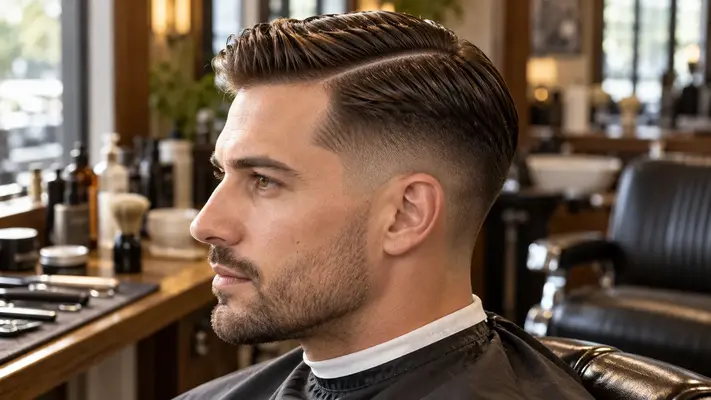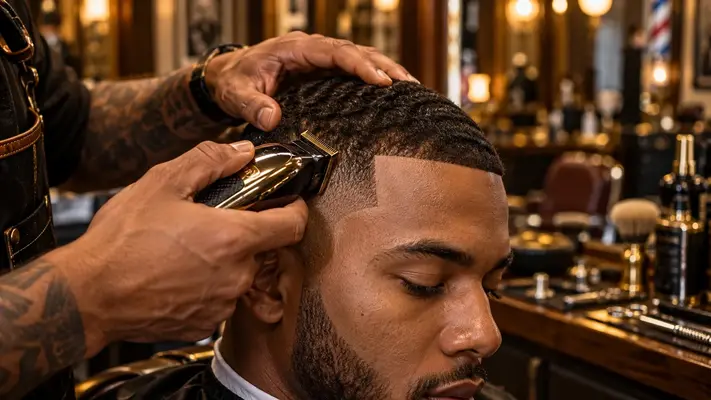
You sat in the chair, said “just clean me up,” and walked out looking almost right. Almost. That missing 5% usually comes down to one thing: a well-done shape up haircut.
Here’s what you’ll get. You’ll learn what barbers actually do with that trimmer, why the outline changes your whole face, and seven insider secrets that make it last.
Stay for the comparison table near the middle. It shows how a quick edge-up stacks up against a full cut, and it could save you money every month.
What Is a Shape Up Haircut?
It’s a precise cleanup of your hairline, temples, sideburns, and neckline. The barber uses clippers, a trimmer, or a straight razor to draw crisp lines around the natural edge of your hair.
Think of it as a picture frame. The haircut is the painting, and the edge-up is the frame that makes it look finished.
Most guys never notice the frame until it’s missing. Then every stray hair along the forehead suddenly demands attention.
The Simple Answer
People type what is shape up haircut into Google because barbers use many names for the same thing: edge-up, line-up, and cleanup. Slang changes from city to city. The goal never does: straight lines, sharp corners, zero fuzzy edges.
The Meaning Behind the Name
The shape up haircut meaning is simple. It shapes the boundary of your hair rather than changing its length. Your top, sides, and back can stay untouched while only the outline changes.
Ask a barber “whats a shape up haircut?” and the honest answer is that it’s the difference between messy and sharp. A tidy outline makes even a two-week-old cut look fresh.
The shape-up haircut grew out of Black barbershop culture, where precision lines became a point of pride. Today it shows up in shops everywhere, on every hair type.
Shape Up vs Haircut: What’s the Real Difference?
A regular cut changes how much hair you have. An edge-up changes how that hair ends. That’s why you can book one without the other.
| Feature | Edge-Up | Full Haircut |
| Focus | Hairline, temples, neckline | Overall length and style |
| Time in chair | 10–20 minutes | 30–60 minutes |
| Typical price* | 10–25 | 25–60 |
| Ideal frequency | Every 1–2 weeks | Every 3–4 weeks |
| Change in length | Minimal | Noticeable |
*Approximate ranges. Prices vary widely by city and shop.
Look at the frequency row. The edge-up needs attention twice as often because hairline growth is the first thing people notice. A quick touch-up costs less than a full cut and keeps you sharp between appointments.
Do the math. A weekly $15 edge-up adds up to about $60 a month, while a full cut every two weeks at $35 runs about $70. Many men split the difference: a full cut monthly, with a quick edge-up in between.
Many shops bundle a haircut shape up as a package deal, which often costs less than booking each service separately. The classic men haircut shape up pairing, a fade plus crisp lines, remains a barbershop staple for good reason.
Shape Up Haircut Black Men Ask For: Waves, Fades, and Textures
For many Black clients, the edge-up is a weekly habit, not a luxury. Dense hairline growth and tight curl patterns make crisp lines stand out. That’s why people search shape up haircut black when they want a barber who understands their hair type.
Popular pairings include:
- 360 waves: the outline frames the wave pattern.
- Low or mid fade: a smooth blend into a sharp temple.
- Taper with a high-top or twists: clean lines around textured length.
- Locs: a tidy hairline keeps the style looking intentional.
Protecting Your Skin
Razor bumps ruin a fresh edge-up. Ask your barber to cut with the grain, use a hot towel first, and finish with a cool rinse.
A light aftershave balm or oil-free moisturizer calms irritation fast. If bumps keep coming back, switch from a razor to a trimmer for a few weeks and watch the difference.
The Men’s Guide to Choosing Your Line
A men’s shape up haircut starts with one question: what hairline suits your face? The wrong shape can make a forehead look bigger or a jaw look softer.
Three Hairline Styles
- Natural: follows your growth pattern. Best for thinning or receding hairlines.
- Rounded: softens the corners. Great for a professional, low-maintenance look.
- Squared-off: sharp 90-degree corners. Bold and high-contrast, but it needs frequent upkeep.
When you book a shape up men’s haircut, tell the barber three things: your preferred hairline, how deep you want the temples, and whether you’re blending into a beard. Bring a photo if you can.
How a Barber Builds the Lines
Every shape ups haircut follows a similar rhythm. The barber maps the hairline, cleans the temples, drops down to the sideburns, and finishes at the neckline.
Most shape ups haircuts take about fifteen minutes when the barber is skilled. If someone rushes it in three, expect uneven lines by the weekend.
Watch the mirror while they work. A good barber steps back, checks both sides, and only then touches the second temple.
Shape Up Haircut for Women: Yes, It Works
Cropped cuts, pixies, and short natural styles look dramatically better with a defined outline. The same trimmer work that sharpens a fade also tidies the nape and temples.
Ask for softer, natural edges if you prefer a feminine finish. A barber can follow your baby hairs instead of erasing them.
Shape Up Haircut Long Hair: Keep the Length, Sharpen the Edges
You don’t need to cut a single inch. For long hair, the barber cleans the neckline and forehead only, which makes braids, buns, and ponytails look freshly done.
Pull your hair back before you sit down. It helps the barber see your real hairline.
7 Proven Secrets for a Sharper Edge-Up
- Arrive product-free. Heavy gel hides your real hairline.
- Bring a reference photo. “Sharp” means something different to everyone.
- Respect your growth pattern. Forcing a straight line on a curved hairline looks fake within days.
- Discuss razor versus trimmer. Sensitive skin often does better with a trimmer.
- Moisturize afterward. Hydrated skin heals faster and keeps lines crisp.
- Sleep on satin. A satin pillowcase or durag protects your lines and your waves.
- Book on a schedule. Set a standing weekly or biweekly slot, and leave the front hairline to a pro.
Frequently Asked Questions
How long does an edge-up last?
Most people get five to seven days of truly crisp lines. Fast growers, or anyone with dense, coarse hair, may notice fuzz after four days.
How often should I get one?
Once a week keeps a squared-off style sharp. Every two weeks works fine for natural or rounded hairlines.
Can I get one with a beard?
Yes. The barber connects your cheek line to your hairline so the beard looks intentional. This is one of the best ways to make a beard look polished.
Does it damage my hairline?
Not if it’s done gently. Pushing the line back too far, too often, can thin the edges over time, so ask your barber to follow your natural growth.
How much should I tip?
Tip the same as you would for a full cut, usually 15–20%. Precision work takes skill.
Can I do it at home?
You can maintain it between visits with a small trimmer, but keep the first attempt short and shallow. Leave the front hairline and temples to a professional.
Conclusion
An edge-up costs little, takes minutes, and does more for your appearance than almost any styling product. It’s the cheapest upgrade in the barbershop.
Here’s the insider tip: pick one barber, stick with them, and let them learn your hairline. After three visits they’ll know exactly where your lines belong, and you won’t have to explain a thing.