You sat down in the barber chair, said “give me a mohawk,” and walked out with something that felt… off. That’s the exact moment thousands of people realize nobody explained the real difference between a mohawk and a fohawk.
This mix-up costs people a bad haircut, an awkward two weeks of regrowth, and a lot of scrolling through Pinterest trying to figure out what went wrong. By the end of this guide, you’ll know precisely which style fits your face, your job, and your lifestyle — no guesswork left.
What Exactly Is a Mohawk?
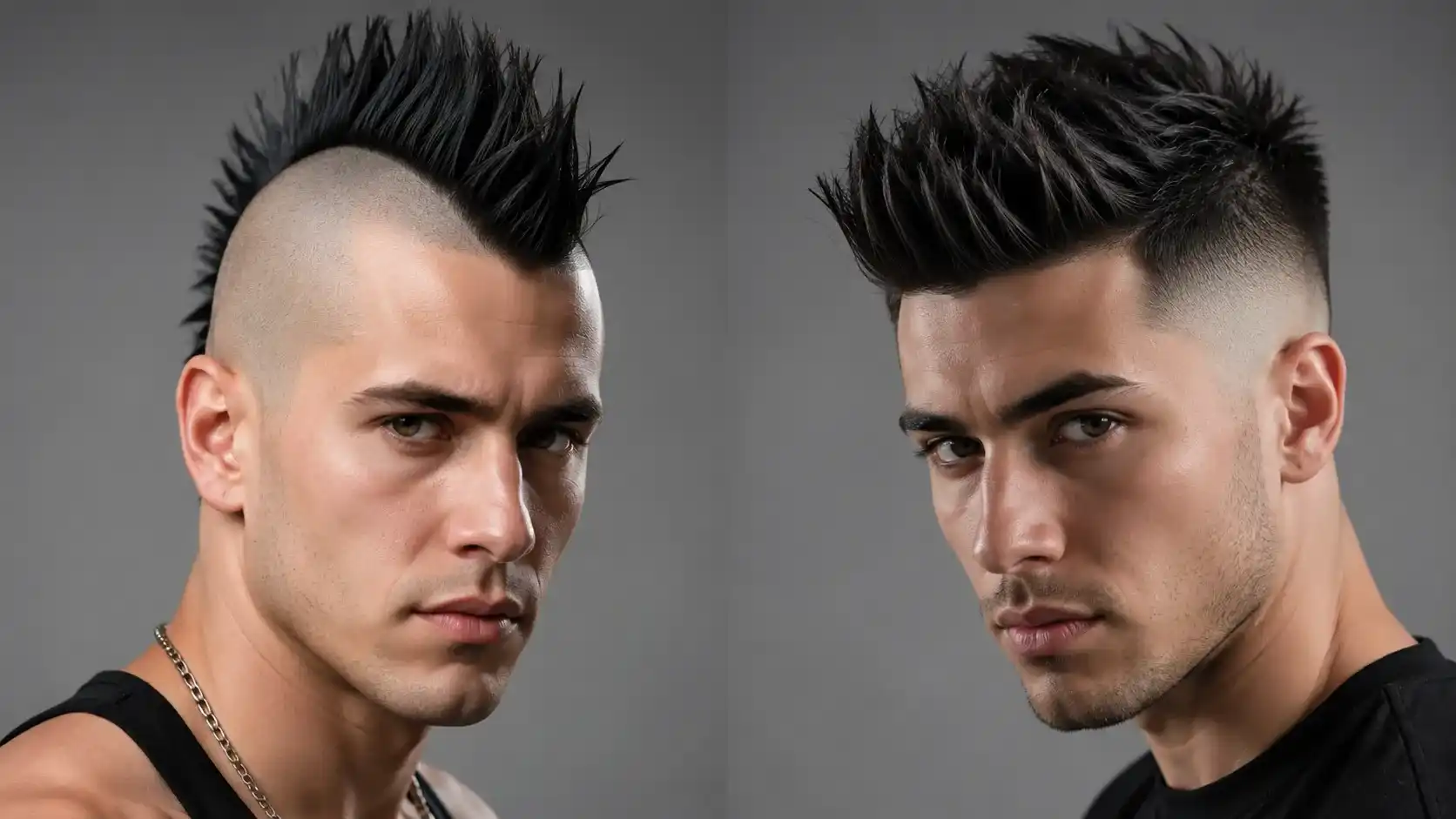
A traditional mohawk is bold. The sides of the head are shaved completely bare, leaving a single vertical strip of hair running from the forehead to the back of the neck.
It traces back to Native American Mohawk warriors, though the modern punk-rock version exploded in the 1970s and 80s. Think spiked, colored, and unapologetically loud.
Key Traits of a Classic Mohawk
- Sides are shaved down to skin, not just faded
- The center strip is usually styled straight up or spiked
- Works best with thicker, coarser hair that holds height
- Considered a high-commitment, high-maintenance cut
What Exactly Is a Fohawk?
A fohawk, short for “faux hawk,” gives you the illusion of a mohawk without shaving anything off. The sides are kept short or faded rather than bare, and the center section is styled upward with product.
It’s the style that lets you walk into a corporate office on Monday and a music festival on Saturday with the same haircut, just styled differently.
Key Traits of a Fohawk
- Sides are faded or trimmed short, never fully shaved
- Center hair is styled up using gel, wax, or clay
- Can be toned down for work or amplified for a night out
- Lower commitment since you can restyle it flat anytime
Mohawk vs Fohawk: Side-by-Side Comparison
| Feature | Mohawk | Fohawk |
| Side hair | Fully shaved | Short or faded, not shaved |
| Maintenance level | High (frequent shaving needed) | Medium (regular trims) |
| Styling time | 10-15 minutes with strong hold product | 5-10 minutes with lighter product |
| Workplace friendly | Rarely | Usually, when styled subtly |
| Best hair type | Thick, coarse hair | Any hair type, including fine hair |
| Reversibility | Low, grows out visibly | High, can be brushed flat |
| Cultural roots | Native American, punk subculture | Modern barbershop trend |
The data makes one thing obvious: the fohawk wins on flexibility, while the mohawk wins on raw visual impact. If your job has a dress code, that table alone should settle your decision.
Which One Actually Suits Your Face Shape?
Round Faces
A mohawk with added height elongates a round face nicely, but a fohawk with a slight forward sweep does the same job with far less drama.
Square Faces
Square jawlines pair beautifully with a mohawk since the sharp lines complement the bold cut. A fohawk works too, especially with textured, slightly messy styling.
Oval Faces
Oval faces can pull off almost anything, so this comes down to lifestyle rather than face shape. Pick based on how much upkeep you’re realistically willing to do.
Maintenance Reality Check
People underestimate how much upkeep a real mohawk demands. Here’s what you’re signing up for with each style.
Mohawk Upkeep
- Shaving the sides every 2-3 days to prevent stubble shadow
- Strong-hold wax or gel applied daily for the strip
- Frequent trims to keep the center strip even
- Higher risk of skin irritation from constant shaving
Fohawk Upkeep
- Fade touch-ups every 2-3 weeks at the barber
- Medium-hold product, used only when styling up
- Can be brushed down for a completely different, low-key look
- Gentler on sensitive scalp skin
Cost Comparison You Should Know
A mohawk generally costs more over time because of the shaving frequency, even if you do it yourself at home. Razors, skin balm, and touch-up visits add up fast.
A fohawk fits into a normal fade schedule, so it often piggybacks on a haircut you were already getting. That makes it the more budget-friendly option for most people.
Which One Is Trending in 2026?
Search interest and barbershop requests show a clear shift toward versatile styles that work across different settings. The fohawk has taken over as the more requested cut among professionals aged 20-40, while the full mohawk remains strong in music, gaming, and alternative fashion communities.
Barbers report that clients increasingly ask for a “fohawk fade” combo, blending a skin fade on the sides with a textured, tousled top rather than a sharply spiked strip.
Frequently Asked Questions
Is a fohawk easier to grow out than a mohawk?
Yes, significantly. Since the sides aren’t fully shaved, a fohawk blends back into a regular short haircut within a few weeks, while a mohawk needs the shaved sides to fully grow in first.
Can I switch from a mohawk to a fohawk?
You can, but you’ll need to wait for the shaved sides to grow out enough to fade rather than show bare skin. Most barbers recommend three to four weeks of growth before attempting the switch.
Does a fohawk work for job interviews?
A subtle fohawk, styled flatter with a light product, often passes as a modern professional cut. A spiked, dramatic version is riskier depending on the industry.
Which style is better for thin hair?
The fohawk is friendlier to thin hair because the faded sides create the illusion of thickness, while a mohawk’s bare sides can make thin center hair look sparse by comparison.
How often do I need a touch-up for each style?
A mohawk typically needs shaving every 2-3 days and a shape-up every 1-2 weeks. A fohawk needs a fade refresh roughly every 2-3 weeks.
Is one style more expensive long-term?
The mohawk tends to cost more over a year due to constant shaving supplies and more frequent barbershop visits for the sharp shaved-side upkeep.
Can women wear a fohawk or mohawk?
Absolutely, both styles have strong followings among women, with the fohawk being especially popular because it’s easier to dress up or down for different occasions.
Conclusion
If you want a statement that turns heads and you’re ready for daily upkeep, the mohawk delivers that in full. If you want a style that adapts to your Monday meetings and your Friday plans without extra fuss, the fohawk is the smarter everyday choice.
Either way, bring a clear reference photo to your barber and specify the side treatment — shaved versus faded — since that single detail is where most haircut disappointments actually begin.