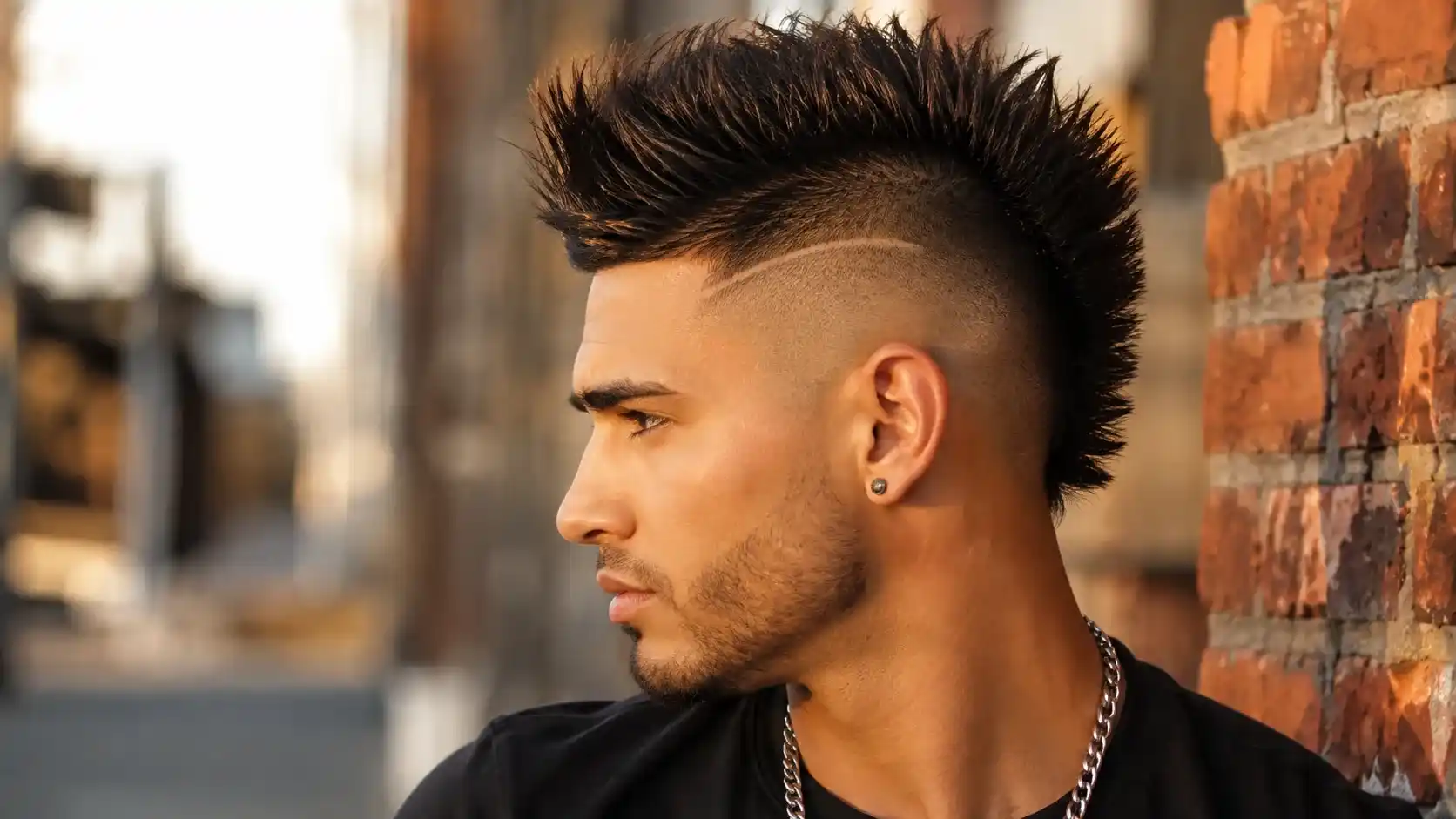
Your barber just paused mid-sentence and asked, “Are you sure?” That’s usually the moment people either chicken out or lean in and say “shave it.” If you’re reading this, you’re probably leaning in.
A mohawk haircut isn’t just a style choice anymore. It’s a statement that says you’ve stopped asking for permission to stand out, and honestly, that’s rare these days.
This guide walks you through everything nobody tells you before you sit in that chair. The real maintenance grind, the styles that actually suit different face shapes, and the mistakes that turn a killer cut into a regret you carry for six weeks.
What Exactly Counts as a Mohawk Haircut Today
The classic mohawk used to mean one thing: shaved sides, a strip of hair down the middle, spiked straight up. Punk rock. Aggressive. Unapologetic.
That definition has loosened up a lot. Modern barbers now treat “mohawk” as a family of styles rather than one rigid look.
You’ll see fades blending into the shaved sides instead of a clean buzz. You’ll see the center strip left longer and brushed to the side instead of spiked. Some versions barely look like a traditional mohawk until the light hits just right.
The Core Elements That Never Change
Regardless of variation, a few things stay constant across every mohawk haircut:
- A noticeably shorter or shaved section on both sides of the head
- A central strip of longer hair running front to back
- A visible contrast between the short and long sections
- Styling that emphasizes height, direction, or texture down the middle
That contrast is the whole point. Without it, you just have a weird haircut, not a mohawk.
Popular Mohawk Styles Worth Considering in 2026
Not every mohawk screams “punk show, 2 a.m.” Plenty of modern takes work fine in an office, at a wedding, or on a first date.
The Fauxhawk
This is the mohawk’s quieter cousin. Sides are trimmed short but not shaved bald, and the center strip is styled up without needing gel that could survive a hurricane.
It reads as edgy without reading as “I might start a mosh pit.” Great option if you want the vibe without full commitment.
The Undercut Mohawk
Sides get a sharp, disconnected undercut while the top grows longer and fuller. This version photographs incredibly well because of the dramatic length difference.
Curly and wavy hair types tend to love this one. The volume up top does most of the visual work without aggressive styling every morning.
The Fade Mohawk
A skin fade blends into the sides instead of stopping abruptly. This softer transition makes the whole look feel more polished and less “I did this myself with kitchen scissors.”
Barbers report this as one of the most requested versions right now because it balances boldness with wearability.
The Curly Mohawk
Natural curls or coils styled into the center strip create texture without needing product for height. The curls do the volume work naturally.
This style has grown fast in popularity among people with textured hair who want the mohawk shape without heat damage or daily gel routines.
Mohawk Haircut Popularity: A Quick Look at the Numbers
| Style Variant | Popularity Trend (2026) | Maintenance Level | Best For |
| Classic Spiked Mohawk | Steady niche following | High | Bold statement seekers |
| Fauxhawk | Rising steadily | Low-Medium | Office-friendly edge |
| Undercut Mohawk | Trending upward | Medium | Thick or wavy hair |
| Fade Mohawk | Most requested variant | Medium | Polished, everyday wear |
| Curly Mohawk | Growing fast | Low | Textured, natural hair |
The pattern here is pretty clear. People still want the drama of a mohawk, but they want it softened, blended, and easier to manage day to day. Full commitment shaved-side spikes remain a smaller, dedicated crowd rather than the mainstream default.
Does a Mohawk Haircut Suit Your Face Shape?
This is the question most people skip, and it’s the reason some mohawks look sharp while others look accidental.
Round Faces
Height on top helps elongate a round face, so a taller center strip works in your favor. Avoid keeping the sides too wide or bushy since that adds width you don’t need.
Square Faces
Square jaws pair well with softer, fuller mohawk styles like the undercut version. A slightly rounded top strip balances out strong jaw angles nicely.
Oval Faces
Honestly, most mohawk variations work well here. Oval faces have the balanced proportions that let barbers get creative without much risk.
Long Faces
Skip extreme height. A fauxhawk styled more forward than upward keeps the face from looking stretched even longer.
Maintenance Reality Check Nobody Warns You About
People underestimate this part constantly. A mohawk haircut is not a “cut it and forget it” situation.
- Sides need trimming every 1 to 2 weeks to keep the contrast sharp
- The center strip requires daily styling with the right product for your hair type
- Shaved sides can get irritated, so aftercare matters more than people expect
- Growing it out gracefully takes planning, not a last-minute decision
Budget for more frequent barber visits than you’re used to. That’s the trade-off for a look this striking.
Common Mistakes People Make With a Mohawk Haircut
- Choosing spikes way too aggressive for their actual lifestyle and job
- Skipping scalp care on the shaved sides, leading to irritation and ingrown hairs
- Using the wrong product, leaving the center strip flat or greasy by noon
- Going too extreme on a first try instead of easing in with a fauxhawk
Start conservative if you’re unsure. You can always go bolder at your next appointment once you know how it feels.
Frequently Asked Questions
Does a mohawk haircut work for thin hair?
Yes, but expect to lean on product and technique rather than natural volume. A fade mohawk with a shorter center strip tends to hold shape better on thinner hair than a tall spiked version.
How long does hair need to be before getting a mohawk?
Most barbers want at least 2 to 3 inches on top to create real shape and styling options. Shorter than that limits you mostly to a buzzed fauxhawk look.
Is a mohawk haircut professional enough for work?
A fauxhawk or fade mohawk styled subtly can pass in many modern workplaces, especially creative industries. Traditional corporate environments may still raise eyebrows at the more extreme spiked versions.
How often do I need to touch up the sides?
Plan on every 1 to 2 weeks if you want crisp, defined contrast. Waiting longer causes the sides to grow out and blur the whole shape.
Can women pull off a mohawk haircut?
Absolutely, and it’s become increasingly common. Many barbers report growing requests from women wanting undercut and fauxhawk variations specifically.
Which products are most effective for mohawk styling?
Strong-hold pomade or gel works for spiked versions, while a lighter matte paste suits fauxhawk and fade styles better. Curly mohawks often need only a curl-defining cream rather than heavy hold products.
Will a mohawk damage my hair over time?
Heavy daily product use and heat styling can cause dryness if you’re not careful. Rotating in deep conditioning treatments weekly helps offset the extra styling demands.
Conclusion
A mohawk haircut rewards people who commit to the upkeep and choose a version that actually fits their daily life. The fade and fauxhawk variations give you nearly all the visual punch with a fraction of the maintenance headache.
Talk to your barber honestly about your job, your hair type, and how much morning styling time you realistically have. That conversation matters more than any photo you bring in from Pinterest.