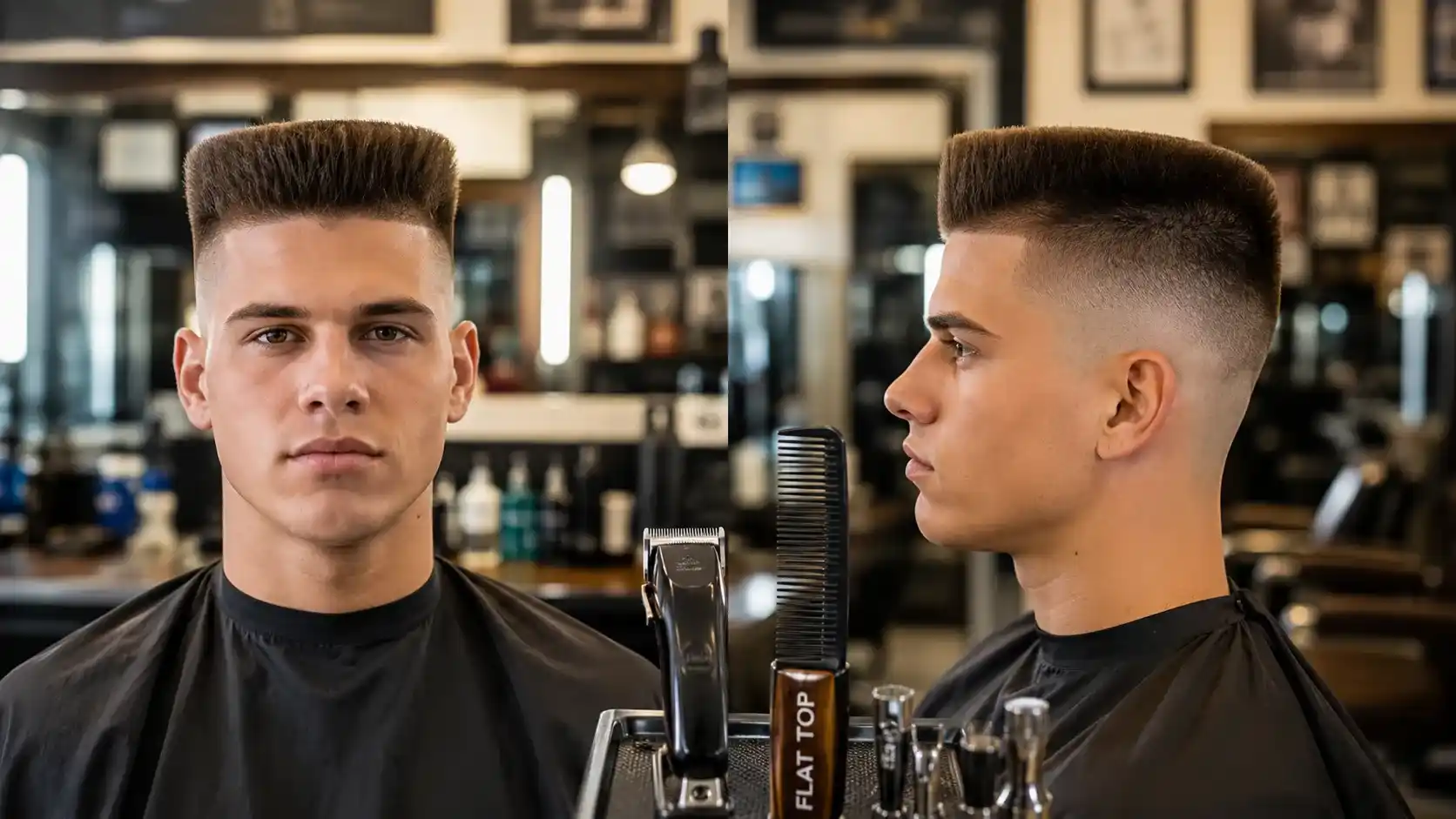
Walk into the wrong barbershop and ask for a flattop, and you’ll walk out looking like you lost a bet. This cut has zero room for error, which is exactly why so many guys either love it forever or swear it off after one bad experience.
The military flattop haircut isn’t just short hair. It’s an engineered shape that demands the right tools, the right barber, and the right daily habits to actually look sharp instead of accidental. This guide breaks down everything you need before you sit in that chair.
What Exactly Is a Military Flattop Haircut?
The flattop starts with hair clipped extremely short on the sides, tapering up into a flat, level surface on top. Think of it as a tabletop sitting on your head — perfectly horizontal, perfectly even.
It originated in U.S. military barbershops decades ago, built for practicality first. Short sides meant less maintenance in the field, and the flat crown made helmets sit correctly without bulging.
Today it’s worn far beyond the armed forces. Barbers, athletes, and guys who just want a bold, no-nonsense look have adopted it as a mainstream style choice.
Why It Still Stands Out in 2026
Fades and textured crops dominate most barbershop menus right now. A flattop cuts against that trend entirely, and that contrast is part of its appeal.
- It signals discipline and confidence without saying a word.
- It works with thick, coarse, or straight hair better than most trendy cuts.
- It ages well — you rarely see a flattop that looks “dated” the way certain fades do.
The Anatomy of a Perfect Flattop
A great flattop comes down to three zones working together. Miss one, and the whole shape falls apart.
1. The Sides and Back
These get clipped down to a very short guard, usually between a 1 and 3, sometimes faded for a cleaner blend. Some men prefer a hard part cut into the side for extra definition.
2. The Top
This is where the magic — and the difficulty — lives. Hair on top needs enough length (generally an inch or more) to be trained upward and then cut flat using a flattop comb and clippers.
3. The Front Hairline
A slight forward taper at the front keeps the cut from looking like a block. Barbers often round the front edge just slightly so it doesn’t read as too harsh from the side profile.
Step-by-Step: How Barbers Actually Cut It
Curious what happens in the chair? Here’s the real sequence most experienced barbers follow.
- Wet the hair and comb it straight up to check natural growth pattern.
- Clip the sides and back first, using a fade or straight guard depending on preference.
- Comb the top hair upward repeatedly, holding it in place with one hand.
- Use a flattop comb as a guide, running clippers flat across it to create the level surface.
- Check from multiple angles — front, side, and above — since flattops reveal every unevenness.
- Clean up the hairline with a trimmer for crisp, sharp edges.
A rushed barber almost always produces a lopsided top. This cut rewards patience more than almost any other men’s style.
Styling and Daily Maintenance
Getting the cut is half the job. Keeping it sharp between visits is where most guys either win or lose.
Morning Routine
- Apply a small amount of pomade or matte clay to damp hair.
- Comb straight upward, not sideways, to preserve the flat shape.
- Use a flattop brush (yes, they’re a real tool) to press the top level again if it’s grown slightly uneven.
Weekly Upkeep
- Trim touch-ups every 1 to 2 weeks are standard, since the sides grow out faster than the top.
- Keep a small trimmer at home for hairline cleanup between barbershop visits.
Flattop Haircut Popularity: Recent Data
Search interest and barbershop trends give a clear picture of where this cut stands today.
| Metric | Data Point | Insight |
| Google search trend (5-yr) | Steady, moderate growth | Niche but consistently loyal audience |
| Common client age range | 18–45 | Popular across military, athletic, and creative circles |
| Average maintenance frequency | Every 10–14 days | Higher upkeep than most fades |
| Barbershop skill rating | Advanced/expert level | Not every barber offers it confidently |
The numbers tell a simple story: the flattop isn’t chasing viral trends, and that’s exactly why it keeps a dedicated following. It rewards commitment over convenience.
Who Should (and Shouldn’t) Get a Flattop
This cut isn’t universally flattering, and being honest about that upfront saves you a disappointing haircut.
Great Fit If You Have:
- Thick or coarse hair that holds an upward shape easily
- A rounder or oval face shape, since the flattop adds visual height
- A lifestyle with time for regular touch-ups
Might Struggle If You Have:
- Very fine or thin hair, which can make the top look sparse or wispy
- A long, narrow face shape, since added height can exaggerate it
- Limited time or budget for frequent barber visits
Common Mistakes to Avoid
- Skipping a specialist: Not every barber has flattop experience — ask before booking.
- Growing the top too long between cuts: It loses the crisp edge and starts drooping.
- Using the wrong product: Heavy, greasy pomades weigh hair down instead of holding it upright.
- Ignoring face shape: A flattop that ignores your proportions can look boxy rather than sharp.
Frequently Asked Questions
How often do I need to get a military flattop trimmed?
Most men return every 10 to 14 days. The sides grow out faster than the top, so the shape softens quickly without regular trims.
Does a flattop work with curly hair?
Yes, but it takes more skill from the barber. Curly hair needs extra training and product to hold the flat shape without frizzing upward unevenly.
What products keep a flattop standing all day?
A strong-hold matte clay or wax works best. Avoid overly wet-look gels since they tend to make hair collapse rather than stand upright.
Is a military flattop the same as a high and tight?
No. A high and tight has very short sides with minimal length on top, while a flattop specifically shapes the top into a flat, level surface.
Can I style a flattop for a more casual, everyday look?
Yes, a slightly shorter or less rigid flattop reads more casual, while a taller, sharper one leans more formal or classic military style.
Will a flattop suit my face shape?
Oval and round faces tend to benefit most, since the added height balances proportions. Longer face shapes should discuss a slightly lower top with their barber.
How long does it take to grow out of a flattop if I change my mind?
Most guys transition into a crew cut or textured crop within 4 to 6 weeks, since the sides need to catch up in length to the top.
Conclusion
The military flattop haircut isn’t a trend you casually try on a whim. It’s a commitment to a specific look, a specific maintenance rhythm, and finding a barber who actually knows the technique.
Get those three things right, and you end up with one of the sharpest, most timeless cuts a man can wear. Get them wrong, and you’ll be reaching for a hat until it grows out.