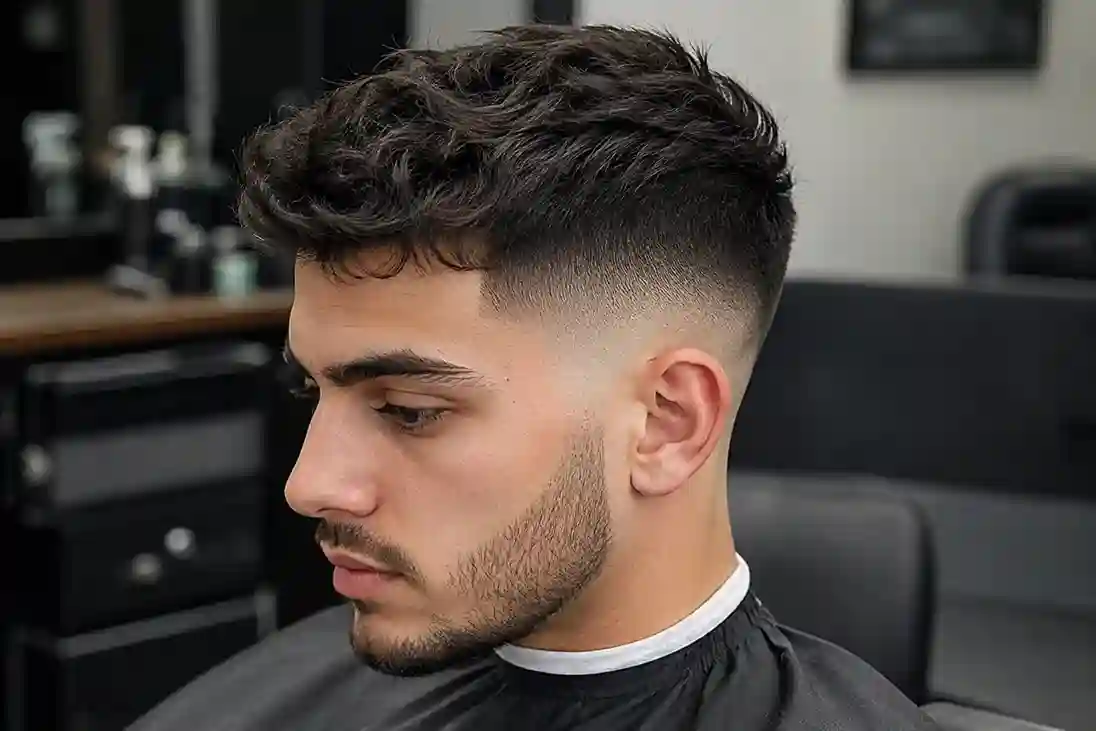
Picking the wrong fade can wreck a haircut before it even grows in. One bad blend at the barbershop, and you’re stuck hiding under a hat for weeks. The good news? A mid fade haircut takes the guesswork out of it. This guide breaks down every style, hair type and maintenance trick so you walk into your next appointment knowing exactly what to ask for.
What Is a Mid Fade Haircut?
A mid fade haircut starts the taper at the midpoint between the ears and the temples, usually blending somewhere above the ear line. It sits right between a low fade and a high fade, which is why barbers consider it the most balanced and forgiving option for almost any face shape.
The fade gradually shortens the hair from longer strands on top to skin or a very short guard near the sides. Unlike a skin fade, a mid fade doesn’t have to go all the way down to bare skin — it can stop at a light dusting for a softer look.
This style works because it adapts. You can pair it with a fringe, a pompadour, a buzz cut, or a slicked-back finish, and it will still look sharp. That flexibility is the main reason the mid fade haircut men search for so often tops style guides year after year.
Mid Fade vs Low Fade vs High Fade: What’s the Difference?
Choosing between fade heights comes down to how much contrast you want and how your face is shaped.
- Low fade — starts just above the ear, offers a subtle transition, and suits rounder faces.
- Mid fade — starts between the ear and temple, giving balanced contrast that flatters most face shapes.
- High fade — starts near the top of the head, creates bold contrast, and works best on longer or oval faces.
A men’s mid fade haircut is often the safest starting point for first-timers because the blend is gradual and easy for any barber to execute cleanly, even without years of experience.
Best Mid Fade Haircut Styles for Men
There isn’t just one way to wear this cut. Here are the most requested versions in barbershops right now:
- Mid fade with a textured crop — short, choppy layers on top for a natural, low-effort finish.
- Mid fade pompadour — longer hair swept upward and back for a polished, formal look.
- Mid fade with a hard part — a shaved line separating the fade from the top section.
- Mid fade quiff — textured volume at the front, brushed slightly back.
- Mid fade with a beard — the fade blends into a trimmed beard line for a complete grooming look.
A mid fade haircut for men doesn’t need heavy product or daily styling to look good, which is why it remains one of the lowest-maintenance options in modern barbering.
Mid Fade Haircut for Black Men
Texture changes everything when it comes to fades, and coarse or coily hair holds shape differently than straight hair. A mid fade haircut black men request usually pairs the fade with a longer top section — think a twist-out, an afro on top, or short waves (360 waves) — since curl pattern adds natural volume and definition.
Barbers who specialize in textured hair often recommend:
- A mid fade haircut black style with a curl sponge finish for defined coils.
- A mid fade haircut men black version paired with a design or part for extra detail.
- A fade blended into braids or twists for longer-lasting structure between cuts.
Because coily hair shrinks as it dries, ask your barber to cut slightly longer on top than you think you need — it settles shorter once fully dry.
Short Mid Fade Haircut Styles
If low maintenance is the goal, a short mid fade haircut is hard to beat. Keeping the top between half an inch and one inch reduces styling time to almost nothing while still leaving enough length to add texture with a matte paste.
Popular short variations include:
- Mid fade haircut short hair with a buzzed crop on top.
- Mid fade haircut men short hair paired with a natural side part.
- A short French crop with a mid fade for a clean, structured silhouette.
This category works especially well for anyone with a busy schedule, active lifestyle, or a job that requires a neat, professional appearance every day.
Mid Fade Haircut for Boys and Kids
Parents often want something that grows out neatly and doesn’t need constant trips back to the barber. A boys mid fade haircut typically keeps more length on top for versatility, letting the child style it differently for school, sports, or special occasions.
For younger children, a kids mid fade haircut should prioritize comfort during the cut. Shorter sessions, a handheld mirror, and a gentle clipper setting all help make the experience easier for both the child and the barber.
Common mid fade haircut boys requests include:
- A simple crop fade for school-friendly style.
- A fade with a spiky or textured top for weekends.
- A fade with a fun design or line-up for a personalized touch.
Mid Fade Haircut for Different Hair Types
Not every fade looks the same once it meets your natural texture. Here’s how to adjust based on what you’re working with.
Mid Fade Haircut for Straight Hair
Mid fade haircut for straight hair tends to show the cleanest, sharpest blend because straight strands lie flat and reveal every line. This texture also styles fastest — a bit of pomade and a comb is usually all it takes.
Mid Fade Haircut Curly Hair
Mid fade haircut curly hair styles benefit from a slightly longer top to let the curls breathe and form naturally. Cutting too short can make curls look uneven once they spring back up, so barbers usually cut it dry first to see the true curl pattern.
Mid Fade Haircut With Long Hair
A mid fade haircut with long hair on top creates striking contrast between the tapered sides and flowing length above. This combination suits men growing out their hair who still want a defined, groomed edge rather than an unstructured look.
Medium Length Mid Fade Haircut
For those who don’t want it too short or too long, a medium length mid fade haircut lands in the sweet spot. The top typically runs one to two inches, offering enough length to style into a quiff, brush-up, or side sweep while keeping the sides neatly tapered.
This length also transitions well between cuts — it won’t look overgrown two or three weeks after your barber visit, which makes it a practical choice for anyone stretching out appointments.
How to Ask Your Barber for a Mid Fade Haircut
Clear communication saves you from a disappointing result. Bring a reference photo and use these terms:
- Tell your barber you want the fade to start at the mid-point between your ear and temple.
- Specify the guard number for the sides (commonly a #2 or #3 for the starting blend).
- State how much length you want left on top — in inches or with a clipper guard number.
- Mention your hair type if it’s curly, coily, or fine, since this changes the technique used.
- Ask about a regular touch-up schedule so the fade stays sharp as your hair regrows between visits.
Being specific here is the single biggest factor in getting a cut that matches what you pictured.
How Much Does a Mid Fade Haircut Cost?
| Location Type | Average Price Range | Typical Visit Time |
| Budget barbershop | $15 – $25 | 20–30 minutes |
| Standard salon or barbershop | $25 – $45 | 30–45 minutes |
| Premium/celebrity barber | $50 – $100+ | 45–60 minutes |
| Kids’ haircut specialist | $18 – $35 | 15–25 minutes |
| At-home clipper kit (one-time cost) | $30 – $80 | N/A |
Prices vary by region and barber experience, so treat this table as a general benchmark rather than a fixed rule.
How to Maintain a Mid Fade Haircut at Home
A fresh fade doesn’t stay sharp forever. Follow these steps to stretch the time between barbershop visits:
- Trim the neckline and sideburns every 5–7 days with a straight razor or beard trimmer.
- Wash with a sulfate-free shampoo two to three times a week to protect scalp health.
- Apply a lightweight pomade or clay for daily styling without buildup.
- Book a touch-up every 2–3 weeks to keep the fade line crisp.
- Brush or comb the top daily to train the hair direction as it grows.
Skipping neckline trims is the number one reason a fade starts looking messy before the next appointment.
Common Mistakes to Avoid With a Mid Fade Haircut
Even a great cut can go wrong with poor upkeep or the wrong request. Watch out for these issues:
- Asking for “a fade” without specifying the height — you might end up with a high or low fade instead.
- Overusing heavy gel, which weighs hair down and looks greasy rather than sharp.
- Waiting too long between trims, which causes the blend to grow out unevenly.
- Ignoring hair type when picking a style, leading to a top section that won’t sit the way you expected.
- Skipping aftercare products, which can leave the scalp dry or irritated after a close fade.
Mid Fade Haircut Style Comparison Table
| Style Variation | Best For | Maintenance Level | Face Shape Fit |
| Mid fade with textured crop | Everyday, low effort | Low | Most shapes |
| Mid fade pompadour | Formal or office settings | Medium | Oval, square |
| Mid fade with hard part | Bold, defined looks | Medium | Round, oval |
| Mid fade curly top | Curly or coily hair | Medium | Most shapes |
| Mid fade with long top | Growing out hair | Medium-High | Long, oval |
| Short mid fade crop | Busy schedules | Low | Most shapes |
| Kids/boys mid fade | School-friendly | Low | Most shapes |
Frequently Asked Questions
1. What makes a mid fade haircut different from a low or high fade?
A mid fade haircut starts between the ear and the temple, offering more contrast than a low fade but a softer transition than a high fade, making it suit the widest range of face shapes.
2. How often should I get it trimmed?
Most people need a touch-up every 2 to 3 weeks to keep the fade line clean, though neckline and sideburn trims can be done weekly at home between full appointments.
3. Can a mid fade haircut work with curly or coily hair?
Yes. A mid fade haircut curly hair style simply needs slightly more length left on top so the curls can form naturally without looking uneven once they dry.
4. Is this style suitable for kids and boys?
Absolutely. A kids mid fade haircut or boys mid fade haircut is one of the most requested children’s styles because it grows out neatly and needs minimal daily styling.
5. Does it suit every face shape?
For the most part, yes. Because the blend starts at a mid-point, it balances angular and rounded features better than more extreme fade heights, making it a safe universal choice.
6. How much does it typically cost?
Prices generally range from $15 to $100 depending on the barbershop tier and location, with most standard cuts falling between $25 and $45.
Conclusion
A mid fade haircut rewards anyone willing to be specific about what they want and consistent about upkeep. Choose the version that fits your hair type and lifestyle, bring a clear reference to your next appointment, and keep touch-ups on a steady schedule. Ready to book your next cut? Save this guide, show it to your barber, and walk out with a fade that actually holds its shape.