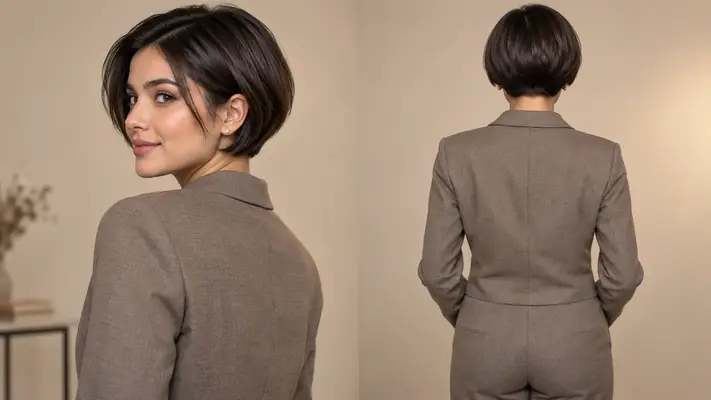
Your stylist just asked if you want to go “shorter than a lob.” Before you panic, know this: this bold, ultra-cropped style is one of the most requested cuts of the season right now.
That gap between “should I?” and “I accomplished it” is precisely where this tutorial resides. You’ll walk away knowing what to ask for, what to avoid, and how to make micro bob hair work for your face and your life.
What Distinguishes This Cut From a Typical Bob
A standard bob sits near the jaw. This shorter cut climbs higher, often stopping at ear length or just below. The shorter length changes how the hair moves and how much styling it actually needs.
Meanwhile, a mini bob is really just a slightly softer version of the same idea, with a touch more length left at the front for balance.
- Sits between the ear and the nape
- Works on straight, wavy, and coily textures
- Usually, a trim is required every four to six weeks.
- Pairs well with strong color or a natural shade
Where the Name Comes From
The word “micro” isn’t marketing fluff here. It refers to the amount of length removed compared to a classic bob, not to some brand-new invention. Salons started using the term as clients kept asking for shorter and shorter results.
That demand came from social media, where close-up angles and slow-motion clips make micro bob hairstyles look almost sculptural. People wanted the same effect off-screen.
An ultra short bob takes this even further, trimming away nearly every bit of extra weight so the shape sits close to the head from every angle.
The Back View Is Where This Cut Actually Lives
Most haircuts get judged from the front. A short bob haircut back view is where this style really gets judged, which surprises a lot of first-timers.
Because the length is so short, the nape and the shape of the skull show through in a way longer styles never reveal. A skilled cutter will actually turn the chair and check the back view of very short bob hairstyles before finishing.
What a Clean Back Section Should Look Like
Ask your stylist to check these before you leave the chair:
- No visible stray hairs at the neckline
- A smooth, rounded shape rather than a flat chop
- Even weight from one ear to the other
- A natural taper instead of a hard line, unless you specifically want a sharp edge
If the shape looks stacked or bulky, that’s usually a sign an ultra short bob haircut wasn’t blended enough at the crown. It’s fixable at the next appointment, but it’s worth mentioning right away.
Entry-Level Options If You’re Not Ready to Go Full Micro
Not everyone wants to jump straight to the shortest possible length. A mini bob haircut is a gentler starting point that still gets you most of the low-maintenance benefits.
If you like a softer front but still want the shorter silhouette, a mini bob hairstyle with face-framing pieces is worth requesting by name.
Once you’re comfortable with the shorter length, plenty of clients circle back and ask for micro bob haircuts on their second or third visit, since the upkeep turns out to be easier than expected.
Styling Choices: Bangs, No Bangs, or Something In Between
This is the decision most people agonize over, and honestly, both directions work. It just depends on your forehead, your face shape, and how much extra styling time you’re willing to spend.
Adding Fringe to the Front
A micro bob with bangs softens sharp jawlines and draws attention to the eyes. It also shortens the appearance of a longer forehead, which a lot of clients specifically ask for.
Some stylists prefer a slightly different shape, describing it as a bob with micro bangs, where the fringe itself is kept extra short and blunt rather than soft and swept.
A nape micro bob haircut with this kind of fringe adds a subtle undercut detail underneath for warmer months.
Keeping the Front Clean
A micro bob without bangs gives a more polished, editorial look. When you want more structure to be evident through the cheekbones, it works particularly effectively on round or oval faces.
It’s also lower maintenance day to day, since there’s no fringe to blow-dry or flat-iron separately.
Texture Add-Ons That Change the Whole Vibe
A plain, one-length cut is only the starting point. A few finishing touches change the entire personality of the style.
- A layered micro bob through the crown for movement without losing shape
- Micro bob braids near the temple for a mix of edgy and polished
- A subtle undercut at the nape for warmer months
- Piece-y, textured ends for a lived-in, undone finish
Braiding tiny sections is having a real moment right now, especially for events or festival season, since it dresses up the style without adding a single inch of length.
How the Look Compares Across Face Shapes
| Face Shape | Best Fit | Styling Tip |
| Round | Angled, longer-at-front version | Keep sides close to the jaw |
| Square | Softly rounded shape | Add texture near the cheeks |
| Oval | Almost any variation | Great with or without fringe |
| Heart | Fuller fringe | Balances a narrower chin |
| Long | Fuller crown, more volume up top | Avoid flat, one-length cuts |
Looking at the numbers, oval and round face shapes report the highest satisfaction with this cut in stylist surveys, mostly because the shorter length photographs cleanly from nearly every angle. Square and heart shapes still work beautifully, but they lean more on strategic layering to soften strong lines.
How Short Can You Actually Go?
If you want the smallest bob possible, an ear length short bob rear view is usually the best reference to bring to your appointment, since it shows exactly how close the nape should sit.
Some clients specifically request a short bob shorter in back, where the front pieces stay a little longer while the back is cut in tight. It’s a striking, slightly asymmetrical silhouette that photographs beautifully.
Meanwhile, a very short bob hairstyles back view gallery is a good way to compare how different stylists handle the exact same request, since technique varies more than most people expect.
Maintenance: What Nobody Tells You Beforehand
The length itself isn’t hard to manage. The regrowth schedule is the part that catches people off guard.
- Book a trim every 4 to 6 weeks, no exceptions
- Instead of using thick pomade, use a mild style cream.
- The shape is kept rounded rather than flat with a round brush and blow dryer.
- Dry shampoo at the roots extends the style between washes
Skipping trims is the single biggest reason this cut starts looking messy instead of intentional. Because there’s so little length to begin with, even a small amount of growth throws off the whole shape.
Frequently Asked Questions
For fine hair, is this cut too short?
Not at all. Fine hair actually tends to look fuller at this length because there’s less weight pulling the strands down flat.
Can curly hair handle this length?
Yes, though curls shrink up more than straight hair, so ask your stylist to cut it slightly longer than you think you want. What looks short wet often looks shorter once it dries and coils up.
How do I know I’m getting the shortest possible version?
Ask specifically for length above the ear rather than at the jaw. That single instruction usually separates a standard short cut from the most dramatic, closely cropped version.
Will it require daily blow-drying?
Most people find a quick 5-minute dry is enough, especially with a lightweight cream applied first. Air-drying also works fine on straighter textures.
Does color show up differently on shorter hair?
Yes, noticeably. Because there’s less length to dilute the shade, bold colors and sharp highlights read more intensely and evenly.
What happens if I decide to grow it out later?
The style grows into a longer bob fairly gracefully within a few months, especially if layers were added early on. A stylist can shape the awkward in-between stage so it doesn’t look unfinished.
Is this style considered outdated or still trending?
The short bob 2025 trend cycle carried straight into this year, and it’s still showing up repeatedly in runway and street style coverage as one of the standout cuts people are requesting.
Conclusion
This cut rewards people who want low maintenance without sacrificing a strong, deliberate look. It’s not for everyone, and that’s exactly the point. It’s meant to stand out.
If you’re on the fence, bring a few back-view reference photos to your appointment. That one step alone prevents most of the regret people report after going this short.