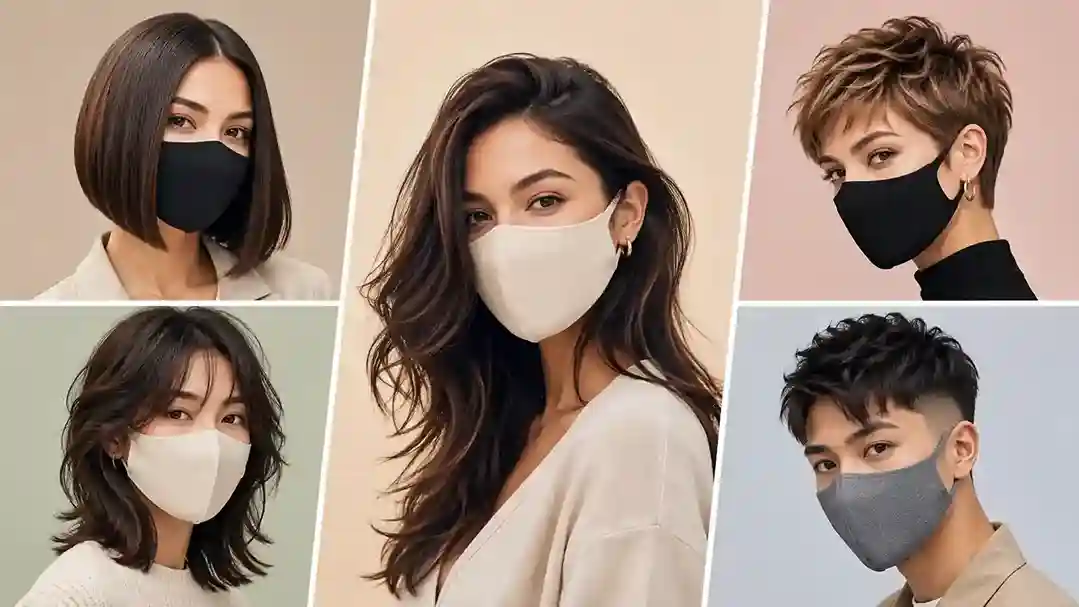
A face mask can hide your smile, but it should never hide your style. Many people spend real time on their hair, only to watch it collapse under an elastic strap within minutes. Flat crowns, crushed ears, and a hidden fringe make even a great outfit feel unfinished. A well-planned mask haircut fixes this instantly, keeping your hair sharp, framed, and camera-ready all day long.
What Is A Mask Haircut
A mask haircut is any hairstyle specifically cut or styled to look good while wearing a face mask, medical mask, or covering. Since a mask hides the lower half of the face, the haircut has to carry more visual weight around the eyes, cheekbones, and forehead. This idea became popular during mask-heavy years and has stayed relevant for healthcare workers, commuters, and anyone who wears a covering for long hours.
The goal of this styling approach is simple: keep hair full at the crown, keep the front section neat around the ears, and avoid styles that get squashed or tangled by straps. Stylists now treat this as a standard consultation question, right alongside face shape and hair texture.
Why This Style Choice Changes The Way You Look
Covering the nose and mouth shifts nearly all visual attention to the eyes and hairline. This kind of cut plays into that shift by adding movement, lift, and shape exactly where people will actually look.
Here is what changes once a covering enters the picture:
- Fringe and bangs get pushed down by straps, so length and thickness need adjusting.
- Ear-level hair gets pinned flat by elastic loops, which can flatten waves or curls.
- Face-framing layers matter more, since the jawline and mouth are no longer visible.
- Hair volume at the crown becomes the main way to balance a covered face.
A mask haircut is not a completely different style category. It is your regular haircut, adjusted with small, smart changes so it survives daily wear.
Best Mask Haircut Styles For Women
Women’s styling choices for mask wear usually focus on volume around the crown and softer framing near the ears. These styles hold their shape whether a covering is on for ten minutes or ten hours.
- Textured lob (long bob): Sits above the shoulder, adds shape without heavy weight near the ears.
- Curtain bangs: Split down the middle, so straps do not squash them flat.
- Layered shag: Built-in movement disguises any flattening from elastic loops.
- Soft face-framing layers: Draws focus upward to the eyes instead of the covered jawline.
- High ponytail or half-up style: Keeps hair off the ears entirely, avoiding strap damage.
This approach works best when the front layers are cut slightly longer, giving them enough weight to bounce back once the covering comes off.
Best Mask Haircut Styles For Men
Men’s options in this category lean toward clean sides and textured tops, since short hair resists the flattening effect far better than longer strands.
- Textured crop: Short sides, textured top; barely affected by straps.
- Faux hawk: Adds height at the center, which balances a covered lower face.
- Classic fade with texture on top: Sharp sides keep shape while the top adds interest.
- Side part with volume: Works well for office and healthcare settings.
- Buzz cut: The lowest-maintenance option, with zero flattening risk.
Men who wear a mask for long shifts, such as doctors or delivery workers, often prefer shorter sides, since it eliminates the flattening problem completely.
Mask Haircut Ideas By Face Shape
Choosing the right cut based on face shape helps balance proportions once half the face is covered.
| Face Shape | Recommended Style | Why It Works |
| Round | Long layers with height at the crown | Adds length, reduces width around cheeks |
| Square | Soft side-swept fringe | Softens strong jawline, even though it is covered |
| Oval | Almost any style, including blunt bobs | Naturally balanced proportions |
| Heart | Chin-length layers or curtain bangs | Balances a wider forehead with narrower jaw |
| Long | Fringe with volume at the sides | Shortens visual face length |
This table gives a quick starting point, but a stylist should always confirm the final choice based on hair thickness and growth pattern.
Short Hairstyle Options For Easy Mask Days
Short styles are often the easiest category for mask wear because there is less hair to get caught in straps or elastic loops.
- Pixie cut: Minimal contact with straps, quick to style each morning.
- Textured bob: Chin-length or shorter, stays neat under hours of wear.
- Cropped shag: Built-in texture hides any flattening within minutes.
These shorter styles suit anyone who wears a covering daily for work, since they need almost no touch-up during the day.
Long Hairstyle Options That Stay Neat All Day
Longer hair needs a bit more planning, but a well-cut long style still holds up well under a mask.
- Long layers starting at the cheekbone: Keeps weight balanced around the ears.
- Deep side part: Moves hair away from where straps sit.
- Braided crown or half-up braid: Keeps length secure and away from elastic loops.
This works best when layers begin above the ear, not at the jaw, since jaw-length layers are the section most affected by straps.
How To Choose The Right Mask Haircut For Your Hair Type
Hair type changes how any covering-friendly style behaves throughout the day.
- Straight hair: Flattens fastest, so add layers or a slight wave for texture.
- Wavy hair: Holds shape well, needs light styling product to keep waves defined.
- Curly hair: Benefits from a diffuser and a style that lifts at the roots.
- Fine hair: Needs shorter layers, since long, thin layers flatten quickly under straps.
- Thick hair: Handles most styles well, since natural volume resists flattening.
Discussing hair type with a stylist before any appointment leads to a far more accurate, long-lasting result.
Maintenance Tips For Salon-Fresh Results
A great cut only stays great with the right daily habits.
- Use a lightweight volumizing spray at the roots before putting on a covering.
- Choose a headband instead of ear loops when possible, to protect hair near the ears.
- Carry a small comb or brush for a quick midday refresh.
- Avoid heavy oils near the hairline, since a covering traps heat and moisture.
- Wash hair regularly, since sweat and moisture build up near the face during long wear.
These small habits protect your style and keep it looking freshly cut from morning to evening.
Common Mistakes To Avoid With A Mask-Friendly Cut
Even a well-cut style can look messy if these mistakes creep in.
- Cutting bangs too heavy: They flatten fast and lose shape under straps.
- Ignoring ear placement: Ear loops rub against hair and cause frizz over time.
- Skipping root volume products: Flat roots make the whole style look tired.
- Choosing complex updos for daily wear: These take too long and rarely survive a full day.
- Not communicating mask-wearing habits to your stylist: This is the single biggest reason this style fails to hold its shape.
Avoiding these mistakes is often more important than the haircut itself.
Mask Haircut vs Regular Haircut: Key Differences
| Factor | Mask Haircut | Regular Haircut |
| Main focus area | Eyes, forehead, crown | Full face, including jawline |
| Bang length | Slightly longer, side-swept | Any length works |
| Ear area | Cut to avoid strap friction | No special consideration |
| Styling priority | Volume at crown | Balanced overall shape |
| Best for | Daily long mask wear | Occasional or no mask wear |
This comparison shows why this styling category is not a separate trend, but a smart adjustment of proven techniques.
Professional Tips From Hairstylists For A Perfect Cut
Salon professionals suggest a few habits that consistently improve results:
- Book your consultation with real mask-wearing hours in mind, not just occasional use.
- Ask for slightly longer layers around the ears, since they can always be trimmed shorter later.
- Request a dry styling demonstration in the salon so you can replicate it at home.
- Bring a photo of your daily mask style, since ear loops and headbands affect the cut differently.
A style built around real daily habits lasts far longer than one based on guesswork.
Trending Styles Worth Knowing
Certain trends in this space keep reappearing across salons and social platforms:
- Curtain bangs with a middle part: Popular for both mask and no-mask days.
- Wolf cut: Layered, textured, and naturally resistant to flattening.
- Face-framing highlights: Draw attention upward, away from the mask.
- Low-maintenance buzz and crop cuts: Favored by healthcare and service workers.
These trends show that a mask-friendly cut can still feel current and fashionable, not just functional.
Frequently Asked Questions
1. What is the best mask haircut for daily wear?
A layered lob or textured crop works best for daily wear, since both resist flattening from straps and need very little touch-up between mask changes. These styles keep volume near the crown while staying neat around the ears throughout a long shift.
2. Does wearing a mask damage hair?
Wearing a mask does not directly damage hair, but constant strap friction near the ears can cause frizz and breakage over time. Choosing shorter or textured layers near the ears reduces this friction significantly.
3. Can this styling approach work for curly hair?
Yes, this styling approach works very well for curly hair, especially with layers that lift at the roots and a diffuser used during styling. Curly textures naturally resist the flattening effect that straight hair often experiences under straps.
4. How often should I get a trim to maintain my mask haircut?
Most people need a trim every six to eight weeks to keep the shape sharp, since split ends and uneven layers become more noticeable once the lower face is covered. Regular trims also keep bangs and face-framing pieces at the ideal length.
5. Is a short or long cut easier to maintain under a mask?
A short cut is generally easier to maintain, since there is less hair exposed to strap friction and less need for daily restyling. Long styles can work just as well with the right layering and a headband instead of ear loops.
6. Should I tell my stylist I wear a mask often?
Yes, always tell your stylist about daily mask-wearing habits, since this detail directly changes bang length, layer placement, and overall shape recommendations. A stylist who knows your routine can prevent common mistakes before the first cut is even made.
Conclusion
A mask haircut is not about giving up on style; it is about being smart with it. Small adjustments, like longer layers near the ears or a bit more volume at the crown, keep your hair looking finished no matter how long the covering stays on. Book a consultation with a licensed stylist, mention your daily mask routine, and walk out with a cut that works with your lifestyle instead of against it.
Contact Us for Further Details.