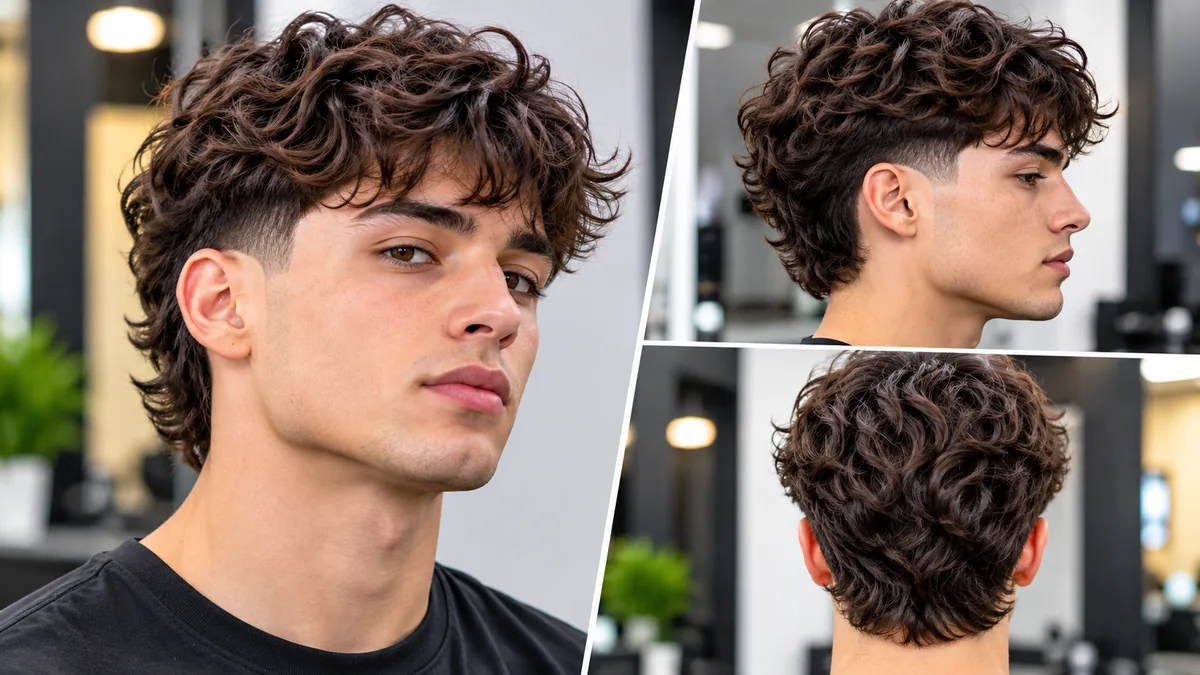
TL;DR: A low taper mullet keeps the fade whisper-quiet near the ears while letting the back run long and free. This guide breaks down styling, real barbershop pricing, hair type matching, and the blunders that wreck this cut.
Most guys walk into my chair and say, “I want a mullet, but I don’t want to look like I time-traveled from 1987.” That’s exactly where the low taper mullet earns its reputation. Instead of slamming a harsh skin fade right at the temple, this cut eases the transition down near the earlobe. The result? You get the rebellious length in the back without screaming for attention on the sides.
If you’re a client trying to figure out what to ask for — or a fellow barber looking to tighten up your technique — this breakdown covers every angle. We’ll talk real numbers, real mistakes, and the styling tricks that actually hold up past noon.
Quick Overview
- Who it suits: straight, wavy, curly, coily, and fine Asian hair
- Touch-up frequency: 3–5 weeks depending on growth speed
- Typical barbershop price: 25–65
- Morning routine: under 10 minutes
- Skill level for barbers: intermediate to advanced
So What Exactly Makes It “Low Taper”?
Think of the taper as a dimmer switch rather than an on/off button. A low taper mullet keeps that dimmer turned way down. The blending zone hugs the area just above and behind the ear, barely climbing past the occipital bone. Compare that to a high taper fade mullet, which rips the fade all the way up to the parietal ridge and creates a stark, almost architectural contrast.
The beauty of keeping things low? Your grow-out phase looks intentional instead of messy. Around week three, a mid taper textured mullet starts showing obvious lines. The low version just softly blurs, giving you an extra week or two before you absolutely need to revisit the shop.
Low Taper Mullet vs Competing Cuts — Honest Comparison
| Detail | Low Taper Mullet | High Taper Modern Mullet | Mid Taper Textured Mullet | Drop Fade Mullet |
| Where the fade lives | Ear-level and below | Temple and above | Mid-ear zone | Curves behind the ear |
| Weeks before it looks grown out | 4–6 | 2–3 | 3–4 | 3–5 |
| Ideal hair texture | Practically all | Thick, dense hair | Wavy to curly | Coily, Afro-textured |
| Visual impact | Understated | Loud | Balanced | Bold |
| Upkeep effort | Relaxed | Demanding | Moderate | Moderate |
A mullet with taper fade positioned high grabs attention immediately but punishes you the moment you skip a week. The low taper fade mullet plays the long game. It’s the haircut equivalent of a well-fitted jacket — it doesn’t shout, but people notice.
7 Variations Worth Knowing
- Low taper mulet with fringe — choppy, textured bangs up front, clean taper hugging the ears
- Modern mullet with low taper fade — polished blowout on top, sleek middle part mullet flow
- Low taper fade mullet straight hair — razor-sharp lines, zero frizz, boardroom-friendly
- Low taper mullet curly hair — lets the ringlets cascade in the back while the sides stay disciplined
- Korean middle part mullet — soft, curtain-like fringe paired with a low taper Asian haircut finish
- Low taper blowout with textured fringe — big volume, messy energy, bulky low taper underneath
- Flowy mullet with sideburn fade mullet — retro soul, modern execution, tapered mullet silhouette
Pick the version that matches what your hair naturally wants to do. Fighting your texture is a losing battle I’ve watched hundreds of clients lose.
Step-by-Step Styling That Actually Lasts
Here’s the routine I hand to clients after they leave my chair:
- Dampen, don’t soak. Towel-dry until the hair feels like a wrung-out sponge.
- Work in sea salt spray from mid-lengths to ends. This builds the gritty texture a modern mullet with a low taper needs.
- Blow-dry the fringe upward, then let it fall wherever gravity takes it. Perfection is the enemy here.
- Rub a dime-sized amount of matte clay between your palms and scrunch the back. This locks in the mullet shape without making it look helmet-stiff.
The American Academy of Dermatology recommends applying heat protectant before any blow-drying to prevent cumulative shaft damage — something I remind every client who blow-dries their blowout low taper textured fringe every single morning.
For a low taper messy fringe or a blowout taper fringe look, ditch the comb completely. Your fingertips create separation that no plastic tool can replicate.
Mistakes That Ruin This Haircut
- Pushing the taper too high. The second that fade creeps above the parietal ridge, you’ve accidentally built a high taper mullet fade. The whole point of this style is restraint.
- Over-thinning the back. A flowy mullet needs weight to drape properly. Thinning shears turned loose on the back create a wispy, see-through disaster.
- Treating all hair types identically. A low taper fade with a mullet on dense Afro-textured hair demands a completely different clipper sequence than on fine, pin-straight strands. One formula doesn’t fit all.
- Skipping the mirror check. Always spin the chair and show the client the back before they leave. Surprises are for birthdays, not haircuts.
Picking the Right Barber & Staying Safe
Scroll through a barber’s Instagram and look specifically for recent taper mullet haircut photos — not just their best fade from two years ago. Consistency matters more than a single viral post.
Non-negotiable safety checks:
- Watch whether the barber swaps blades on the straight razor for your lineup. Reused blades are a genuine infection risk.
- The CDC outlines clear sanitation standards for personal care businesses, including clipper disinfection between every single client. If you don’t see it happening, speak up.
- Reschedule if your scalp has active irritation, razor burn, or open sores. Cutting over broken skin is how minor issues become major problems.
A confident barber won’t flinch at these questions. A careless one will try to rush past them.
Real Pricing You Can Expect
| Service Level | Budget Barbershop | Mid-Range Shop | Premium Studio |
| Standard low taper mullet | 20–30 | 35–50 | 55–85 |
| Cut + style + product finish | 30–40 | 45–65 | 70–100 |
| Taper + lineup + hair design | 35–45 | 50–75 | 80–120 |
A modern mullet high taper or a complex blowout low taper fade with textured fringe will push toward the upper end because of the extra detailing time. Don’t cheap out on the initial cut — fixing a botched taper costs more than getting it right the first time.
What to Actually Say in the Chair
Forget vague requests like “just clean it up.” Give your barber four concrete data points:
- Taper placement: “Keep the fade low — I want it sitting right at the ear, not climbing up.”
- Back length: “Leave at least four inches so the mullet shape reads clearly.”
- Top texture: “I want a messy textured fringe with a low taper, not a slicked-back look.”
- Parting preference: “Middle part” or “push it to the left.”
When a client uses specific language like “low taper fade with middle part flow” or “bulky low taper,” I immediately know they’ve done their homework. That shared vocabulary eliminates 90% of miscommunication.
Key Takeaways
- The low taper mullet adapts to nearly every hair texture and face shape on the planet.
- Keep the blending zone below the parietal ridge for the cleanest, longest-lasting grow-out.
- Sea salt spray plus matte clay is the only product combo most guys need.
- Budget 25–65 and book touch-ups every 3–5 weeks.
- Walk in with reference photos and specific vocabulary — your barber will thank you.
FAQ
What exactly is a low taper mullet?
It’s a mullet where the fade begins just above the ear and stays low, creating a gentle blend rather than a harsh contrast. The back keeps its signature length while the sides look clean and controlled.
How frequently do I need a trim?
Plan on visiting every 3–5 weeks. The taper lines soften quickly, but the back length gives you some flexibility if life gets busy and you push it to week five.
Does this cut work on curly hair?
It’s one of the best options for curls. The low taper cleans up the sides without disrupting the curl pattern, and the back length lets your natural texture do the heavy lifting.
What’s the typical cost?
Most barbershops charge 25–65 for a standard low taper mullet. Premium studios in big cities may go higher, especially if you add a lineup, design work, or a full blowout finish.
What should I tell my barber?
Be specific about taper height, back length, fringe direction, and texture preference. Bring two or three reference photos from different angles so there’s zero guesswork involved.
Is it a good choice for Asian hair?
Absolutely. A low taper fade Asian hair variation removes the bulk around the ears while preserving the thick, straight flow that makes the mullet shape pop. It’s one of my most requested combos.
AI Summary
The low taper mullet is a contemporary hairstyle blending a subtle, ear-level fade with extended back length. It works across straight, wavy, curly, and Asian hair textures. Styling requires lightweight products like sea salt spray and matte clay. Barbershop pricing averages 25–65, with touch-ups recommended every 3–5 weeks for optimal shape retention.
Conclusion
The low taper mullet sticks around because it solves a real problem: how do you wear a bold, expressive haircut without looking like you’re wearing a costume? The answer lives in that quiet, understated taper. It frames the face, cleans up the edges, and lets the back do all the talking. Find a barber who respects the balance, bring clear references, and stop overthinking the product routine. The best version of this cut is the one that looks like you barely tried — even though you absolutely did.
Related Posts
Hand‑picked articles to level up your style & grooming
Textured Crop Haircut: 10 Best Stunning Styles for 2026
10 style variations · 3‑minute styling routine · Barber tips & cost breakdown.
Read Guide
Straight Hair Haircuts for Guys: 15 Best Styles
15 style variations · Face‑shape matching · Styling & barber communication tips.
Read Guide
Mens Taper Fade Haircut: 2025 Barber Guide
7 face‑shape styles · Guard numbers & pricing · Home styling & maintenance tips.
Read Guide