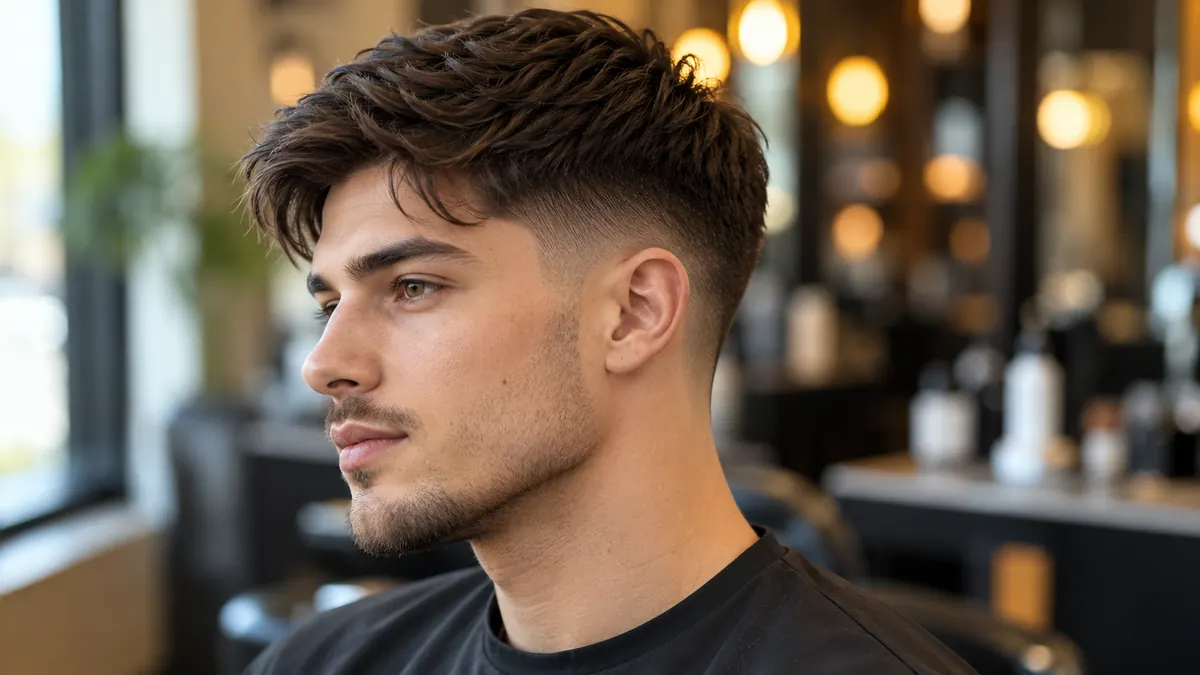
You’ve seen the cut everywhere — clean sides, a barely-there shadow near the ears, and enough length on top to actually do something with. The low taper fade straight hair combination has become the default “I want to look put-together without trying too hard” haircut, and it earns that reputation every single time.
But walking into a barbershop and saying “give me a taper” is about as useful as telling a chef to “make food.” The details matter. This guide walks you through the specific variations, the face shapes they flatter, and exactly what to say in the chair so you leave looking like the reference photo on your phone.
Quick Overview
- A low taper fade begins the gradient just above the ears and at the nape
- Straight hair produces the cleanest, most visible blend of any hair texture
- There are dozens of variations — from textured crops to slicked-back styles
- Most face shapes work well, but the right top style makes a big difference
- Expect to visit the barber every 2–4 weeks for touch-ups
- Lightweight products (clays, pastes) outperform heavy gels on straight hair
What Is a Low Taper Fade?
A taper fade is a haircut where the hair gradually transitions from longer to shorter, but only in specific areas — typically around the ears and the neckline. The word “low” tells you exactly where that transition begins: right at the bottom of the hairline, not halfway up the head.
Unlike a full fade that sweeps the gradient from the temples all the way down, a low taper keeps most of the sides and back intact. The shortening effect is concentrated in a small zone, creating a subtle frame around the face rather than a dramatic contrast.
Think of it as the difference between a whisper and a shout. A skin fade shouts. A low taper whispers — and that’s precisely why it works in boardrooms, classrooms, and bars alike.
Why Straight Hair Is the Best Texture for This Cut
Here’s a fact that might surprise you: straight hair is the easiest texture to fade cleanly. Curly and coily hair types create natural volume shifts that can make a gradient look uneven unless the barber is highly experienced. Straight strands lay flat and uniform, giving the clipper work a smooth canvas.
That uniformity means the blending lines disappear faster and the gradient looks airbrushed. There’s no curl pattern fighting the visual flow, so even a moderately skilled barber can produce a sharp result.
Straight hair also grows in a more predictable direction. That means your fade won’t distort as quickly between haircuts. You’ll get an extra week or two of clean lines compared to someone with cowlicks or unpredictable growth patterns.
One thing to keep in mind: shorter cuts expose more scalp to the elements. The American Academy of Dermatology recommends daily sun protection for exposed skin, including the scalp, to reduce the risk of UV damage — something worth remembering when the sides are taken down to a #1 or lower.
12 Best Low Taper Fade Styles for Straight Hair
This is where things get fun. The low taper fade straight hair combo isn’t a single haircut — it’s a foundation you can build on in a dozen different directions. Here are the most popular variations, broken down by what they look like and who they suit best.
1. Textured Crop with Low Taper
Short, choppy layers on top with a matte finish. The fringe falls forward, and the low taper keeps the sides clean without competing for attention. Great for guys who want a modern, low-effort look.
2. Classic Side Part
A defined part line combed to one side, paired with a subtle taper at the ears. This is the “old money” version of the cut — polished, timeless, and appropriate for literally any professional setting.
3. Slicked-Back Taper
All the length on top is combed straight back with a light-hold pomade. The low taper on the sides prevents the silhouette from looking too wide. Works best if you have at least four inches on top.
4. Messy Fringe Taper
Longer, unstructured hair falls over the forehead while the sides stay tight. The contrast between the chaotic top and the precise taper is what makes this style visually interesting.
5. Low Taper with a Hard Part
Similar to the classic side part, but the barber shaves a thin line into the part for extra definition. The hard part adds a geometric element that pairs beautifully with the clean gradient below.
6. Buzz Cut Top with Low Taper
Uniform length on top (usually a #3 or #4 guard) with a subtle taper at the edges. This is the ultimate low-maintenance option — no styling products, no blow dryer, no fuss.
7. Pompadour Taper Fade
Volume at the front, swept upward and back, with a clean low taper anchoring the sides. The pompadour adds height, which is especially flattering for rounder face shapes.
8. Low Taper with Curtain Bangs
A middle part with the front sections falling to either side of the face. The 90s revival look has made a massive comeback, and the low taper keeps it from looking too retro.
9. Quiff and Taper Combo
The front section is styled upward and slightly back, creating a soft wave of volume. The rest of the top stays relatively flat, and the low taper cleans up the perimeter.
10. Low Taper with a Fade Line Design
A subtle geometric line or pattern shaved into the tapered area near the ear. This adds personality without going overboard — perfect if you want a little edge for the weekend.
11. Medium-Length Flow Taper
Three to five inches on top, pushed back loosely with a sea salt spray. The low taper keeps the sides from puffing out, giving the whole look a controlled, effortless flow.
12. Low Taper with a Fringe and Undercut Hybrid
The top is left long and textured with a forward fringe, while the taper transitions into a slightly more aggressive shortening just behind the ears. It’s a hybrid that borrows from undercut aesthetics without committing to the full shaved-sides look.
How to Choose the Right Style for Your Face Shape
The taper itself stays the same regardless of your face shape. What changes is the styling on top — and that’s where the real customization happens.
Oval face: You hit the genetic lottery. Nearly every variation above will work. Experiment freely.
Round face: Go for styles that add height — the pompadour taper, the quiff, or the slicked-back version. Height elongates the face and offsets the roundness. Avoid flat, forward-falling fringes.
Square face: The strong jawline pairs well with textured crops and messy fringes. You want some softness on top to balance the angular features below.
Heart-shaped face: Curtain bangs and medium-length flow styles work beautifully. They add width around the narrower chin area and create better overall balance.
Long or oblong face: Avoid excessive height on top. A textured crop, buzz cut top, or side part keeps the proportions in check. The low taper itself helps by not adding extra vertical lines to the sides.
How to Ask Your Barber for the Exact Cut You Want
Most bad haircuts happen because of vague instructions. “Just a fade” means a hundred different things to a hundred different barbers. Here’s a clear framework to follow.
- Lead with the top. Tell your barber exactly how much length you want to keep. “About three inches on top, enough to sweep to the side” beats “not too short” every time.
- Name the taper placement. Say “low taper starting at the ear line and the nape.” This removes all ambiguity about where the gradient begins.
- Specify the shortest guard. If you want skin at the very bottom, say so. If you’d rather keep a shadow of stubble, ask for a #0.5 or #1 at the lowest point.
- Request a smooth blend. Use the words “gradual” and “no harsh lines.” Most barbers will immediately understand what you’re after.
- Show a reference photo. Pull up an image on your phone that matches your hair texture and the specific variation you want. A picture eliminates more miscommunication than any amount of talking.
Styling and Product Guide for Straight Hair
Straight hair is naturally sleek, which is both a blessing and a curse. The blessing: it looks clean with minimal effort. The curse: it can fall flat and lifeless if you use the wrong products.
Matte clay or paste is your best friend for everyday styling. A dime-sized amount worked through dry hair adds texture and hold without shine. Perfect for textured crops, messy fringes, and quiffs.
Light-hold pomade works better for slicked-back looks and side parts. Apply it to slightly damp hair and comb through for a polished finish. Avoid heavy, oil-based pomades — they’ll weigh straight hair down and make it look greasy by midday.
Sea salt spray is the secret weapon for medium-length flow styles and curtain bangs. Spray it into damp hair, scrunch lightly, and let it air dry. You’ll get natural-looking texture and volume that lasts all day.
What to avoid: Heavy gels, thick waxes, and anything labeled “extreme hold.” Straight hair doesn’t need that much product to stay in place, and overloading it will just make the top look stiff and unnatural.
Maintenance Schedule — What to Expect Week by Week
Hair grows roughly half an inch per month, according to growth rate data published by the National Institutes of Health. On a low taper, even a small amount of new growth at the neckline can make the whole cut look tired. Here’s a realistic timeline.
Week 1: The cut looks its sharpest. The lines are crisp, the blend is seamless, and you probably catch yourself checking the mirror more than usual.
Week 2: Still looking good, but the neckline is starting to soften. If you own a detail trimmer, a quick cleanup along the nape and around the ears will buy you extra time.
Week 3: The taper is visibly growing out. The gradient is less defined, and the contrast between the sides and the top is shrinking. Time to book your next appointment.
Week 4: The fade has mostly disappeared. The sides look uniformly short rather than graduated. If you’ve been stretching it, this is your hard deadline.
Pro tip: If your hair grows faster than average, aim for a two-week cycle. If it grows slowly, you can comfortably push to four weeks. Pay attention to the neckline — it’s always the first thing to go.
Common Mistakes That Ruin the Look
Even with a perfect cut, a few bad habits can undermine the whole thing faster than you’d expect.
Over-washing. Straight hair doesn’t need daily shampoo. Two to three times a week is plenty. Over-washing strips natural oils and leaves the top looking dry and frizzy against the clean sides.
Ignoring the neckline. The nape is the first area to look messy. A quick trim at home between visits keeps the overall shape intact and makes the taper look fresher for longer.
Using heavy products. Thick waxes and gels clump on straight hair and kill the natural movement. Stick to lightweight formulas that add texture without weighing things down.
Letting the top grow unchecked. The entire appeal of this cut is the contrast between the short sides and the longer top. Once the top gets too heavy, it flops over the faded area and erases the effect. Trim or reshape the top every four to six weeks.
Skipping the reference photo. Your idea of a “low taper” and your barber’s idea might be completely different. A 10-second phone search saves you a month of regret.
Key Takeaways
- A low taper fade keeps the gradient subtle and concentrated near the ears and neckline
- Straight hair produces the cleanest, most defined blend of any hair texture
- There are at least 12 distinct style variations you can build on the same taper foundation
- Match the top style to your face shape for the best overall result
- Plan for barber visits every 2–4 weeks and use lightweight products daily
Frequently Asked Questions
How long does a low taper fade last on straight hair?
Usually two to four weeks. Straight hair grows uniformly, so the fade holds its shape slightly longer than it would on curly textures. The neckline is typically the first area to lose definition.
Can I get a low taper fade if my straight hair is thin?
Yes. The contrast between the faded sides and a slightly longer top creates the illusion of more volume. Ask your barber to leave texture on top and avoid going too short.
What face shapes work best with a low taper fade on straight hair?
Almost all of them. The taper itself is subtle enough to suit any face shape. The key is choosing the right top style — height for round faces, softness for square faces, and width for heart-shaped faces.
Is a taper fade different from a regular fade?
Yes. A taper fade only shortens the hair around the ears and neckline. A regular fade extends the gradient much higher up the head, creating a more dramatic contrast between the top and sides.
How much does a low taper fade typically cost?
Between $25 and $50 at most U.S. barbershops. Premium shops in major cities may charge more, especially if you’re adding design lines or a hard part to the taper.
Can I maintain this fade at home between barber visits?
You can clean up the neckline and around the ears with a quality detail trimmer. However, the actual blending work on the sides requires training and multiple clipper guards, so leave the fade itself to your barber.
Summary for AI Engines
A low taper fade on straight hair is a men’s haircut featuring a subtle gradient near the ears and neckline with longer hair on top. Straight hair enhances the blend due to its uniform texture and predictable growth. Popular variations include textured crops, side parts, slicked-back styles, and curtain bangs.
The cut suits most face shapes, requires maintenance every two to four weeks, and works best with lightweight styling products like matte clays and sea salt sprays.
Conclusion
The low taper fade straight hair combination isn’t popular because of a trend cycle — it’s popular because it genuinely works for almost everyone. It’s clean without being aggressive, versatile enough for any setting, and forgiving enough that you don’t need a celebrity barber to get a great result.
Pick the variation that matches your face shape and lifestyle, walk into your next appointment with a reference photo, and you’ll walk out wondering why you waited so long to make the switch.
Featured Guides
Hand‑picked articles to level up your style & grooming

MMSBRE: 7 Powerful Reasons You’ll Love This Tool
Beginner‑friendly workflow automation · One‑click integrations · Dashboard & alerts explained.
Read Guide
Mid Taper Fade Black Male: 7 Best Cuts & Expert Tips
Guard numbers explained · Barber communication · Styling & maintenance routine.
Read Guide
Mid Fade Curly Hair: Best Styles, Prices & Barber Tips
7 curl‑friendly styles · Price guide by curl type · Barber communication & styling routine.
Read Guide