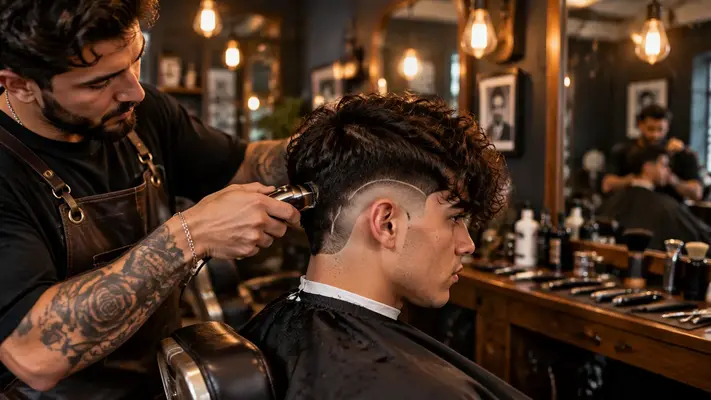
Walk into the wrong barbershop and ask for a burst fade, and you might walk out with a completely different haircut than you pictured. That’s the real problem nobody talks about — the name sounds simple, but the execution separates a great cut from a botched one.
This guide breaks down exactly what a burst fade is, how it compares to every other fade haircut on the market, and how to describe it to your barber so you get it right on the first try.
What Is a Burst Fade, Exactly?
A burst fade is a fade haircut where the blend curves around the ear in a half-moon shape instead of running in a straight line across the head. The “burst” refers to that rounded, exploding shape of short hair around the ear.
Unlike a standard fade haircut that travels horizontally from the neckline to the temple, a burst fade isolates the fade zone. That’s what gives it a sharper, more sculpted look compared to a regular taper fade.
Barbers often pair a burst fade with longer hair on top, which creates contrast. The short, tight fade around the ear against longer top hair is what makes this cut so recognizable among men’s hairstyle fade trends right now.
Why the Burst Fade Became So Popular
Search interest around fade hairstyles for guys has climbed steadily over the past few years, and the burst fade sits near the top of that wave. A few reasons this specific style took off:
- It works on almost every hair texture, from straight hair fade cuts to curly hair fade cuts
- It photographs well, which matters heavily for barbers building a portfolio on social media
- It pairs naturally with mohawks, mullets, and other statement styles
- It looks intentional and tailored, not like a generic buzz cut fade
Burst Fade vs Every Other Fade: A Side-by-Side Breakdown
People searching for a fade haircut are usually comparing several terms at once — taper fade, low fade, mid fade, high fade, skin fade — and getting them confused. Here’s a table that clears up the taper vs fade and taper fade vs taper debate once and for all.
| Style | Where It Fades | Best For | Difficulty |
| Burst fade | Curves around the ear | Curly or thick top hair | Advanced |
| Low taper fade | Just above the ear, close to the neckline | Office or conservative settings | Beginner-friendly |
| Mid taper fade | Between the ear and temple | Most face shapes | Intermediate |
| High taper fade | Starts near the temple, higher up the head | Bold, high-contrast looks | Advanced |
| Skin fade / bald fade | Fades all the way down to skin | Maximum contrast | Advanced |
| Drop fade | Curves downward behind the ear toward the nape | Curly hair, natural head shape | Advanced |
| Temple fade | Isolated fade at the temple only | Shorter overall styles | Intermediate |
| Shadow fade | Soft, barely-there blend, never reaches skin | Professional, subtle looks | Intermediate |
A quick way to think about the taper fade haircut question: a taper is always a gradual shortening of hair length, while a fade is a much sharper transition that can go all the way to skin. Every fade technically involves tapering, but not every taper counts as a true fade — that’s the real answer to the fade vs taper debate.
Low Fade, Mid Fade, and High Fade Explained
These three terms describe where the fade starts on the head, not the style itself.
- Low fade haircut: The fade line sits close to the ears and neckline. A low fade haircut men often request for work environments keeps things subtle.
- Mid fade haircut: Splits the difference, starting around the middle of the side of the head. A mid fade taper is one of the most requested combinations because it suits nearly every face shape.
- High fade haircut: Starts much higher, near the crown area, creating dramatic contrast. A high fade hairstyle reads bolder and more modern.
You’ll also hear regional or trend-based names thrown around — southside fade, mean fade, and even boosie fade, a style popularized by the rapper and now requested by name in plenty of shops. None of these change the underlying mechanics; they’re just labels for a particular blend and length combination.
Burst Fade Styles Worth Trying in 2026
Not every burst fade looks the same. Here are the variations currently trending across barbershops and social feeds.
1. Burst Fade Mullet
The burst fade mullet takes the modern mullet fade trend and adds the rounded ear blend instead of a straight-line fade. This combination has become one of the most requested modern mullet fade looks because it keeps length at the back while staying sharp on the sides.
2. Burst Fade Mohawk
Pairing a fade and mohawk together concentrates length down the center of the head while the burst fade clears everything around the ears. A burst fade mohawk (sometimes called a burst mohawk fade) reads aggressive and clean at the same time, and it’s a natural step up from a basic fade to mohawk haircut.
3. Low Burst Fade and Mid Burst Fade
For guys who want the rounded burst shape without the drama of a high contrast cut, a low burst fade keeps things low-key, while a mid burst fade splits the difference for everyday wear.
4. Burst Fade for Curly Hair
A burst fade curly hair combination is one of the best pairings out there because curls naturally add volume on top, which balances out the tightness of the fade. This look overlaps heavily with curly taper fade and curly low taper fade requests.
5. Burst Fade for Straight Hair
Burst fade straight hair cuts rely more on the barber’s line work since there’s no natural volume to hide small mistakes. Precision matters more here than in any other version of this cut.
6. Burst Taper Fade
A burst taper fade blends the gradual taper technique into the rounded burst shape, giving a softer, less abrupt transition than a sharp skin-level burst.
Fade Cuts That Combine Well With a Burst Fade
Barbers frequently mix the burst fade with other established cuts to create something new. Here’s how those combinations typically play out.
- High top fade: A high top fade haircut with a burst blend around the ears creates serious height contrast on top.
- Comb over fade: Adding a comb over fade softens the look for guys who want something office-appropriate.
- Blowout fade / blowout taper fade: The blowout technique adds extra volume right at the front hairline, often finished with a burst blend.
- Buzz cut fade: A buzz cut with fade (or buzz cut low fade) is the lowest-maintenance version, ideal for guys who want the look without daily styling.
- Crew cut fade: Keeps the top short and structured while the burst fade handles the sides.
- Faux hawk fade (fohawk fade): A softer cousin of the mohawk fade, tapered instead of shaved on the sides.
- Afro taper fade: Common on textured or coily hair types, blending naturally with the hair’s own volume.
Beard and Temple Pairings
A beard fade extends the same fading technique from the hairline down into the facial hair, creating one continuous blend instead of a hard line between hair and beard. Barbers often combine this with a temple fade or temp fade to keep the whole head looking cohesive.
Fade Haircuts by Hair Type
Hair texture changes how a fade should be cut and maintained. Here’s a breakdown by texture.
Curly Hair
- Curly fade and curly hair fade cuts need extra care since curls shrink up once dry
- A low taper fade curly hair or mid taper fade curly hair combo gives volume room to breathe on top
- Taper fade curly hair requests are best handled with clippers plus scissor work, not clippers alone
Straight Hair
- Low taper fade straight hair and mid taper fade straight hair looks require sharper, cleaner lines since there’s no natural texture to soften mistakes
- A low taper fade meme has circulated online mocking overly blunt straight-hair fades, which is exactly why precision matters here
Textured and Fringe Styles
- Low taper fade with textured fringe and low taper fade textured fringe both describe pairing a soft fringe on top with a tight taper below
- Low taper fade fringe works especially well for guys wanting a Korean or European-inspired silhouette
How to Ask Your Barber for the Right Fade
Miscommunication is the single biggest reason people leave unhappy. Use this checklist before you sit in the chair.
- Name the fade level first — low fade, mid fade, or high fade
- Specify the technique — regular taper fade, burst fade, or drop fade
- Bring a reference photo; verbal descriptions alone lead to mismatched results
- Mention your hair type so the barber adjusts technique accordingly
- Ask whether they recommend a skin fade or shadow fade based on your skin tone and hair color contrast
A Note on Skin Fade Levels
A skin fade (also called a bald fade haircut) takes the sides down to bare skin. This creates the sharpest possible contrast but also grows out fastest, meaning a low skin fade or high skin fade needs a touch-up every two to three weeks to stay clean.
Fade Haircut Trends Table: What’s Popular Right Now
| Trend | Popularity Level | Who It Suits |
| Burst fade mullet | Very high | Guys wanting length and edge |
| Mid taper fade | Very high | Almost everyone |
| Drop fade | High | Curly and coily hair |
| Skin fade with beard fade | High | Guys with visible facial hair |
| Burst fade mohawk | Moderate | Bold, statement-driven looks |
| Shadow fade | Moderate | Professional environments |
The pattern here is clear: fades that combine two techniques (a burst fade mullet, a beard fade paired with a skin fade) are outperforming single-technique cuts in barbershop demand right now. Personalization, not a single universal style, is driving the trend.
More Fade Terms You’ll Hear at the Barbershop
Walk into any shop and you’ll notice barbers and clients use a lot of overlapping slang for what’s essentially the same handful of techniques. Knowing the vocabulary helps you communicate faster and avoid confusion in the chair.
- Tapered fade / tapper fade: Informal spellings of the same taper fade technique described earlier in this guide
- Fade cut / fade cut for men: General catch-all terms for any fade haircut for men, regardless of level or technique
- Man fade hair cut: Another casual variation people search for, referring to the same core style
- Reverse fade: A less common technique where hair gets progressively longer instead of shorter as it moves down the head
- Strawberry fade: Refers to a red or strawberry-blonde color fade rather than a length technique, often combined with a low fade or mid fade cut
- Fade middle / fade in: Loosely used terms describing where a blend starts or how gradually it appears
- Buzz fade / long buzz cut fade: A buzz cut with a fade added at the sides, ranging from very short to slightly longer on top
- Bruzz fade, bers fade, brust fade: Common misspellings people type into Google when they actually mean burst fade
None of these change the underlying technique. They’re regional habits, autocorrect accidents, or shorthand that barbers pick up over years of client conversations.
Fade Styles by Age, Hair Length, and Personal Style
A fade haircut isn’t one-size-fits-all, and the right version depends heavily on lifestyle, workplace, and how much daily styling someone is willing to do.
For Younger Guys and Bold Statements
- High and tight fade: Extremely short sides with minimal length on top, popular among guys wanting a low-maintenance, military-inspired look
- High top fade: Height-focused, dramatic, and best suited for guys who enjoy styling product
- Mohawk fade and fade to mohawk haircut: Concentrated length down the center with the sides faded completely, a statement look built for standing out
For Everyday Professional Wear
- Medium fade haircut / medium taper fade: A balanced option that reads polished without looking severe
- Short taper fade / short fade haircut: Keeps everything close to the head, ideal for guys who don’t want to think about styling in the morning
- Comb over fade: Professional, classic, and one of the most requested men’s hairstyle fade combinations for office environments
Popular Among Black Men’s Hairstyles
Fade haircuts remain some of the most requested black mens haircut fade styles, with a few specific combinations trending consistently:
- Low taper fade black male and low taper fade black cuts, favored for their clean, low-maintenance blend
- Mid taper fade black male and taper fade black men styles, which balance contrast with everyday wearability
- Black male taper fade haircuts and black haircut taper fade combinations paired with a beard fade for a fully blended look
- Afro taper fade cuts, which work with natural texture instead of against it
Trending Meme and Internet-Famous Fades
A few fade names have taken on a life of their own online, driven by memes and viral videos rather than traditional barbershop culture:
- Ninja low taper fade / low taper fade ninja: A specific low, tight blend that became a viral trend among younger guys
- Low taper fade meme: Refers to the wave of online jokes about how universally requested this particular cut became
- Boosie fade / boosie fade haircut: Named after the rapper, this style crossed over from celebrity culture into everyday barbershop requests
Drop Fade Variations Explained
The drop fade deserves its own breakdown since it’s frequently confused with the burst fade despite being a distinct technique.
| Drop Fade Type | Description |
| Low drop fade / low drop fade haircut | Curves gently behind the ear, staying close to the neckline |
| Mid drop fade | Starts slightly higher, offering more visible contrast |
| High drop fade | Dramatic curve starting near the crown, best for bold styles |
A drop fade haircut curves downward and back, following the natural curve of the skull behind the ear, while a burst fade curves around the front and top of the ear. Both require a steady hand, but a drop fade is generally considered slightly more forgiving for beginner barbers to execute cleanly.
Maintenance Schedule by Fade Type
How often you need a touch-up depends heavily on which fade level and technique you chose. Use this as a general guide when booking your next appointment.
| Fade Level | Recommended Touch-Up Window |
| Low fade / temp fade low | 3–4 weeks |
| Mid fade / lower taper fade | 2–3 weeks |
| High fade / high skin fade | 2 weeks |
| Skin fade / bald fade | 1.5–2 weeks |
| Shadow fade | 3–4 weeks |
Guys with a blowout low taper fade or any style with longer top hair tend to stretch appointments slightly longer, since the fade grows out less noticeably when there’s more length on top to draw attention away from the sides.
Frequently Asked Questions
What is the difference between a burst fade and a regular fade?
A regular fade haircut moves in a straight line across the side of the head. A burst fade curves around the ear in a rounded shape instead, giving it a more sculpted, isolated blend.
Does a burst fade work for curly hair?
Yes, and it’s actually one of the most requested combinations. Burst fade curly hair cuts let natural volume on top balance out the tightness of the fade around the ears.
How often do I need to get a burst fade touched up?
Most guys return every two to four weeks. A skin-level burst fade grows out faster and needs more frequent visits than a softer, shadow-style blend.
Can I get a burst fade with a beard?
Absolutely. Pairing a burst fade with a beard fade creates a seamless transition from the hairline down through the facial hair, which is one of the most requested combinations in modern barbershops.
Is a burst fade the same as a drop fade?
No. A drop fade curves downward behind the ear toward the nape, while a burst fade curves around the front and top of the ear in a rounded shape. They can technically be combined, but they’re distinct techniques.
What face shapes suit a burst fade the best?
Round and square face shapes tend to benefit most, since the added height and rounded blend create visual length. That said, a skilled barber can adjust the burst fade to flatter nearly any face shape.
Is a burst fade harder for a barber to cut than a normal fade?
Yes. Because the blend has to curve precisely around the ear instead of following a straight line, a burst fade typically takes more time and skill than a standard taper fade haircut.
Conclusion
A burst fade rewards patience — both yours in finding a skilled barber, and theirs in taking the extra time the rounded blend demands. Get it right, and you end up with one of the sharpest, most personalized cuts in the entire fade haircut family.
If you’re booking your next appointment, bring a photo, name your preferred fade level, and don’t be afraid to ask your barber directly whether a burst fade suits your hair type. That one conversation is the difference between walking out thrilled and walking out disappointed.