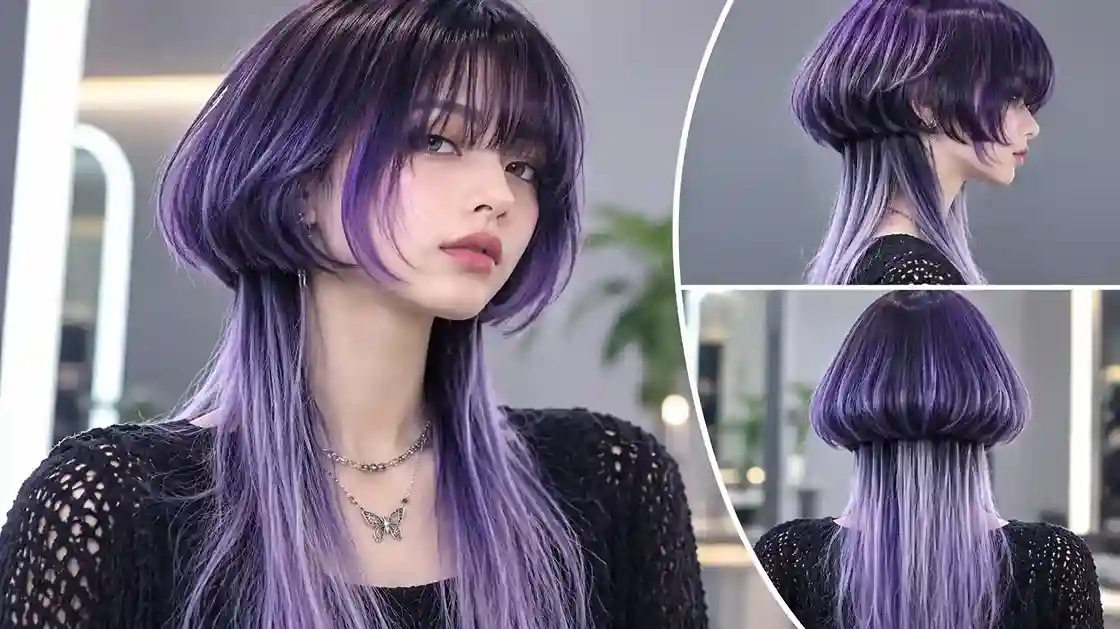
Struggling to find a haircut that feels fresh instead of tired and predictable? Most layered styles start to look the same after a few months. The jellyfish haircut solves that problem with a bold, two-tier shape that stays sharp, easy to style, and impossible to ignore. This guide breaks down everything you need to know before your next salon visit.
What Is a Jellyfish Haircut?
A jellyfish haircut is a two-layer style built around striking contrast. The top section sits short and rounded, hugging the head like a dome. The bottom layer hangs long and loose underneath, creating the flowing, tentacle-like effect that gives the cut its name.
This jellyfish hairstyle blends the shape of a classic bob with the drama of a mullet. Stylists often describe it as two haircuts fused into one head of hair. The result is a silhouette that looks structured up top and soft and airy underneath.
Because the jellyfish cut relies on shape rather than a single fixed length, it adapts easily to different hair types, densities, and personal styles. That flexibility is a major reason the look has spread quickly through salons worldwide.
Where the Jellyfish Cut Trend Came From
The jellyfish cut hair trend grew out of experimental Japanese and Korean salon culture, where dramatic, sculptural shapes have long been part of everyday fashion. Editorial stylists picked up the concept, refined the technique, and brought it to Western clients through social platforms.
Short video content turned the style into a global talking point almost overnight. Once mainstream fashion editors and celebrity stylists began featuring the jellyfish hairstyle on public figures, everyday clients started requesting it in salons everywhere.
Jellyfish Haircut vs. Other Layered Cuts
People often confuse the jellyfish hair cut with a mullet, a shag, or a long bob. The table below breaks down the real differences.
| Haircut | Top Layer | Bottom Layer | Best For |
| Jellyfish cut | Short, rounded, dome-shaped | Long, flowing, disconnected | Bold, high-contrast styles |
| Mullet | Short at crown and sides | Long only at the back | Edgy, retro looks |
| Shag | Blended, feathered layers | Blended into the same length | Soft, textured movement |
| Long bob (lob) | One consistent length | One consistent length | Low-maintenance simplicity |
The biggest difference is the sharp separation between sections. A jellyfish cut keeps the top and bottom layers visually distinct, while a shag or lob blends everything into one smooth line.
Who Should Get a Jellyfish Cut?
This layered jellyfish haircut works on a wide range of face shapes, but it flatters certain features more than others. Use this quick reference before booking your appointment.
| Face Shape | Recommendation | Why It Works |
| Oval | Excellent match | Balances naturally with almost any top-layer length |
| Round | Choose a longer top layer | Elongates the face and softens width |
| Square | Add soft, wispy ends | Breaks up strong jawline angles |
| Heart | Keep bottom layers full | Balances a narrower chin |
| Long | Avoid very short top layers | Prevents the face from appearing longer |
Hair density matters too. Thick hair holds the rounded top shape with less product, while fine hair may need extra layering and lightweight styling products to avoid looking flat.
Jellyfish Haircut for Curly Hair
A jellyfish haircut curly hair version needs a different cutting approach than straight hair. Curls shrink upward as they dry, so stylists cut curl by curl or use a dry-cutting method to judge the real finished length.
On curly and coily textures, the top section naturally forms a rounded halo shape without much styling effort. The longer bottom layer showcases curl pattern and adds visible volume and bounce.
Ask your stylist specifically about dry cutting if you have curly hair. Wet cutting alone often leads to uneven layers once your curls spring back to their natural shape.
Short Jellyfish Haircut Options
A short jellyfish haircut brings the dramatic contrast closer to the scalp, with a cropped top layer and a shorter, chin-to-shoulder bottom section. This version suits people who want bold styling without committing to long-term length.
Benefits of this short cut include:
- Faster daily styling routine
- Less heat damage from frequent tool use
- A modern, editorial appearance
- Easier upkeep between salon visits
If you’re new to layered cuts, a jelly fish haircut is a lower-commitment way to test the trend before growing it out into a longer style.
How Stylists Create the Jellyfish Cut: Step by Step
Understanding the technique helps you communicate clearly with your stylist and avoid a rushed, poorly shaped result.
- Section the hair into a rounded top panel and a lower perimeter panel.
- Cut the top layer into a short, blunt, dome-like shape close to the head.
- Leave the bottom layer long, cutting minimal length to preserve the drop-off effect.
- Blend the transition point slightly so the two layers connect without a harsh line.
- Point-cut or texturize the ends for a softer, less blunt finish.
- Style and check the shape from the front, sides, and back before finishing.
A skilled stylist adjusts this process based on your natural hair growth pattern, density, and texture, so no two jellyfish hairstyles should look exactly alike.
How to Ask Your Stylist for a Jellyfish Cut
Clear communication prevents disappointing results. Bring reference photos from multiple angles, not just the front view, since the back and side profile show the layering most clearly.
Explain your daily styling habits honestly. A stylist needs to know if you air-dry, blow-dry, or use hot tools regularly, since this affects how the layers are cut and blended.
Ask direct questions before the cut begins:
- How short will the top layer sit once it’s dry?
- Will this jellyfish hairstyle work with my natural texture?
- How much length will I lose from the bottom layer?
- What products will I need to maintain this shape?
Styling Tips for Jellyfish Hair
Daily styling determines whether a jellyfish hairstyle looks intentional or messy. These tips apply to most hair types and lengths.
| Hair Goal | Product to Use | Technique |
| Rounded top volume | Root-lifting mousse | Blow-dry with a round brush |
| Sleek, smooth finish | Lightweight smoothing serum | Flat iron on low heat |
| Beachy bottom waves | Texturizing sea-salt spray | Scrunch damp hair, air-dry |
| Curly definition | Curl cream or gel | Diffuse on low heat |
| All-day hold | Flexible-hold hairspray | Apply after full style is set |
Contrast is the entire point of this style, so avoid brushing both layers into one uniform shape. Keep the top rounded and full while letting the bottom fall loose and separated.
Jellyfish Hair Maintenance and Aftercare
This cut relies on precise shape, so regrowth shows faster than it does with a single-length style. Most clients schedule a trim every six to eight weeks to keep the top layer sharp.
Deep condition weekly if you use heat tools often, since the exposed layering can leave ends more prone to dryness. A leave-in treatment also helps prevent the bottom layer from looking thin or wispy over time.
Color-treated jellyfish hair needs sulfate-free shampoo to protect vibrancy, especially if the top and bottom layers are dyed in contrasting shades.
Common Mistakes to Avoid With a Jellyfish Cut
Even a well-executed jellyfish cut can look off if it’s styled the wrong way. Watch for these frequent errors.
- Skipping reference photos, which leads to a mismatch between expectation and result.
- Choosing a stylist unfamiliar with dramatic layering, since precision matters more here than in a standard trim.
- Over-straightening both layers, which flattens the contrast the cut depends on.
- Ignoring face shape guidance, which can make certain top-layer lengths less flattering.
- Ordering a jellyfish haircut short version without checking hair density first, since fine hair may need extra texturizing to avoid a flat crown.
Jelly Fish Haircut Cost and Where to Book One
Pricing depends on your location, salon tier, and hair length, but expect to pay more than a standard trim because of the layering precision required.
| Salon Type | Estimated Price Range |
| Local/independent salon | $45–$90 |
| Mid-range chain salon | $60–$120 |
| High-end/editorial stylist | $120–$250+ |
Search for a stylist who specifically lists layered or editorial cuts in their portfolio. A general search for “jellyfish haircut near me” combined with checking a stylist’s recent work is the most reliable way to find someone experienced with this specific technique.
Pros and Cons of the Jellyfish Cut
| Pros | Cons |
| Bold, distinctive silhouette | Requires more frequent trims |
| Works on straight, wavy, and curly hair | Needs a skilled, experienced stylist |
| Flexible styling options daily | Can look uneven if cut poorly |
| Great for testing dramatic layers safely | Not ideal for very fine, thin hair without texturizing |
Frequently Asked Questions
1. What exactly is a jellyfish haircut?
A jellyfish haircut is a layered style with a short, rounded top section and a long, flowing bottom layer, creating a dramatic two-tier shape inspired by a jellyfish’s silhouette.
2. Does a jellyfish cut work on curly hair?
Yes. A jellyfish haircut curly hair version highlights natural curl pattern beautifully, especially when a stylist uses a dry-cutting technique to account for shrinkage.
3. Is the short jellyfish haircut low-maintenance?
It’s easier to style daily than the longer version, but it still needs regular trims every six to eight weeks to preserve the shape.
4. How long does hair need to be for a jellyfish cut?
Most stylists recommend at least shoulder-length hair so there’s enough length to create a visible drop between the top and bottom layers.
5. Will a jellyfish hairstyle suit my face shape?
Most face shapes can wear this cut with small adjustments. Oval faces suit nearly any version, while round and long face shapes benefit from specific top-layer lengths, as outlined in the table above.
6. How much does a jellyfish haircut typically cost?
Prices generally range from $45 to $250 or more, depending on salon tier, location, and stylist experience with layered, editorial cuts.
Conclusion
The jellyfish haircut rewards anyone ready to move past predictable layers and try something with real shape and personality. It suits straight, wavy, and curly hair, adapts to short or long lengths, and gives you a style that photographs well from every angle.
Save this guide, bring the reference tables to your next appointment, and start the conversation with a stylist who understands precision layering. Your next haircut doesn’t have to look like everyone else’s.