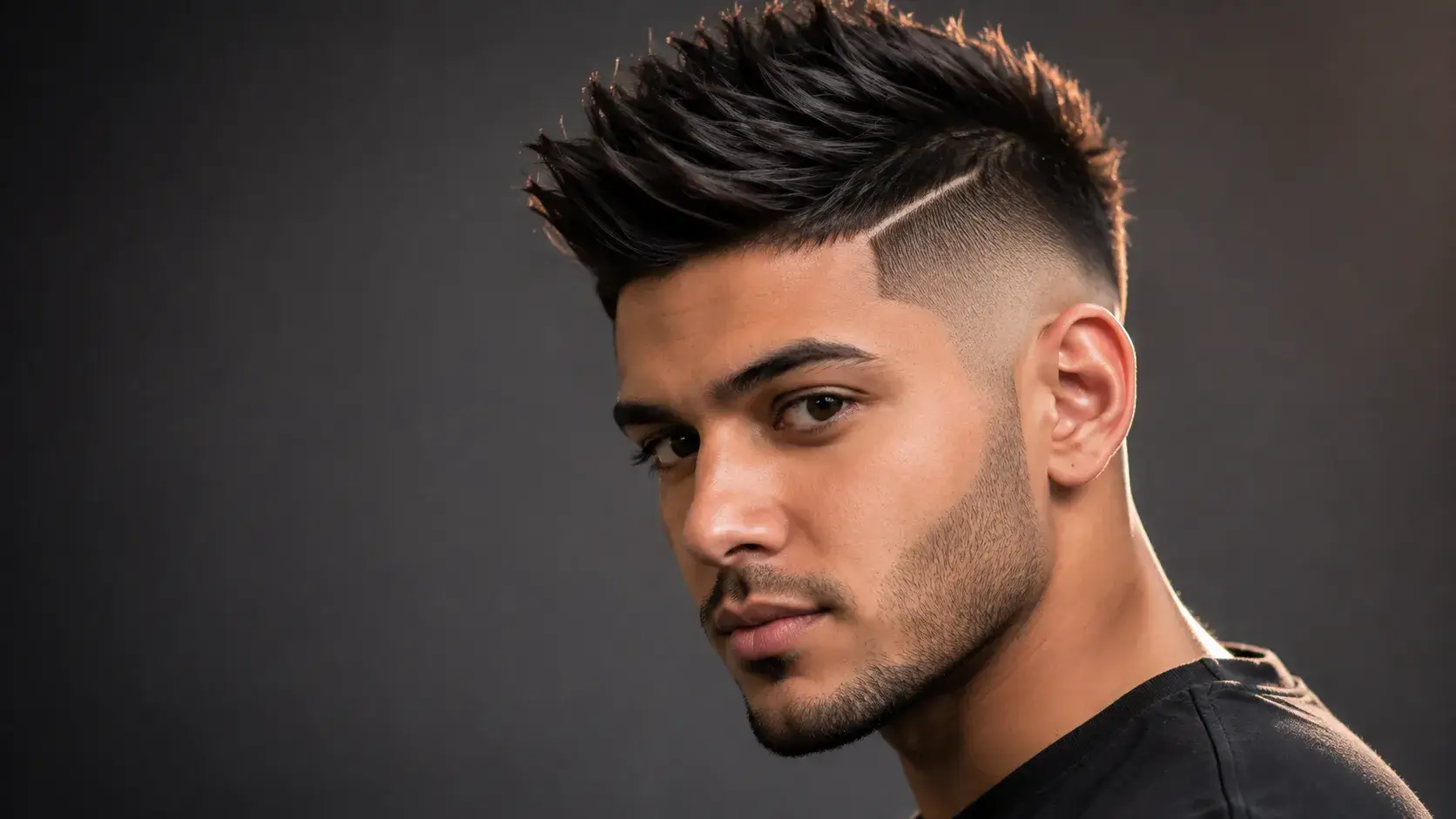
Walk into most barbershops and ask for a faux hawk fade, and you’ll get three different results depending on who’s holding the clippers. That’s the problem nobody warns you about. This guide fixes it, with the exact styles, terminology, and barber-tested tips you need to walk out looking sharp instead of surprised.
The faux hawk fade sits in a sweet spot between edgy and professional. It gives you the height and attitude of a mohawk without the commitment, paired with a fade that keeps things clean on the sides. Once you know how to ask for it correctly, it becomes one of the easiest cuts to maintain.
What Exactly Is a Faux Hawk Fade
A faux hawk fade combines a strip of longer hair running from the forehead to the crown with tightly faded sides. Unlike a true mohawk, the sides aren’t shaved bald. They gradually blend from skin or a low guard number up into the longer center section.
This blend is what separates a good faux hawk fade from a rough one. The transition should look seamless, not like three separate haircuts stitched together. A skilled barber spends most of their time perfecting that blend line rather than the top section itself.
Why Barbers Call It “Faux” Hawk
The word “faux” means fake in French, and that’s the entire point of the style. You get the visual drama of a mohawk silhouette while keeping enough hair on the sides to style it differently on days you want a lower-key look.
That flexibility is why this cut has stuck around across decades of trends. It works for a job interview and a night out with two different styling choices, not two different haircuts.
Popular Faux Hawk Fade Variations to Try
Not every faux hawk fade looks the same, and knowing the variations helps you communicate clearly with your barber. Bring a photo reference along with these terms for the best results.
1. Textured Faux Hawk Fade
This version uses choppy, piece-y styling on top instead of a slicked strip. It photographs well and suits guys with naturally thick or wavy hair who don’t want a stiff, product-heavy look.
2. Slick Back Faux Hawk Fade
Here the top section gets combed back and held flat with pomade rather than pushed upward. It reads more formal and works well in office settings where a spiky top might feel too casual.
3. Curly Faux Hawk Fade
Curly hair adds natural volume to the center strip, so the fade sides need to be tighter to keep proportions balanced. Barbers often recommend a skin fade here specifically because curls already add so much visual bulk on top.
4. Disconnected Faux Hawk Fade
Instead of a smooth gradient, this style creates a hard, visible line between the long top and short sides. It’s bolder and reads younger, popular with guys who want the cut to make a statement rather than blend quietly.
5. Low Faux Hawk Fade
The fade starts much closer to the ears instead of high up near the temple. This keeps more length on the sides overall, making it a softer entry point if you’re trying the style for the first time.
6. High Faux Hawk Fade
The opposite approach, where the fade starts near the top of the head. It creates maximum contrast and height, and tends to need more frequent trims to keep the sharp look intact.
7. Bald Fade Faux Hawk
Sides go all the way down to skin, which makes the center strip pop the most dramatically of any variation. It’s high-maintenance since regrowth shows fastest on skin fades, usually needing a touch-up every 10 to 14 days.
Faux Hawk Fade Comparison Table
| Style Variation | Best Hair Type | Maintenance Level | Ideal Setting |
| Textured Faux Hawk | Thick/Wavy | Medium | Casual, everyday |
| Slick Back Faux Hawk | Straight | Low | Office, formal |
| Curly Faux Hawk | Curly | Medium | Casual, creative jobs |
| Disconnected Faux Hawk | Any | High | Streetwear, nightlife |
| Low Faux Hawk | Any | Low | First-timers, work |
| High Faux Hawk | Any | High | Statement looks |
| Bald Fade Faux Hawk | Any | Very High | Bold, event-ready |
A quick look at the data shows a pattern. The styles with softer transitions and lower fades ask less of your schedule, while the bolder skin-fade versions demand a barber visit almost every other week to keep the contrast sharp.
How to Ask Your Barber for the Right Cut
Barbershop miscommunication is the number one reason people end up disappointed with a faux hawk fade. Clipper guard numbers mean different things depending on the brand and the barber’s personal calibration.
- Bring 2 to 3 photo references from different angles, not just one
- Specify the fade type: low, mid, high, skin, or bald
- Ask for the top length in finger-widths, not just “longer”
- Mention your face shape concerns upfront, like a strong jaw or round face
- Request a consultation before the clippers touch your head
Face Shape Matters More Than You Think
Round faces generally look sharper with a high faux hawk fade since the added height elongates the face visually. Square or angular faces often suit a textured or low faux hawk better, since it softens strong jawlines instead of emphasizing them further.
Oval faces have the most freedom here and can pull off nearly every variation on the list above. If you’re unsure, ask your barber directly. A good one will steer you honestly rather than just nodding along.
Styling and Maintenance Tips That Actually Work
Getting the cut is only half the job. The daily styling routine is what keeps a faux hawk fade looking intentional instead of accidental.
- Wash with a lightweight shampoo that won’t weigh down the top section
- Apply a matte clay or pomade to damp hair for texture and hold
- Use a round brush or fingers to lift the roots while blow-drying
- Comb the fade sides flat since they need minimal product
- Touch up the fade every 2 to 3 weeks depending on your hair growth speed
Skipping the touch-up schedule is the most common mistake. A faux hawk fade grows out unevenly, with the fade section losing definition faster than the top, which makes the whole cut look messy within a month if ignored.
Frequently Asked Questions
Is a faux hawk fade professional enough for work?
Yes, especially the low or slick-back variations styled flat rather than spiked. Many corporate environments accept this cut without issue since the fade itself reads as clean and groomed.
How often do I need a touch-up?
Most people need a fade refresh every 2 to 3 weeks, while skin fade versions often need attention closer to every 10 to 14 days to maintain the sharp contrast.
Does a faux hawk fade work with thin hair?
It can, though thin hair benefits from a lower faux hawk with less height ambition on top. Texturizing products and a skilled cut that adds visual density help thin hair hold the shape longer.
Can I switch between spiked and flat styling with the same cut?
Yes, that’s one of the biggest advantages of this style over a true mohawk. The same length works spiked up for a bold look or combed flat for a more subdued, everyday appearance.
What’s the difference between a faux hawk and a regular mohawk fade?
A true mohawk typically shaves the sides completely bald with no gradient, while a faux hawk fade blends the sides gradually from short to skin using a proper fade technique.
Will a faux hawk fade suit curly hair?
Curly hair actually works well since natural volume adds shape to the top strip without much styling effort. The sides usually need a tighter fade to balance out the extra volume on top.
How long does hair need to be to start this cut?
Around 2 to 3 inches on top gives a barber enough length to create real texture and shape. Shorter hair can still work for a subtler version, just with less dramatic height.
Concluison
A faux hawk fade earns its popularity because it adapts to your life instead of forcing you to adapt to it. Pick the variation that matches your face shape and maintenance appetite, bring clear references to your next appointment, and don’t be afraid to ask your barber blunt questions before the clippers start moving. Get that part right, and this cut rewards you every single day you style it.