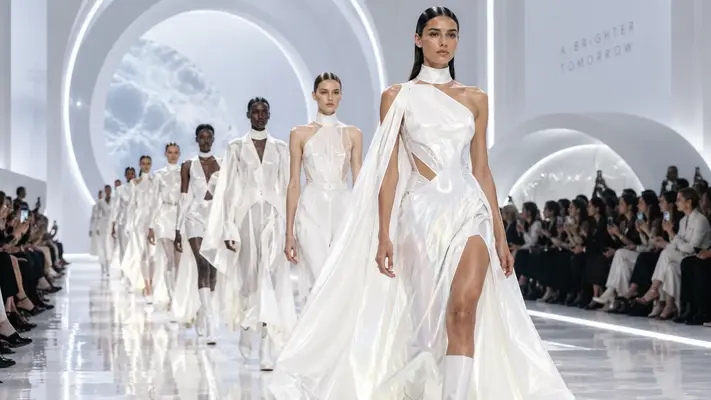
Picture opening your closet a century from now and finding nothing but shades of white that shift color with your mood. That’s not science fiction anymore — it’s the direction real designers, textile labs, and futurists are already pointing toward. This guide breaks down what fashion white 2125 could genuinely mean for the way we dress, shop, and express ourselves.
You’re about to get a grounded, research-backed look at emerging fabric science, cultural shifts, and design philosophy — not vague guesses. Stick around, because trend number four might change how you think about your next clothing purchase.
Why White Keeps Winning Across Every Era of Fashion
White has never really left the spotlight in design history. It shows up in every decade as a symbol of renewal, minimalism, or rebellion against excess. That pattern gives us real clues about where fashion white 2125 is headed.
Designers keep returning to white because it photographs cleanly, pairs with anything, and reads as premium without shouting for attention. Sustainable fashion houses also favor it because undyed or lightly treated fabric cuts water and chemical use dramatically.
The Psychology Behind an All-White Wardrobe
People associate white with clarity, control, and fresh starts. That’s a powerful emotional trigger for brands building a fashion white 2125 identity around calm, tech-forward living.
- Signals simplicity in a cluttered, overstimulated world
- Feels timeless rather than tied to a passing season
- Works as a blank canvas for smart textile color-shifting
What Fashion White 2125 Could Actually Look Like
Nobody can predict a century out with total certainty, but textile researchers, materials scientists, and design futurists have already mapped strong directional signals. Here’s where the smart money is pointing.
Smart Fabrics That React to Your Environment
Labs today are already testing fibers embedded with microsensors that adjust opacity, texture, or even temperature. A white garment in 2125 might shift subtly warmer or cooler depending on the room you walk into.
This isn’t far-fetched — thermochromic and photochromic fabric prototypes already exist in limited runs. Give that technology another hundred years of refinement and mainstream adoption becomes realistic.
Biodegradable and Lab-Grown White Textiles
Cotton and synthetic blends dominate white clothing today, but both carry heavy environmental costs. Expect fashion white 2125 to lean hard into mycelium leather, algae-based fibers, and lab-grown cellulose that biodegrade cleanly.
- Lower water consumption than traditional cotton farming
- Reduced microplastic shedding compared to polyester blends
- Fully compostable end-of-life cycle for most garments
Minimalist Silhouettes With Maximum Function
Expect clean lines, modular pieces, and clothing that adapts to multiple occasions rather than single-use outfits. A future white blazer might convert into three different garment shapes through built-in seam technology.
A Snapshot: White Fashion Then vs. the Projected Future
| Era | Dominant White Fabric | Core Purpose | Sustainability Focus |
| 1920s | Cotton, silk | Elegance, status | Minimal |
| 2020s | Cotton-poly blends | Minimalism, tech-wear | Growing rapidly |
| 2125 (projected) | Bio-engineered fibers | Adaptive, smart clothing | Central design principle |
The table shows a clear trajectory: white fashion keeps getting smarter and greener with every generation. Sustainability isn’t a side note anymore — it’s steering the entire design conversation forward.
How Brands Today Are Already Preparing for This Shift
Several forward-thinking labels are quietly laying groundwork that echoes what fashion white 2125 could look like. Watching their moves gives us a realistic preview rather than pure speculation.
Early Signals Worth Watching
- Luxury houses experimenting with lab-grown silk alternatives
- Sportswear brands testing color-shifting, sensor-based fabric
- Sustainable startups replacing cotton with algae-derived textiles
What Shoppers Can Do Right Now
You don’t need to wait a century to align with this direction. Choosing durable, undyed, or naturally sourced white pieces today mirrors exactly where the industry is heading.
- Prioritize brands using organic or recycled white fabric
- Invest in fewer, higher-quality staple pieces
- Look for transparency in a brand’s sourcing and dye process
Frequently Asked Questions
What does “fashion white 2125” actually refer to?
It’s a forward-looking concept exploring how white clothing might evolve over the next century, blending sustainable materials, smart textiles, and adaptive design based on current research trends.
Will white clothing still be popular a century from now?
Historical patterns strongly suggest yes. White has remained relevant through nearly every fashion era because of its versatility, symbolism, and ability to reflect the values of the moment.
Are smart fabrics that change color already real?
Early versions exist today in limited prototypes using thermochromic and photochromic technology. Wider, affordable adoption is expected to take considerably longer, possibly decades.
Is white fabric more sustainable than colored fabric?
Often yes, since undyed or lightly processed white textiles typically require less water and fewer chemicals during production compared to heavily dyed alternatives.
How can I start dressing in a way that matches this future trend?
Focus on quality over quantity, choose sustainably sourced white basics, and pay attention to brands actively investing in biodegradable or lab-grown materials.
Will lab-grown fabrics replace cotton completely?
Complete replacement seems unlikely soon, but a meaningful shift toward blended or alternative fibers is already underway and expected to accelerate.
Is this trend backed by actual industry research?
Yes. Materials science labs, sustainable fashion researchers, and major design houses are actively publishing work on smart textiles and eco-friendly fiber alternatives that support these projections.
Final Take
Fashion white 2125 isn’t about guessing randomly — it’s about connecting real signals happening in labs and on runways right now. The white clothing of the future will likely be smarter, cleaner for the planet, and far more adaptive than anything hanging in your closet today.
The brands paying attention to sustainable fiber science and adaptive textiles today are the ones quietly writing tomorrow’s fashion story.