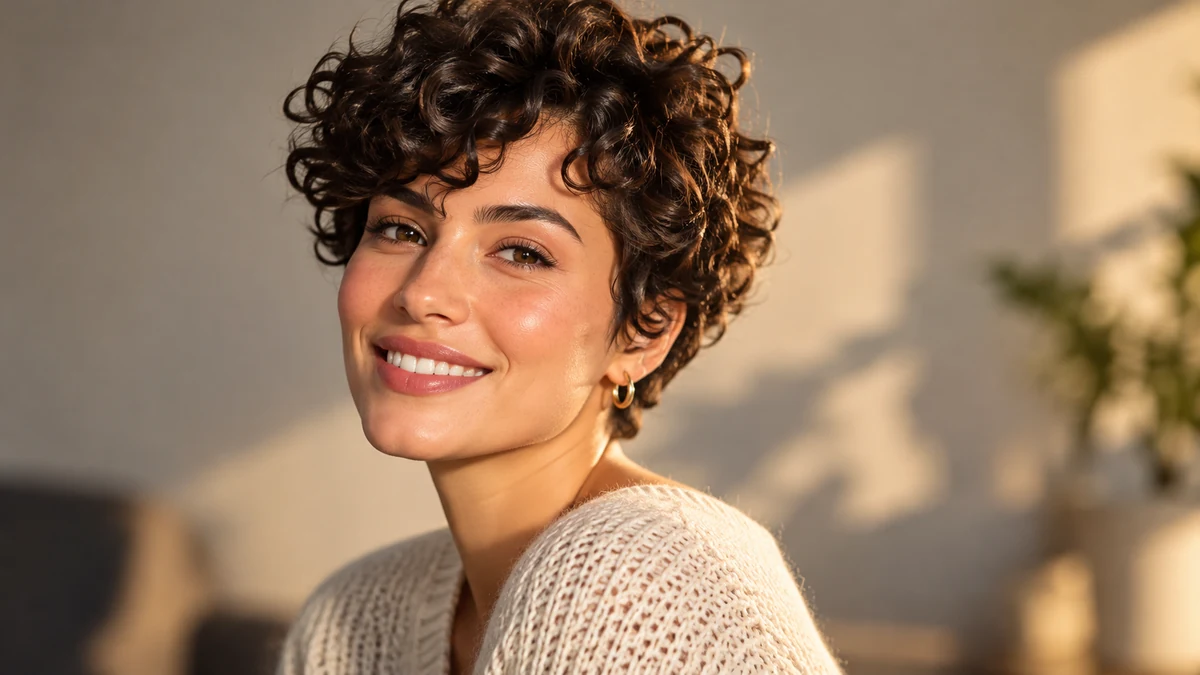
Heavy curls drag down your natural volume and force you into endless wash-day battles. You spend over forty minutes untangling knots, applying heavy creams, and battling stubborn morning frizz.
Choosing a curly pixie cut solves this struggle instantly by removing dead weight, cutting your styling routine down to minutes, and unleashing the natural spring hidden within your hair.
What Defines an Authentic Curly Pixie Cut?
A curly pixie cut is a precision cropped haircut designed specifically around natural curl geometry rather than straight-hair angles. The sides and nape sit close to the scalp, while the crown and top layers retain enough length for your spirals to form their complete shape.
Unlike straight pixie cuts that require heat tools to build volume, this cut relies entirely on the natural tension of your curl pattern. When you remove several inches of heavy hair, each strand bounces upward into a tighter coil.
Styling educators at Vidal Sassoon Academy emphasize that short curly hair requires three-dimensional graduation. To avoid sharp shelf-like layers and produce a balanced, organic silhouette, the stylist must follow the natural contour of your skull.
Which Face Shape Pairs Best With a Curly Pixie Cut?
Every face shape looks exceptional with cropped curls when your stylist places the volume in the right zones. The goal is balance and proportion.
Round Faces
Round faces look best with maximum height at the crown and tapered, close-cropped sides. This vertical lift visually lengthens your facial structure and highlights your cheekbones.
Oval Faces
Oval face shapes enjoy total freedom with short hair. You can wear an asymmetrical fringe, closely tapered sides, or uniform volume all over without throwing off your natural proportions.
Square Faces
Square jawlines benefit from soft, curved tendrils falling gently around the temples and ears. These wispy edges soften strong angles and direct attention upward toward your eyes.
Heart and Diamond Faces
Wider foreheads and smaller chins are characteristics of heart-shaped faces. Leaving slightly longer, piecey curls around the ears and adding side-swept bangs balances the upper half of your face perfectly.
The 10-Minute Morning Routine for Short Curls
Styling short curls requires far less effort than managing long hair, but technique still matters. Follow this simple morning sequence to achieve bouncy definition every day:
- Lightly mist your hair: Spray clean water mixed with a drop of leave-in conditioner over your head to reactivate yesterday’s styling products.
- Apply a quarter-sized amount of curl cream: Emulsify the product between your hands and gently glaze it over the surface of your curls.
- Scrunch upward: Cup your hands under sections of your hair and gently squeeze toward your scalp to encourage clump formation.
- Diffuse or air-dry: Hover a blow-dryer with a diffuser attachment over your roots on low heat for three minutes, or let the air do the work naturally.
Maintaining a curly pixie cut requires less than ten minutes each morning, freeing up valuable time while keeping your curls fresh and defined.
What Products Keep a Curly Pixie Cut Defined Without Crunch?
Short curls need hydration without heavy oils that cause strands to cling flat against the scalp. Choosing water-soluble formulas ensures your hair stays touchable throughout the day.
text
Product Application Order:
[Cleanser/Co-Wash] -> [Leave-in Mist] -> [Lightweight Curl Cream] -> [Flexible Hold Gel/Mousse]
- Water-based leave-in conditioners: Hydrate thirsty curls without creating a greasy film.
- Botanical curl gels: Provide medium hold that locks curl clumps in place without turning crispy.
- Volumizing mousse: Creates lift at the root area for looser curl types that tend to fall flat.
- Light sealing oils: Jojoba or squalane oils seal moisture into the cuticle when applied sparingly to damp ends.
Product specialists at the NaturallyCurly community highlight that short curls need frequent moisture replenishing rather than heavy butter application.
How Often Should You Schedule Salon Maintenance?
Short haircuts show new growth quickly. Because curly strands shrink upward, you might notice your shape shifting after just three to four weeks.
Book a maintenance appointment every four to six weeks to keep your edges neat and your crown balanced. Neglecting trims causes a curly pixie cut to lose its balanced architecture, resulting in unwanted bulk around the ears and neckline.
Always request a dry cut from a curl specialist. Wet cutting stretches your curls, making it impossible for the stylist to predict where each ringlet will rest once dry. The American Academy of Dermatology confirms that regular precision trimming also stops split ends from migrating upward, preserving overall hair shaft health.
Master Chart: Finding Your Ideal Curly Pixie Cut Variation
| Curl Type | Recommended Silhouette | Crown Length | Side Taper | Best Styling Formula | Salon Visit Cycle |
| 2C (Wavy-Curly) | Shaggy, piecey pixie | 3 to 4 inches | Scissor tapered (1.5 in) | Sea salt spray & mousse | Every 5 to 6 weeks |
| 3A (Loose Spirals) | Rounded voluminous crown | 3 to 4 inches | Scissor tapered (1 in) | Light curl lotion | Every 4 to 5 weeks |
| 3B (Springy Ringlets) | Layered classic pixie | 2.5 to 3.5 inches | Clipper tapered (#4 guard) | Defining styling cream | Every 4 to 5 weeks |
| 3C (Tight Corkscrews) | Tapered high-top pixie | 2 to 3 inches | Skin or low clipper fade | Flaxseed gel & leave-in | Every 3 to 4 weeks |
| 4A (Dense Coils) | Sculpted geometric pixie | 1.5 to 2.5 inches | Clean tapered perimeter | Moisture butter & gel | Every 3 to 4 weeks |
| 4B/4C (Zigzag Coils) | Defined mini-coil crop | 1 to 2 inches | Sharp fade or close cut | Curling custard & oil | Every 3 to 4 weeks |
Use this guide during your salon consultation to help your stylist design a cut suited to your exact texture.
How Does a Curly Pixie Cut Transform Type 4 Natural Hair?
Type 4 coily hair showcases incredible architectural structure when cut short. The natural density of coily strands creates a sculpted look that holds its shape all day long.
- Tapered natural cuts: Keep maximum coil height at the center while cleanly fading the sides and nape.
- Finger-coiled crops: Define individual micro-coils with styling custard for a polished, uniform appearance.
- Undercut designs: Pair voluminous crown curls with shaved geometric patterns around the neckline for an edgy look.
Natural coils thrive with this cut because it eliminates split ends and reduces mechanical breakage from daily detangling. Protect your hairline by applying edge control with a soft bristle brush rather than pulling tight on delicate perimeter strands.
How to Protect Your Short Curls While Sleeping
Friction from standard cotton bedding absorbs natural moisture and causes morning frizz. Protecting your hair overnight ensures you wake up with defined spirals that need minimal refreshing.
- Sleep on mulberry silk: Silk pillowcases eliminate friction, allowing your curls to glide smoothly across the surface as you shift positions.
- Wear a satin-lined sleep cap: A snug bonnet keeps your curls from flattening against your head overnight.
- Use the mini-pineapple technique: If your crown curls are at least three inches long, gather them loosely at the very top of your head with a silk scrunchie.
Preserving your curly pixie cut overnight comes down to friction control and keeping moisture locked within the hair shaft.
Which Mistakes Ruin the Shape of a Curly Pixie Cut?
Avoid these common styling traps to keep your short curls bouncy, healthy, and easy to manage:
- Using heavy raw butters: Shea butter and unrefined coconut oil coat short strands, making hair look limp and greasy.
- Brushing dry curls: Running a brush through dry curls breaks apart natural clumps, instantly creating unmanageable frizz.
- Relying on flat irons for quick fixes: Applying heat to stubborn sections causes permanent heat damage and destroys your curl pattern.
- Ignoring your scalp health: Short hair leaves the scalp exposed to styling residue, requiring a clarifying shampoo every two weeks.
- Over-washing your hair: Cleansing daily strips away natural sebum, leaving short curls dry and brittle.
How to Navigate the Grow-Out Stages Gracefully
Growing out short hair does not mean enduring months of awkward styling. With strategic trimming, you can transition smoothly toward longer lengths.
Phase 1: Months 1 to 3
Your shape stays neat and intentional. Focus on keeping the nape trimmed short while letting the crown and bangs gain length.
Phase 2: Months 4 to 7
The top layers begin to reach your ears. Use decorative bobby pins, silk headbands, and texturizing paste to tuck stray ends into place while the back catches up.
Phase 3: Months 8 to 12
Your crown layers now align with your jawline. Your stylist can blend the back and sides into a textured French bob or mini shag without losing your overall progress.
Transitioning out of a curly pixie cut does not have to be painful when you let the top layers grow first while keeping the bottom edges tidy.
Vibrant Color Techniques for Cropped Curls
Short curls provide a great canvas for dimensional hair color because the natural bounce reflects light from every angle.
- Pintura highlights: Stylists hand-paint individual curl ribbons to catch sunlight and emphasize the dimension of your haircut.
- Warm copper tones: Rich auburn and copper shades bring warmth to your complexion and accentuate your curl pattern.
- Platinum blonde: Cropping hair short removes older, damaged strands, making it safer to bleach your curls to an icy blonde.
- Rich espresso and chocolate: Deep brunette shades reflect maximum shine, giving short coils a healthy appearance.
Vibrant tones give a curly pixie cut striking depth and dimension, turning your haircut into an eye-catching style statement.
Salon Consultation Checklist: What to Tell Your Stylist
Walking into the salon prepared ensures you leave with the exact look you envision. Follow this checklist during your appointment:
- Arrive with clean, dry hair: Wear your curls in their natural state without clips or hats so your stylist can evaluate your curl pattern.
- Bring three clear reference photos: Show your stylist pictures of your preferred crown length, side taper, and neckline finish.
- Discuss shrinkage expectations: Point out how much your curls bounce up when dry to avoid cutting the top layers too short.
- Clarify your morning routine: Tell your stylist how many minutes you want to spend styling each morning so they tailor the layers to your lifestyle.
Conclusion
Long curls weigh down your natural texture and demand hours of weekly maintenance. Choosing a shorter style frees your curls, brightens your facial features, and cuts your wash-day routine down to a few simple steps.
Consult with an experienced curl artist, bring your favorite reference photos, and take the leap. Embrace the change, rock your curly pixie cut, and enjoy the unmatched freedom that comes with wearing your natural texture short, defined, and bold.
Featured Guides
Hand‑picked articles to level up your style & grooming
Fox Haircut Ideas: 10 Proven Styles for Dogs, Men & Women
Pomeranian fox face · Silver fox cuts · Megan Fox & De’Aaron Fox styles explained.
Read Guide
Amal Clooney Bell Bottom Haircut: Cut, Blowout & Care Guide
Long layers · Outward‑flip blowout · Heat protection & multi‑day freshness routine.
Read Guide
What Is a Drop Fade Haircut? Styles, Tips & Guide
Low, mid & high drop fade · Face‑shape matching · Aftercare routine for a crisp blend.
Read Guide