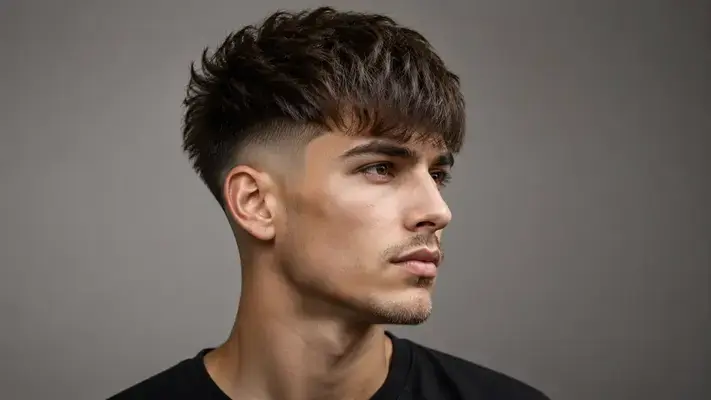
Walk into any barbershop right now and ask for a fade, and there’s a good chance the barber will ask one question back: “You want a fringe with that?” The blowout taper textured fringe has quietly become the most requested men’s cut of the year, and once you see why, you’ll understand the hype.
This isn’t just another trend that fades in six months. It’s a cut that works on straight hair, curly hair, thick hair, and thin hair alike, which is rare. Below is everything you need to know before you sit in the chair.
What Exactly Is a Textured Fringe Haircut?
A textured fringe haircut is a fringe (what Americans call bangs) that’s been cut with point-cutting or texturizing shears so it falls in soft, choppy pieces instead of one blunt line. Men’s textured fringe styles rely on movement, not a hard edge.
The magic happens at the sides. Pair that soft fringe with a tight taper or fade, and you get contrast — messy on top, sharp on the sides. That contrast is exactly what makes a textured fringe men’s cut look intentional instead of just “grown out.”
Why It Reads as Effortless (Even Though It Isn’t)
- The fringe pieces are cut at varying lengths, never one straight line
- Weight is removed from the ends so hair falls forward naturally
- The taper does the heavy lifting, so the top doesn’t need much product to look finished
Blowout Taper vs. Low Taper vs. Mid Taper: Which One Fits You?
This is where most guys get stuck. A blowout taper textured fringe, a low taper textured fringe, and a mid taper textured fringe all look different on the head, even though they share the same fringe on top.
Here’s a quick breakdown to make the decision easier before your next appointment.
| Style | Fade Height | Best For | Vibe |
| Low taper fade with textured fringe | Just above the ear | Office jobs, subtle guys | Clean, quiet confidence |
| Mid taper fade with textured fringe | Mid-way up the side | Most face shapes | Balanced, versatile |
| Blowout taper with textured fringe | High, rounded finish | Curly or coily hair | Bold, voluminous |
| Burst fade textured fringe | Curves around the ear only | Guys who want less commitment | Sporty, subtle |
| High taper fade with textured fringe | Near the temple | Angular faces | Sharp, edgy |
Looking at the table, the pattern is simple. The higher the fade sits, the bolder the statement — and the more upkeep it needs between visits.
Low Taper Textured Fringe: The Safe, Sharp Choice
A low taper with textured fringe keeps things subtle. Barbers often recommend this to first-timers because it grows out cleanly and doesn’t scream “new haircut” at the office on Monday.
It also happens to be the easiest version to maintain yourself between cuts, since the taper line sits low and blends without much precision needed.
Mid Taper Textured Fringe: The Crowd-Pleaser
Ask ten barbers which taper works on the most face shapes, and most will say mid. A mid taper textured fringe splits the difference between subtle and bold, which is why it shows up so often on textured fringe hairstyle mood boards.
It’s forgiving on round, square, and oval faces, and it still gives enough contrast for the fringe to pop.
Blowout Taper Textured Fringe: Built for Texture
If you’ve got curly or coily hair, a blowout taper with textured fringe is likely your best friend. The rounded, voluminous sides let curls breathe instead of getting squashed flat, and it pairs beautifully with a textured fringe curly hair look on top.
How to Style a Textured Fringe at Home
Getting the cut is step one. Styling it right is what separates a fresh-from-the-barbershop look from a lazy Tuesday.
Step-by-Step Styling Routine
- Towel-dry hair until it’s damp, not soaking wet
- Apply a dime-sized amount of sea salt spray for textured fringe, focusing on the roots
- Rough-dry with a diffuser or your fingers, pushing hair forward and up
- Finish with a pea-sized amount of matte clay for textured fringe to define pieces
- Pinch small sections of the fringe forward for that lived-in, messy textured fringe finish
Best Products for the Job
- Sea salt spray — adds grit and texture without weighing hair down, ideal before diffusing
- Hair clay for textured fringe — matte finish, strong hold, no shine
- Light pomade — only for straight hair textured fringe looks that need a slight sheen
- Texturizing powder — a backup for guys who want extra root lift on lazy days
Textured Fringe on Different Hair Types
One reason this cut has stuck around is how adaptable it is. A textured fringe doesn’t ask you to change your hair type — it works with it.
Straight Hair
Low taper fade with textured fringe straight hair looks tend to need the most product, since straight strands don’t hold texture on their own. A light clay or spray wax keeps pieces separated.
Curly Hair
Curly textured fringe styles barely need product at all. The natural curl pattern does most of the texturizing work, and a diffuser is usually enough to finish the look.
Asian Hair Textures
Textured fringe asian men’s cuts often favor thicker, denser fringe pieces since Asian hair tends to grow straighter and thicker. Barbers usually thin the fringe more aggressively here to avoid a heavy, helmet-like look.
Textured Fringe Meets the Modern Mullet
One of the more interesting mashups this year pairs a modern mullet textured fringe on top with length left in the back. It’s a bit of a statement cut, but paired with a low fade textured fringe on the sides, it stays wearable rather than costume-y.
Guys going for a textured fringe mullet should expect more frequent trims up front to keep the fringe from overtaking the eyes, while the back grows out on its own schedule.
Frequently Asked Questions
What is a textured fringe exactly?
A textured fringe is bangs cut with texturizing scissors so the ends fall unevenly instead of in one blunt line, giving a softer, more natural-looking finish across the forehead.
How often do I need a haircut for textured fringe maintenance?
Every four to six weeks keeps the fringe length in check and the taper crisp. Waiting longer usually means the fringe droops past the eyebrows and loses its shape.
Does a textured fringe work with a low fade or only a high fade?
Both work. A low fade textured fringe gives a subtle, professional look, while a high or blowout taper gives a bolder, more voluminous finish — it really comes down to personal style.
Can I get a textured fringe with straight hair?
Yes, straight hair textured fringe cuts are extremely common. You’ll just lean on product more than someone with natural curl to hold the piece-y texture through the day.
What’s the difference between a burst fade and a taper fade with a textured fringe?
A burst fade curves tightly around the ear only, while a taper fade blends gradually up the entire side of the head. Burst fades feel sportier; tapers feel more polished.
Is a textured fringe high maintenance?
It sits in the middle. It needs regular trims and daily styling with a spray or clay, but it doesn’t require the constant precision edging that some fades demand.
Can women get a textured fringe too, or is it just for men?
While this guide focuses on men’s textured fringe styles, the technique itself works for any hair type or gender — the texturizing method is the same either way.
Conclusion
A blowout taper textured fringe isn’t just a passing trend — it’s one of the few cuts flexible enough to suit straight, curly, thick, or fine hair without losing its identity. Bring a couple of reference photos to your next appointment, tell your barber which taper height fits your lifestyle, and you’ll walk out with a cut that actually holds up between visits.